The Mirror

The student-run newspaper of Northwood School in Lake Placid.

 ADK Science Visits Fish Hatchery

On March 13, students from Ms. Fagan’s Adirondack Science classes had a field trip to the Adirondack Fish Hatchery for a firsthand learning experience on conservation. The hatchery is located just outside Saranac Lake and is operated by the New York State Department of Environmental Conservation.

During the visit, students were given an inside look at how fish are bred, raised, and released to support local ecosystems. The hatchery specializes in landlocked Atlantic salmon, producing 30,000 pounds of fish per year. The salmon are released into lakes and rivers across New York State to maintain ecological balance and support recreational fishing.

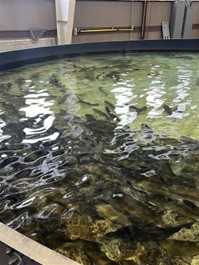
Students explored the facility, observing large tanks filled with salmon at various stages of development. This included learning about the lifecycle of fish, from tiny eggs and newly hatched fry to larger juvenile fish. The hatchery uses a constant flow of cold water from nearby ponds and wells to raise the fish. This ensures fish are growing up healthy before they are released back into the wild. “I enjoyed it a lot. The hatchery was something I found really interesting and taught me a lot about how these fish are raised. It was also cool seeing just the number of fish they had there.” Cooper Plotts ’26 stated. This was a good opportunity to learn about the life cycle of fish and the importance of maintaining freshwater biodiversity.

A highlight of the visit was viewing the large broodstock fish. These are carefully selected adult fish used in hatcheries to breed the next generation. “Yeah, it was really cool how big some of the older salmon were. They are a lot bigger than I thought, and then seeing the fish in the display was even crazier. The trout they had in there were massive.” Plotts said. It takes a lot of work and care to keep our fish populations healthy and thriving year after year.

Ms. Fagan noted, “This field trip is important as it is an opportunity to learn firsthand how fish hatcheries function. Especially because we are raising our own salmon in the class on a small scale. And we’re working with a hatchery to release these fish in the spring.”

The visit to the Adirondack Fish Hatchery offered students a memorable day outside the classroom and a look at how local government supports the health and sustainability of the ecosystems in our community.

The Northwood Mirror

The student-run newspaper of Northwood School in Lake Placid

Northwood Life

ADK Science Visits Fish Hatchery

On March 13, students from Ms. Fagan’s Adirondack Science classes had a field trip to the Adirondack Fish…

Listen Read this article aloud

On March 13, students from Ms. Fagan’s Adirondack Science classes had a field trip to the Adirondack Fish Hatchery for a firsthand learning experience on conservation. The hatchery is located just outside Saranac Lake and is operated by the New York State Department of Environmental Conservation.

During the visit, students were given an inside look at how fish are bred, raised, and released to support local ecosystems. The hatchery specializes in landlocked Atlantic salmon, producing 30,000 pounds of fish per year. The salmon are released into lakes and rivers across New York State to maintain ecological balance and support recreational fishing.

Students explored the facility, observing large tanks filled with salmon at various stages of development. This included learning about the lifecycle of fish, from tiny eggs and newly hatched fry to larger juvenile fish. The hatchery uses a constant flow of cold water from nearby ponds and wells to raise the fish. This ensures fish are growing up healthy before they are released back into the wild. “I enjoyed it a lot. The hatchery was something I found really interesting and taught me a lot about how these fish are raised. It was also cool seeing just the number of fish they had there.” Cooper Plotts ’26 stated. This was a good opportunity to learn about the life cycle of fish and the importance of maintaining freshwater biodiversity.

A highlight of the visit was viewing the large broodstock fish. These are carefully selected adult fish used in hatcheries to breed the next generation. “Yeah, it was really cool how big some of the older salmon were. They are a lot bigger than I thought, and then seeing the fish in the display was even crazier. The trout they had in there were massive.” Plotts said. It takes a lot of work and care to keep our fish populations healthy and thriving year after year.

Ms. Fagan noted, “This field trip is important as it is an opportunity to learn firsthand how fish hatcheries function. Especially because we are raising our own salmon in the class on a small scale. And we’re working with a hatchery to release these fish in the spring.”

The visit to the Adirondack Fish Hatchery offered students a memorable day outside the classroom and a look at how local government supports the health and sustainability of the ecosystems in our community.