Blueprints For Growth: A Peak Pathway Publication

By guest contributor Cooper Plotts ’26

This article is part of Northwood School’s Peak Pathways Program—a year-long, student-driven independent study that empowers students to explore topics they are passionate about in depth. Through research, creativity, and real-world application, students take ownership of their learning and produce meaningful work that extends beyond the classroom.

Many Peak Pathways projects culminate during Publication Week, when students share their work with authentic audiences. By publishing in The Mirror, these students contribute to a broader conversation, offering original perspectives, insights, and creative expression to the Northwood community and beyond.

Over this past school year, my goal for Peak Pathways was to improve myself by learning about habits and applying them to my daily routine. I knew that I wanted to use the time in this class to better myself and felt like learning about habits would be a good step in the right direction. During this project, I read Atomic Habits by James Clear, started journaling, and began implementing new habits.

A key point I took from Atomic Habits was focusing on systems rather than goals. For example, rather than saying “I want better grades”, I focused on building study habits like studying for 20 minutes a day leading up to an exam and organizing my assignments ahead of time to keep myself on pace. These small actions didn’t feel overwhelming, which made them easier to stick with. Over time, they became automatic, and the results showed.

Another impactful thing I learned from Atomic Habits was how it made behavior change feel simple and achievable. It explains how habits are driven by cues, cravings, responses, and rewards, helping me understand my actions more clearly. Instead of relying on motivation, it showed me how to shape my environment to make good habits easier to form. Even small changes, like keeping my phone on my desk at night, made a difference. It also emphasized focusing on identity, or becoming the kind of person with good habits, which gave my project a deeper purpose.

One of the first habits I adopted was journaling. At the beginning, it felt awkward. It felt like I was forcing myself to write when I had little to say. But over time, journaling became a space for reflection rather than an obligation. I used it to track my progress, clarify my thoughts, and hold myself accountable. Writing regularly helped me notice patterns in my behavior, both positive and negative, which made it easier to adjust and improve.

Another important concept was habit stacking; attaching a new habit to something I already do. For example, I started journaling right after brushing my teeth at night. Linking the two made it easier to remember and more likely that I would follow through. After this, I started to plug my phone in and leave it at my desk for the night, rather than keeping it right next to my bed. Over time, these small routines built on each other, creating a structure that made my days feel more productive and balanced.

Of course, the process wasn’t perfect. There were times when I fell off track or lost motivation. But instead of giving up, I learned to focus on consistency rather than perfection. Missing one day didn’t mean failure; it just meant I was starting the next day again.

Looking back, this project taught me that change doesn’t happen overnight. It’s the result of small choices repeated over time. By committing to simple habits like journaling and being more mindful of my routines, I built a stronger sense of discipline and self-awareness. What began as a school project became a lasting part of my life.

“Idrett for alle” – Norway’s Unique Sporting Model Explained

Unfortunately, underdog Norwegian side Bodo/Glimt have been knocked out of the Champions League by Portuguese side Sporting. For a week, Glimt looked to be cruising into the quarterfinals of the UCL, but after a second leg collapse – where they lost 5-0 – Glimt are now out of the European competition. (See previous article)

Photo: sportsedtv.com

Everyone enjoys a good underdog story, so it is a little disappointing to see their run end. Glimt’s campaign was memorable, but let’s shift our attention beyond football; Norway’s athletics have quietly been on the rise – think of their most recent winter Olympic campaign – the Scandinavian nation seems to have a secret sauce, here’s their recipe:

“Idrett for alle” – Sport for all

Photo: tv2.no

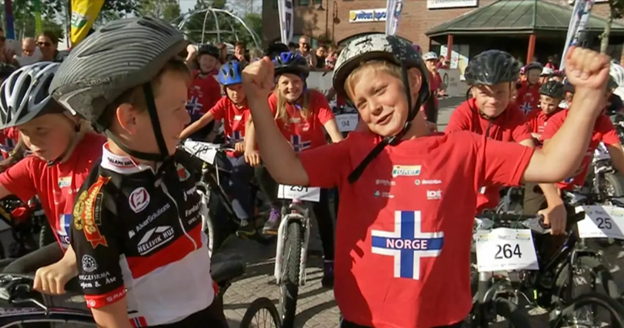
Norway’s entire approach to its sporting model is to get as many kids playing sports as possible, and to keep them playing for as long as possible. The model focuses on participation and enjoyment before winning, and in doing so, kids end up sticking around.

In 2025, 93% of children participated in organized sports.

Between the ages of 5 and 13, there is virtually no focus on performance; there are no standings, stats, or scorekeeping – pure development and enjoyment. Introduction to competition begins between 13 and 15, when scores, standings, and statistics are tracked; that said, the focus remains on development, and equal playing time is a priority. At the age of 16 onward, athletes focus on one sport – not multiple – and performance and results come to the forefront.

The idea is twofold: to allow kids to enjoy playing sports for as long as possible, and, in doing so, to produce a broad base of elite athletes.

How Norway funds its model

Norway’s athletic structure is managed by the Department of Sport Policy (NIF). The NIF oversees all athletics, managing community and elite sporting setups. Each year, Norway takes 64% of the money it makes from the national lottery and sports betting and gives it to the DSP for the committee to allocate accordingly, injecting it back into their grassroots programs. This allocation amounts to roughly 400 million (USD) dollars per year. This strategy funds communities and equips them with quality equipment and facilities, making youth sports feasible for low-income households.

These are annual numbers from 2021. As of 2025, lottery profits were approximately 4.2 billion NOK (438 million USD.

Norway does fund its elite athletes, but it is not its primary focus – the focus is on youth sport.

Unlike many countries – such as the US and Canada – Norway’s sporting system isn’t focused on making money; it’s about making athletics accessible for all and allowing youth to play and grow. It’s not about applying pressure and pushing kids harder; it’s about keeping as many kids as possible in sports for as long as possible.

Inside the Owner’s Box: Northwood Students Explore St. Lawrence in Montreal

Three Northwood School students were recently treated to a memorable evening in Montreal after being invited to a special admissions event hosted by St. Lawrence University.

View from the owner’s box. Photo: Owen MacLean ’26.

Held on March 24, the event brought a small group of prospective students and their families together in a unique setting inside the owner’s box at a Montreal Canadiens game against the Carolina Hurricanes. Known for having one of the loudest atmospheres in the NHL, the Montreal crowd did not disappoint, creating an electric environment throughout the night as the Canadiens skated to a 5-2 victory.

The experience was made possible through the generosity of St. Lawrence University alumni Geoff Molson and Kate Finn Molson, who hosted the group for the evening. The Molson family is the majority owner of the Montreal Canadiens.

Northwood students, Elizabeth Gauvin-Langevin ’26, Rafaelle Fondacaro ’26, and Owen MacLean ’26 were among a select group of invited attendees. The event offered more than just an opportunity to watch NHL action; it provided an inside look at the St. Lawrence community in an informal environment.

View from the owner’s box. Photo: Owen MacLean ’26.

Also in attendance was Jonathan Kent, Vice President for Enrollment Management, who spoke with students and families about academic programs, campus life, and what sets the university apart. Several coaches from different St. Lawrence University sports teams were also there, including the women’s hockey team’s Head Coach. Conversations throughout the evening gave attendees the chance to ask questions and connect directly with university representatives.

“It was an incredible experience that was unlike most college admissions events,” Fondacaro shared. “Being able to learn more about St. Lawrence from the staff in person really helped gain a better idea of how the school might be and if it is the right fit for me.”

The event reflects a growing trend among universities to create meaningful, personalized experiences for prospective students as they make their final college decisions. This event targeted Canadian students as St. Lawrence University looks to increase its international enrollment. By combining athletics, alumni engagement, and admissions outreach, St. Lawrence showcased what it offers prospective students.

Northwood’s strong college preparation process continues to see students recognized with unique opportunities like this. As the final buzzer sounded in Montreal, these students left with some lasting memories from the excitement of the game to a clearer picture of what their future at St. Lawrence University could look like.

 ADK Science Visits Fish Hatchery

On March 13, students from Ms. Fagan’s Adirondack Science classes had a field trip to the Adirondack Fish Hatchery for a firsthand learning experience on conservation. The hatchery is located just outside Saranac Lake and is operated by the New York State Department of Environmental Conservation.

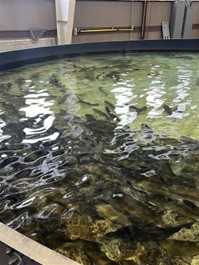
During the visit, students were given an inside look at how fish are bred, raised, and released to support local ecosystems. The hatchery specializes in landlocked Atlantic salmon, producing 30,000 pounds of fish per year. The salmon are released into lakes and rivers across New York State to maintain ecological balance and support recreational fishing.

Students explored the facility, observing large tanks filled with salmon at various stages of development. This included learning about the lifecycle of fish, from tiny eggs and newly hatched fry to larger juvenile fish. The hatchery uses a constant flow of cold water from nearby ponds and wells to raise the fish. This ensures fish are growing up healthy before they are released back into the wild. “I enjoyed it a lot. The hatchery was something I found really interesting and taught me a lot about how these fish are raised. It was also cool seeing just the number of fish they had there.” Cooper Plotts ’26 stated. This was a good opportunity to learn about the life cycle of fish and the importance of maintaining freshwater biodiversity.

A highlight of the visit was viewing the large broodstock fish. These are carefully selected adult fish used in hatcheries to breed the next generation. “Yeah, it was really cool how big some of the older salmon were. They are a lot bigger than I thought, and then seeing the fish in the display was even crazier. The trout they had in there were massive.” Plotts said. It takes a lot of work and care to keep our fish populations healthy and thriving year after year.

Ms. Fagan noted, “This field trip is important as it is an opportunity to learn firsthand how fish hatcheries function. Especially because we are raising our own salmon in the class on a small scale. And we’re working with a hatchery to release these fish in the spring.”

The visit to the Adirondack Fish Hatchery offered students a memorable day outside the classroom and a look at how local government supports the health and sustainability of the ecosystems in our community.

Red Moon Over Lake Placid

Early on March 3, a total lunar eclipse gave people in the Adirondack region a glimpse of the red moon. The eclipse took place before sunrise, with the moon low in the sky while Earth’s shadow moved across it. In the Lake Placid area, the eclipse began around 3:44 a.m. The partial phase started at 4:50 a.m., and totality began at 6:04 a.m., just before the moon dropped below the horizon.

Photo by Jacob Slagel ’26.

What makes lunar eclipses so notable is the Moon’s color. During totality, the moon appears red or reddish-orange instead of white. While the Earth blocks most direct sunlight, some light still passes through the Earth’s atmosphere. That extra light gets distorted, which in turn affects the moon’s color.

Photo by Jacob Slagel ’26.

A lunar eclipse happens when the Earth moves directly between the sun and the moon. When they line up, Earth will block sunlight from reaching the moon, casting a shadow across its surface. This kind of event can only happen during a full moon, which is why lunar eclipses are uncommon.

Photo by Jacob Slagel ’26.

However, in the Adirondacks, the timing made the eclipse more challenging to see. By the time the moon turned fully red, it was already low in the sky, making hills, trees, or buildings block the view. The true maximum of the eclipse wasn’t fully visible from the area since the moon set so soon after totality began.

Even so, the eclipse is a reminder that sky events don’t always need fancy equipment or complicated planning to be interesting. For a few minutes on an ordinary March morning, the moon looked completely different from normal, giving anyone awake a view of a familiar object in a new way.

Real World on Film: Sicario: Day of the Soldado

Over the February mini-break, my teammates and I had some free time and watched a movie called Sicario. Watching the film led me to investigate how accurately movies portray real-world topics. The story focuses on law enforcement efforts and border activity, which are also connected to real government agencies such as Immigration and Customs Enforcement. I also watched the sequel, Sicario: Day of the Soldado, which includes scenes involving border crossings from Mexico into the United States. This made me think of modern-day topics such as ICE and border control controversies.

As I watched the films, I noticed how the cartel system and law enforcement operations were portrayed. The movies showed how different groups interact and how organized these operations appear to be. Because the films are presented in a realistic style, they raise questions about how closely movie portrayals match real-world situations.

A scene from “Sicario: Day of the Soldado.” Black Label Media and Thunder Road Pictures.

Movies often include real locations, agencies, and scenarios, which can make them seem accurate. At the same time, films are produced to tell a story, and certain elements may be simplified or emphasized for storytelling purposes. Comparing movie portrayals with real information can help provide a clearer understanding of the topic.

Watching Sicario made me realize that movies can help people become interested in real-world issues, but they should not be the only source of information. While films can reflect parts of reality, it is important to do research and learn from reliable sources to fully understand what is happening in the world. It is definitely eye-opening to see how bad things can get.

The AI Lab Race: Who’s Building the Future of AI?

Pictured above (left to right): Mark Zuckerberg (Meta), Lisa Su (AMD), Elon Musk (xAI), Jensen Huang (Nvidia), Sam Altman (OpenAI), Demis Hassabis (DeepMind Technologies), Dario Amodei (Anthropic), Fei-Fei Li (World Labs). Painting by Jason Seiler for TIME.

Artificial intelligence is accelerating faster than any other technology in history and is doing so in a dramatic fashion. Centered in the US, with tight competitors in China and a few others around the world, major technology labs are racing to develop the most powerful AI systems ever created. This competition, often referred to as the “AI Race,” includes companies such as OpenAI, Google, Anthropic, Meta, xAi, and DeepSeek. Each one is putting historic amounts of capital, time, and resources into building more capable machines.

AI has existed for many decades, but over the past two years, the tools have improved dramatically. These models can write code, generate images and videos, and optimize research for all fields. The speed at which these tasks are being executed is being cut back as the cost of performing them is as well. Due to this rapid progress, these companies are pouring billions of dollars into building stronger models and infrastructure, such as data centers, to run them.

This race has expanded well beyond making better chatbots to solve many of the world’s largest problems. AI has the potential to reshape industries like medicine, education, engineering, transportation, and entertainment. For example, specific AI models can improve research into curing a disease while also being much more accurate at diagnosing it than an experienced doctor. Whoever can take the lead in developing these capabilities will gain serious economic power.

While this all seems new and exciting, the competition does raise serious concerns. Powerful AI systems have the potential to replace millions of jobs, possibly spread misinformation, and create realistic fake images or videos. That is why it is critical that rules and regulations be developed to support user safety.

As we continue to see the events unfolding in real time, no one knows who could be in the lead tomorrow. All we know is that the technology will evolve, and the best way to take advantage of it is to understand it. The worst thing one could do is be “AI incompetent.”

Meet the New Fed Chair Nominee

Kevin Warsh, President Trump’s Fed Chairman nominee. Photo: CBC News

Two weeks ago, President Trump nominated Kevin Warsh as the next Chair of the United States Federal Reserve. To anyone outside government, finance, or economics, this is a powerful role that is out of the spotlight. It is one of the most influential economic positions in the world as the United States serves as the world’s reserve currency. Due to this responsibility, decisions made by the Fed affect people, institutions, and countries around the world.

The Federal Reserve is the central bank of the United States. As the most important bank, it operates very differently from a normal bank. It does not provide daily transactional banking for individuals; rather, it manages the country’s financial system by setting interest rates that influence how much money can be borrowed.

The Federal Reserve building. Photo: Investopedia.

You may be wondering why this is important, but it is critical to understand because it plays a major role in everyday life. The Fed’s decisions affect things like student loans, car loans, mortgages, and savings accounts. Their two biggest goals are to maintain stable prices and maximize employment. All decisions are made in an effort to achieve both goals.

So, who is Kevin Warsh, the newly nominated chairman? Warsh is an economist and a former investment banker at Morgan Stanley. He previously served on the Federal Reserve’s Board of Governors from 2006 to 2011 and helped guide the US out of the 2008 financial crisis. This experience will now help him lead the Fed and guide decisions on interest rates and economic policy.

It is expected that Warsh will take over in May 2026, when the current chair, Jerome Powell’s, term expires. While this may seem irrelevant to our day-to-day lives, the Fed’s decisions affect all of us. The cost of borrowing money and prices paid at the store both depend on the Fed. That is why the nomination of the newest Fed chair, Kevin Warsh, is an important event worth paying attention to and understanding.

Learning About Artemis Moon Mission

Photo by Jacob Slagel ’26.

NASA’s Artemis program is NASA’s plan to send astronauts back to the moon and use what they learn there to prepare for future missions deeper into space. On NASA’s Artemis II mission page, NASA states that the mission is planned as a crewed lunar flyby, with four astronauts orbiting the Moon for approximately 10 days, using the Space Launch System rocket and the Orion spacecraft. The page also lists the launch timing as no earlier than March 2026.

NASA has been running major tests ahead of the mission. In a Feb. 3 update on NASA’s missions blog, NASA said it completed a wet dress rehearsal, a full-fueling test meant to catch problems before launch. In the same set of updates, NASA reported that the test countdown was halted due to a liquid hydrogen leak, and teams worked to save the vehicle and drain the tanks.

Even with a program as large as Artemis, not every student is following the details closely. Cooper Plotts ’26 said he had not heard about the Artemis program before this week. After learning that NASA is preparing to send astronauts back toward the moon, Plotts said it sounds like a rare experience for the crew. “It’d be a pretty cool experience for them to be able to go back up and experience it,” he said.

Photo by Jacob Slagel ’26.

Plotts said the return to the moon feels exciting, even if it is not something he hears about every day. “It feels exciting but also distant,” he said. Still, Plotts said space exploration matters because there is much humans do not yet know. “There’s still so much we don’t know,” he said.

Plotts also has a personal connection to launches from growing up in Florida. He visited Kennedy Space Center on an elementary school field trip and saw a rocket launch that same day. Plotts described how the rocket seemed to move slowly at first, then looked faster as it rose through clouds and disappeared from view. “That was a really cool experience,” he said.

NASA describes Artemis as a long-term exploration campaign focused on returning to the moon for science and technology development while building experience for future missions to Mars, according to NASA’s main Artemis overview page. For Plotts, learning about Artemis made future launches feel more worth following, especially because launches can sometimes be visible from far away in Florida.

Catching up with Nathaniel Poole ’25

Nathaniel Poole ’25. Photo: Instagram.

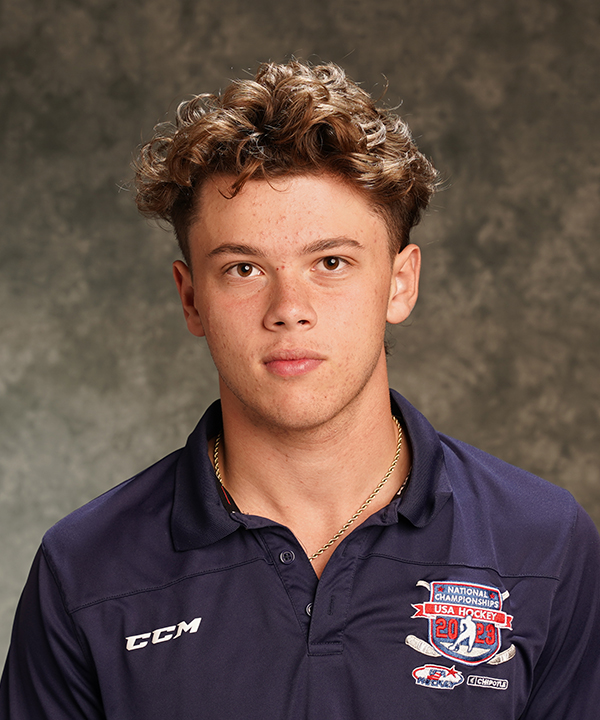
At the end of the 2024-2025 year, Nathaniel Poole’s short but meaningful time at Northwood was something special. Nathaniel spent only one year at Northwood, but he became a favorite around campus during his time there. He made the most of every moment and did not take his senior year for granted. Nathaniel spent his single season at Northwood on the Prep team as a defenseman and committed to Union College to play NCAA Division 1 hockey. He now plays for the Lincoln Stars in the USHL, which is the top junior hockey league in the United States. Fortunately, I was lucky enough to speak with Nathaniel and gain insight into his life as a junior hockey player.

“I currently play for the Lincoln Stars in the USHL, and I am a defenseman,” Poole said. He then talked about what it is like to play junior hockey. He said, “Honestly, compared to Northwood, it is much less fun and much more of a grind. However, I am enjoying my time here so far. The hockey is amazing, and the days go by so fast because I’m so busy. I’m also in a great location, so when I have time off, I can go to the University of Nebraska for football or basketball games. It’s been hard, but it’s also a blast.”

“In my one year at Northwood, I really learned and grew so much as a person. Northwood has a way of connecting you with people and forcing you outside of your comfort zone in a great way,” Poole said when asked about his time at Northwood. “Northwood prepared me for the rest of my life. The way you learn to talk to people and take risks is a thing that prepares you for the rest of your life, and I will use those skills in the future, whether it’s in college or in a job,” Poole said. “I also really miss Northwood. My time there was so short, and being able to go to class with your best friends every day was special. The memories I made at Northwood will never be forgotten.”

“My plan for next year is to play another year in the USHL, and then hopefully I will be ready to play at Union,” Poole said when asked about his plans for the future. “I hope to have a great season next year and really settle into the junior life and get more comfortable, that will elevate my game, and I want to be a premier defenseman in the league next year.”

Nathaniel has a younger brother, Brennan Poole, who now attends Northwood. Brennan plays hockey for the 16U team, and Nathaniel ended our conversation in classic brotherly fashion: he said, “Be hard on Brennan for me!”

The Mirror was established in 1927
© 2015-2022 by the Staff of The Mirror
The Mirror's Policy Manual and Style Guide.
The Mirror is funded by gifts to the Northwood Fund. Thank you.