Humans of Northwood: Davor Kriukov ’26

“The best piece I would give to someone is probably to give your 100% on whatever you’re doing, and find a way to give it your all. It doesn’t matter if you’re playing a game, doing a test – you always have to find a way to give your 100%.

“If I could introduce one aspect of Chile into American culture, it would be the food. The food from Chile is amazing – it’s the best – compared to the food here, it’s fake. So, I would love to bring Chilean food to America if I could.

“I wouldn’t say that I have a particular hidden talent, but the closest thing I have to it is that I can speak languages. I think that’s something about me that’s special, so yeah.

“[If I weren’t playing football] I would play basketball. Both of my parents – mom and dad – played basketball at a very good level growing up, and it’s been something I’ve loved as well. I would say that I’m pretty good at it, so that’s what I would be doing if football didn’t exist.

“Once I graduate, I will be going back to Chile to play pro – my season will start basically as soon as I get back and will continue until next March. When March next year comes around, I will have to decide whether to continue playing pro or go to university in Chile and get a degree instead.

“For me, Pineapple doesn’t belong to pizza –though it doesn’t really matter. Like, I will not eat it, but I think that it’s a valid thing for others to like.”

As told to Gavin Kruger ’26. Photo by Mr. Michael Aldridge.

An Idiot’s Guide to Fouls and Cards in Football (Soccer)

The average soccer match features more than 20 fouls, a handful of yellow cards, and the occasional sending-off (red card). To casual sports fans, differentiating between a caution and a card-worthy offense is likely pretty difficult. After this article, this won’t be an issue; here is an “idiot’s” guide to fouls and cards.

FOULS

Photo: sportskeeda.com

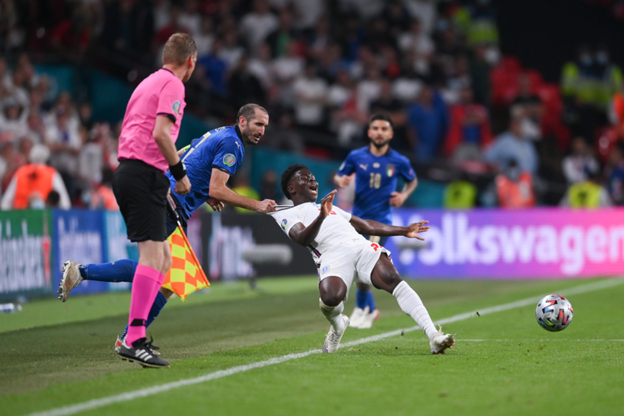
On average, the referee will blow his whistle every 5 minutes to signal a stoppage in play due to a foul. When a foul occurs, two things happen: First, the referee blows his whistle, signaling foul play. Second, he (the referee) may have a quick word with the culprit; usually, he will remind the player to keep a cool head and warn him that further foul play could earn him a card. Things such as shirt-tugging, mistimed tackles, and impeding a player’s movement are all forms of foul play and will earn a player a stern talking-to (these actions can also be yellow and red card offenses, and I will explain how this can be the case later on).

Note: Fouls are most common at the start of games, as the referee needs to establish control. Sending the message to both teams that foul play will not be tolerated.

Yellow Card

Photo: football-italia.net

As I previously hinted, yellow card offenses are not so different from regular fouls; the difference lies in the intent and context of the situation. If a referee deems a *challenge as reckless, or that the player does not show clear intent to play the ball, or that there is any other disingenuous intent, that player has earned himself a **booking. For example, if a player flies into a tackle at high speed, severely mistiming it and clattering into the opponent, the referee has good reason to deem the challenge reckless and issue a yellow card as punishment. A second example is when a player grabs an opponent’s shirt to hold them and prevent them from maintaining possession of the ball; this kind of infraction is called a “tactical foul”. A tactical foul usually occurs when a team is being counter-attacked and outnumbered in defense. In this situation, a player from the defending team will intentionally grab or trip up an opponent to stop play; the goal isn’t to win the ball, but to stop the attack.

In short, a yellow card offense will live up to one of the two criteria: Either it was a reckless decision, or the play made no real or honest attempt to play the ball.

Note: A yellow card means the player is now walking on thin ice, as another yellow will earn him a sending off. Yellow + Yellow = Red.

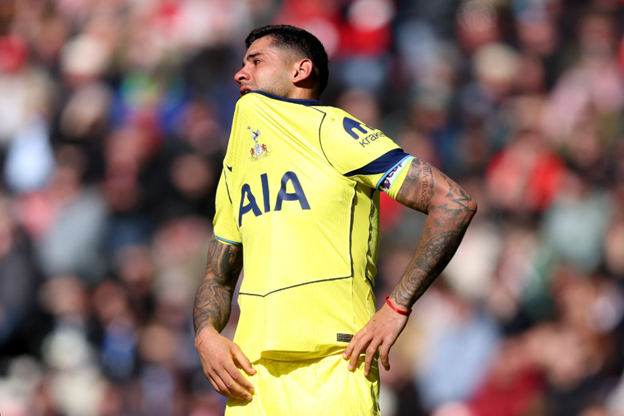
Note: A player can also receive a yellow card for taking their jersey off after scoring a goal.

*A challenge is a footballing term that essentially means “tackle”.

**Every referee has a little booklet in their front chest pocket, which, among other things, is used to note down players who have been disciplined. So, to be “booked” means earning yourself a yellow or red card.

Red Card

Photo: mirror.co.uk

In the game of football, there is no more game-changing event than when a player is sent off. Unlike in other sports, where you can replace the dismissed player, a red card in football means that the receiving team must play a man down for the remainder of the match. This man’s disadvantage forces teams to change their game plan; if a midfielder or defender is sent off, teams must take off an attacker to plug the hole in defense, and they can’t afford to take risks. A man-down causes the affected side to play an ultra-defensive style of football, in which all 10 players are compact and behind the ball (think of their defensive shape as a bus parked in front of the goal.

A Red Card is reserved only for when the referee deems that a player has used excessive force, endangered the safety of an opponent, or denied the opponent a clear goal-scoring opportunity. The most common situations where the card is brandished are when a player severely mistimes a slide tackle from behind or goes into a tackle with his studs up, targeting the ankle or upper leg.

Summary

Next time you are watching a game of football (soccer), here is what you should think about when the referee whistles for foul play: Was the tackle reckless? Was there a genuine attempt to play the ball? Was it a dangerous challenge? If any of the answers to these questions are yes, you can be confident in knowing that the player earned himself a card – and whether the referee brandished one or not – you made the right call.

“Idrett for alle” – Norway’s Unique Sporting Model Explained

Unfortunately, underdog Norwegian side Bodo/Glimt have been knocked out of the Champions League by Portuguese side Sporting. For a week, Glimt looked to be cruising into the quarterfinals of the UCL, but after a second leg collapse – where they lost 5-0 – Glimt are now out of the European competition. (See previous article)

Photo: sportsedtv.com

Everyone enjoys a good underdog story, so it is a little disappointing to see their run end. Glimt’s campaign was memorable, but let’s shift our attention beyond football; Norway’s athletics have quietly been on the rise – think of their most recent winter Olympic campaign – the Scandinavian nation seems to have a secret sauce, here’s their recipe:

“Idrett for alle” – Sport for all

Photo: tv2.no

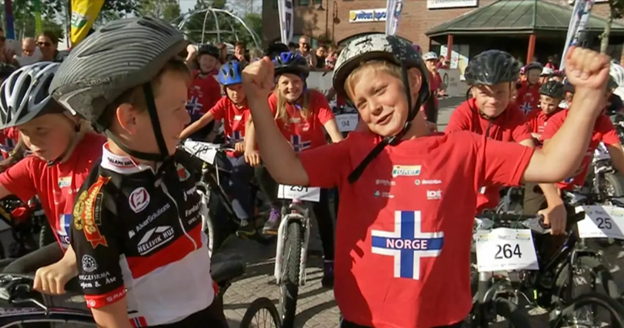
Norway’s entire approach to its sporting model is to get as many kids playing sports as possible, and to keep them playing for as long as possible. The model focuses on participation and enjoyment before winning, and in doing so, kids end up sticking around.

In 2025, 93% of children participated in organized sports.

Between the ages of 5 and 13, there is virtually no focus on performance; there are no standings, stats, or scorekeeping – pure development and enjoyment. Introduction to competition begins between 13 and 15, when scores, standings, and statistics are tracked; that said, the focus remains on development, and equal playing time is a priority. At the age of 16 onward, athletes focus on one sport – not multiple – and performance and results come to the forefront.

The idea is twofold: to allow kids to enjoy playing sports for as long as possible, and, in doing so, to produce a broad base of elite athletes.

How Norway funds its model

Norway’s athletic structure is managed by the Department of Sport Policy (NIF). The NIF oversees all athletics, managing community and elite sporting setups. Each year, Norway takes 64% of the money it makes from the national lottery and sports betting and gives it to the DSP for the committee to allocate accordingly, injecting it back into their grassroots programs. This allocation amounts to roughly 400 million (USD) dollars per year. This strategy funds communities and equips them with quality equipment and facilities, making youth sports feasible for low-income households.

These are annual numbers from 2021. As of 2025, lottery profits were approximately 4.2 billion NOK (438 million USD.

Norway does fund its elite athletes, but it is not its primary focus – the focus is on youth sport.

Unlike many countries – such as the US and Canada – Norway’s sporting system isn’t focused on making money; it’s about making athletics accessible for all and allowing youth to play and grow. It’s not about applying pressure and pushing kids harder; it’s about keeping as many kids as possible in sports for as long as possible.

Teqball Tournament Returns

A Teqball match in the spring of 2025. Photo provided.

After a successful inaugural season in 2025, the Northwood Teqball tournament is back for a second year, this time, bigger and better. Teqball is a rapidly growing sport combining soccer and table tennis, played on a specially curved table (TEQ™ table).

The sole, but significant, change from last year’s tournament is that it will now truly be a schoolwide event. In 2025, the bracket was comprised only of soccer players; fast forward to this year, and the event is open to everyone. This was something that current commissioners Hamish Riddell ’26 and Ashton Khory ’26 felt was important: “For me and Fry (Ashton), making the event open to anyone was the biggest thing we wanted to improve on when we took over the operation from Ryan [Farr ‘25],” said Riddell.

Not only will Hamish and Ashton oversee the competition’s operations, but they will also play in them. Ashton had a very blunt answer when I asked him what he’s looking forward to changing as league commissioner: “To change my finalist run to champ.” It seems that he is just as excited to play as to organize the event.

There is no official start date yet, but the word is that it will begin sometime this week. I was told that the NBL’s scheduling complicates things, as players are participating in both tournaments, and spectators will likely decrease in both events due to the conflicting times. So, nothing confirmed yet, but it will have to happen at some point, sooner rather than later. My hunch is that we will get an announcement sometime this week as to when the first round will take place.

NFL Combine Risers

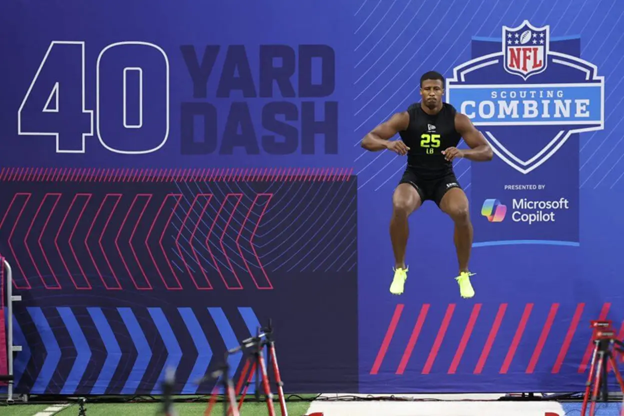
The NFL combine is a huge part of how scout teams around the league assess draft prospects. The combine is not just about 40-yard dashes and vertical jumps, but also about the time for teams and coaches to interview players and get a glimpse of their character and personalities. Though I do not have insider info on how teams felt about specific interviews, I can give you the rundown of the combine. Here are the post-NFL-combine draft risers:

Risers:

Eli Stowers – TE – Vanderbilt

Photo via usatoday.com.

Stowers set a new vertical jump record at this year’s combine, with a 45.5-inch vertical. For context, Stowers can jump higher than Vince Carter, Ja Morant, and Cristiano Ronaldo. In addition to setting a combine record, Stowers also set a new Broad jump record for tight ends by jumping 11 feet and 3 inches. Besides his record-setting numbers, Stowers also clocked a 4.51 40-time, which ranked 2nd amongst all tight ends, and is an elite time for a man of his size. Before the combine, the Vanderbilt prospect was projected as a possible late-day 2 pick, but was more of a day 3 selection. Now, after testing off the charts, there is a high chance he ends up going on day 2, in the second round.

Taylen Green – QB – Arkansas

Photo via nypost.com.

The Arkansas quarterback, who has not been touted as a top prospect to this point, just put up the best testing numbers that we have seen from any quarterback at the combine. Starting with the 40-yard dash, Green ran a 4.36. A 4.36 is what you expect from top-end running backs and wide receivers – not quarterbacks. Green’s 40 time is the second-best all-time for a QB at the combine. Green set a new combine record for quarterbacks in both vertical and broad jumps with a 43.5-inch jump and an 11″ 2 broad. Again, I must reiterate that these numbers are unheard of for QBs; it is also important to note that he put up these numbers as a 6’6″, 230-pound man. While he tested well, the Arkansas signal caller’s footwork and throwing mechanics have been questioned by scouts and analysts, and he is viewed as a developmental quarterback. That said, Green has just made himself a lot of money, and his draft stock has certainly gone up.

Sonny Styles – LB – Ohio State

Photo via theathletic.com.

Styles entered the combine as the #2 linebacker on most expert boards. Arvell Reese held the top spot as the top-ranked linebacker, and though Styles has not necessarily leapfrogged.

Reese, there is a realistic possibility that he is the first linebacker off the board. Here is where styles ranked among linebackers in testing: 40 yd dash – 1st. Vertical – 1st. Broad – 1st. 3 cone – 6th. Shuttle – 5th. Styles has been gaining popularity as the off-season has progressed, and his draft stock is going to continue rising after testing as well. I would not be shocked if he went in the top 5 picks.

Deion Burks – WR – Oklahoma

Photo via tech.yahoo.com.

Burks put up good numbers in Oklahoma and would be ranked much higher as a prospect if it were not for his size. Burks, who is listed at 5’9 “and 180, is not the frame GMs are looking for. However, his combined numbers have alleviated much of the worry about his small stature. Burks had an athleticism score of 93, which ranks second among all receivers in the draft. He highlighted this past weekend by putting up the 2nd best bench press by a receiver in combine history, notching 26 reps. On top of this incredible show of strength, the Oklahoma wide receiver ran a 4.3 40 – 3rd best of receivers; best among receivers in the vertical jump – 42.5 inches; and 4th best among his position in the broad jump. Burks’ draft stock has risen significantly, and we may now see him go on day 2 of the draft.

Bodo Glimt: Back From the Brink

The Bodo/Glimt side. Photo via football-italia.net.

Bodo/Glimt are a Norwegian 1st division side who are a bubbling topic of discussion at the moment. Glimt, a town of 55 thousand, and whose stadium’s capacity is a mere 8,270, has shocked the world in the Champions League this season by beating top clubs Atletico Madrid, Manchester City, and now Inter Milan (twice).

Glimt’s name has evolved over history. In the mid-1900s, they changed their name due to confusion with a different club in Norway; first using a hyphen, then opting for a forward slash to avoid confusion on betting slips and in newspapers.

The idea and context of the Champions League

The idea of the Champions League is to host an international competition in which the top teams from the world’s best leagues compete against one another to see who truly is the best team on the planet. Usually, all the focus is on the big names, which is fair because the gap between Premier League, Ligue 1, Serie A, and Bundesliga teams and the rest of the world is so big. Essentially, though the competition comprises teams from 16 different domestic leagues, about half of the leagues never see one of their teams make any noise. – Year after year, the competition is dominated by familiar faces.

Now, let’s rewind and review how the Norwegian side’s campaign has gone:

On the brink of elimination

After match week 5 of the round-robin, Glimt were given a 99.7% chance of elimination. At that point, they were winless, drawing to Slavia and Spurs, and then losing to Galatasaray, Monaco, and Juventus in consecutive matches. They were never a thought in anyone’s mind to begin with, and with Borussia Dortmund, Manchester City, and Atletico Madrid ahead, you almost felt bad for the club and their fans.

For context, Dortmund is a household name in the footballing world; they have a Champions League title and 5 Bundesliga titles. Manchester City has been one of the best clubs in the world in the past decade, winning 19 titles since the 2015-16 season. Atletico Madrid is also recognized as one of the best clubs in the world and finished 3rd in LaLiga last season.

What Glimt then went on to do was truly incredible. Let alone the statistical possibilities of a playoff qualification, beating three of Europe’s biggest names was a joke in and of itself. Against Dortmund, the Norwegian side drew. Here is the Cinderella story: Glimt held a 3-0 lead in the 58th minute against the best team in the world, Man City – the game finished 3-1, Bodo, with the Norwegians controlling just 34% possession. Then, against Athleti, Glimt fought back from 1- 0 down to beat the Spanish giants 2-1. With that win, the Norwegian’s found a way into the next phase of the Champions League, defying all the statistical odds.

Source: footballtoday.com

Knockout round matchup vs Inter Milan

You’d think that after playing Man City and Atlético Madrid, the side would be set for an easier matchup – this wasn’t the case; they had to play the runners-up from the 23-24 season: Inter Milan. The knockout phase is comprised of 2-legged affairs, giving both teams the chance to play at home. After two games, the goal difference is aggregated, and whoever has scored more moves on. Glimt played the first leg at home and continued their run with a gritty, convincing 3-1 win. Being upset in the manner they were, Inter were rattled, and didn’t turn it around in the second leg, as the Norwegian club beat them again 2-1.

Reference Point: Bodo/Glimt’s total wage bill comes to 153 thousand pounds per week – Inter Milan forward Lautaro Martinez makes 277 thousand pounds a week.

Where do Bodo/Glimt go from here?

With all of Norway on their back, Glimt will inevitably be the David fighting Goliath in any matchup they end up with, though there are some favorable outcomes. As they are in the round of 16, the side will face either Portuguese side Sporting CP or an old foe: Manchester City. Glimt will be hoping they aren’t matched up against City for a second time. They have already exceeded expectations, and all the pressure is on whoever they end up playing. This bodes very well for Bodo and could help them going forward.

Humans of Northwood: Pablo Hernandez Ponce ’26

“My piece of advice is to enjoy life, and to truly be grateful for what you have. A lot of people don’t appreciate what they have until they lose it, so it’s important to be grateful and embrace what you have, because you never know when you will lose it.

“If I could add one part of Chile into American culture, it would be unity. In Chile – especially during national holidays – there is a unique sense of togetherness and care, and families are always very united. It is a feeling you can’t truly understand unless you are part of the culture, so it is something I would bring to the US.

“My hidden talent is that I’m a barber. I took a professional course in Chile in 2024, and I’ve been practicing for three years now. I’ve continued to cut hair at Northwood, and it’s been great.

“Pineapple does not belong on pizza. Pineapple is a sweet thing; pizza is a savory food, so, for me, it is not acceptable, and I will not eat that pizza.

“Something interesting about me is that I’ve moved around a ton – but all within Chile. I was born in the capital (Santiago). I then moved up north, before coming back to Santiago. My family is currently living in La Serena.

“My favorite experience at Northwood was when we went to Costa Rica as a soccer team. We got to play football against some of the academy teams, which was cool. But for me, the best part of the trip was experiencing a new country, being in the city, and also spending time at the beach with my teammates. I made stronger friendships because of this trip, and it was a unique way of seeing a new country.”

As told to Gavin Krugger ’26. Photo by Mr. Michael Aldridge.

NFL Free Agency Outlook

Image: Steelers/NFL.

The NFL has one of the longest off-seasons of any sport in the world; it lasts 5 months. The new league year officially begins in mid-March, just after free agency opens; training camps take place throughout the summer, pre-season games take place in August, and the new season begins within the first week of September.

The offseason is long, but the first few months are always exciting. Fans look forward to what their team will do in free agency and the draft; some even go so far as to create their own off-season plans and mock drafts. Today’s article will focus on the Kansas City Chiefs’ outlook and what I think they could do in free agency.

Salary cap maneuvering

Before getting to free agency, Kansas City has some serious cap navigation to do. They currently have –57 million in cap room and must find ways to shed that 57 million before the new league year. Here is a mock scenario of how the Chiefs can create cap space going into free agency:

Release Right Tackle Jawaan Taylor – Cap savings: 20 million

The Chiefs signed Taylor in free agency a few years ago to what was a big contract at the time. He hasn’t lived up to the contract the Chiefs gave him, and even if he had played well for them, he would likely still be released.

Release EDGE Mike Danna – Cap savings: 9 million.

Danna has played well for KC and gives veteran experience on the defense. However, he is not a true starter and is expendable. Releasing Danna saves a lot of money and is a logical move.

Restructure C Creed Humphrey – Cap savings: 10 million

Another way of creating cap space is to restructure contracts. Restructuring is done by converting a player’s base salary to a signing bonus and then spreading that signing bonus across the remainder of the contract. Doing this lowers the cap hit for the current year but at a cost of a slightly higher cap number in future years. Restructuring Humphrey would see his 2026 cap number drop from 18 million to just over 7 million.

Release LB Drue Tranquill – Cap savings: 5 million

Tranquill is in the same boat as Danna, as a player who has been valuable to the Chiefs but is expendable, and there are ways to replenish the linebacker room in the draft.

Restructure QB Patrick Mahomes – Cap savings: 43 million.

Restructuring Mahomes’ contract is something KC has done a few times now. Since his contract is so long, they can continue to kick the can down the road and save money upfront. This is a move I could see them not doing, because continuously restructuring his contract increases his cap hit in later years – in other words, they will pay a higher price later.

UPDATED SALARY CAP: 28,309,131 million

Through releasing 3 players and restructuring 2 contracts, Kansas City would be able to shed 85 million in cap space. I do not believe this is the most likely scenario, but it is a viable one.


Free agency: based on current needs

  • Re-sign LB Leo Chenal to 3 years, 34 million

Leo Chenal. Photo: on3.com.

Chenal has been an instrumental piece for the Chiefs, and they should try to keep him.

  • Re-sign TE Travis Kelce to 1-year, 1.3 million

Travis Kelce. Photo via givemesport.com.

Kelce looks to be coming back for one last hoorah and will be willing to take a minimum deal for the team.

  • Re-sign WR/PR Tyquan Thornton to 1-year, 2.9 million

Tyquan Thornton. Photo: nflanalysis.net.

Thornton is a good depth piece at receiver while being a great kick and punt returner.

  • Sign CB Noah Igbinoghene to 2 years, 9 million

Noah Igbinoghene. Photo: msn.com.

Igbinoghene had a solid season for the Commanders and is a good run-stopper and tackler who contributes to a diverse Corner room.

  • Sign RB Tyler Allgeier to 1-year, 2.5 million

Tyler Allgeier. Photo: thefantasyfootballers.com.

Allgeier has shown the ability to be a suitable RB2 and effective in short-yardage situations. The Chiefs need to fill out their RB room, and Allgeier can add depth.

  • Extend CB Trent McDuffie to 4 years, 96 million

Trent McDuffie. Photo: atozsports.com.

Even though he is coming off a down year, McDuffie is one of the best players on this Chiefs’ defense, and it would make sense to retain a top-10 corner in the league.

  • Sign LB Alex Anzalone to 2 years, 14 million

Alex Anzalone. Photo: athlonsports.com.

Anzalone has been a great veteran presence for the Lions and possesses strong leadership. If the Chiefs are to release Drue Tranquill, they need to add someone to their linebacker room; Anzalone could be an option.

Remaining cap space: 16 million

The Chiefs will certainly have to make more moves to fill out their roster than what I’ve listed, but that was a mock scenario of positions they need to fill and profiles of players that they could sign.

Go-To Gas Station Snacks: Parker Borden ‘27

Parker Borden ’27. Photo by Michael Aldridge.

In this inaugural edition of Northwood “Go-To Gas Station Snacks.” I felt that it was only right for the following guest to be the first: he is a good friend of mine, and somewhat of a snack connoisseur, Parker Borden ’27. Before I dive into his order, Borden mentioned that this is not his “dream order,” but his typical order, consisting of items that he can reliably find at any gas station.

Without further ado, here is Parker Borden’s gas station order:

  • Airhead Xtreme Sours
  • Honey Roasted Cashews
  • Body Armor

Strengths: Balanced, satisfies cravings, and cohesive.

At first glance, the order touches all the bases: the airheads take care of any sugar cravings, the cashews give you that savory balance to counter the sweet candy, and Body Armor is an all-around healthy drink to hydrate for athletic weekends. This is this order’s biggest strength: It takes care of the three types of cravings – sweet, savory, and thirst.

Summary: I really enjoyed this order. The airheads were sour but weren’t overwhelming, and they tasted great. Surprisingly, I would say the cashews were the best part of the order; they are healthy, and the honey-roasted flavor really hit the mark. Body Armor was a really smart choice for a drink. It was not so flavorful that it overwhelmed your taste buds; rather, it served as a thirst-quenching option that complemented the snacks without being overpowering.

The State of the Premier League Today

The English Premier League has long been considered the best footballing (soccer) league in the world. Many argue that, historically, the style of football and quality of players across the league have made it the most exciting league to watch. To add, Premier League supporters point to the prestige and notoriety of its’ top clubs: Manchester United, Liverpool, Chelsea, Arsenal, and, as of the last decade, Manchester City. However, over the past few years, the league has quietly suffered a now-apparent decline, attributable to financial imbalances, an increasing emphasis on statistics and set pieces, and the controversy surrounding VAR, among many factors.


Lopsided financial structure

A chart listing club wage bills, next to 2024-25 league finish.

Football operates under a financial structure where there is no limit on how much a club can spend, there is no luxury tax, and there is no salary cap. This unique model is not found in almost any other sporting league in the world. This model means that there is no pot of cash divided equally across the league. Instead, clubs are funded through the investment of their owners, meaning that the richer your owner, the more money your club can spend. This model makes the sport unique, but it has also created a sport where the rich will almost always finish at the top, while clubs with less money are doomed to relegation to lower leagues.


Why is this such a big deal?

In the NFL, teams go through phases: they compete, and eventually they must rebuild. This cycle makes the standings interesting from year to year and gives fans of struggling organizations something to hope for. In the Premier League, fans of “poorer” clubs have nothing to be hopeful about, because the rich will outspend them – the rich can offer bigger contracts and bigger transfer fees to buy superstars. Clubs with less money are stuck in a perpetual state of mediocrity because they cannot outbid wealthier clubs for quality players.

Fact: In the past 20 years, only 5 different clubs have won a league title. Of those five, four are considered among the richest clubs in the world: Manchester City, Manchester United, Chelsea, and Liverpool; the one outlier is Leicester City, whose betting odds were listed at 5000 to 1 (0.02%) at the beginning of their title-winning season.


The emergence of uninventive football

The decline of the Premier League stems not only from the sport’s financial and statistical aspects but also from the creativity and flair associated with “the beautiful game”. For decades, football was a form of art. The world has witnessed players such as Pélé, Ronaldinho, Messi, and, more recently, Neymar Jr. These players were truly special for their creativity and skill, and it is what made millions fall in love with the game. Sadly, there are not many of these types of players left in the sport, and especially not in the Premier League. It is not that there is no creativity among today’s footballers; it is that they are forced to play within a system that is predominantly focused on keeping possession rather than allowing individual moments of genius.

Photo from: sportskeeda.com

In addition to a lack of dribbling and creativity, all 20 Premier League clubs operate under one of two tactical systems: high-line, possession-based, or low-block, counter-attacking football. The top teams – who are also the wealthiest – operate in systems where they have the ball for 60-70% of the game, while the lesser teams – the ones with less money – are forced to play a really low defensive line to avoid being broken down. The result is boring football games, where one team has all its players sit deep, and the other spends most of the game passing around the pitch trying to break them down.

Of course, this does not mean every game is bland; there are still moments of brilliance. But generally speaking, many games are low-scoring and don’t see many shots on goal.

Fact: In the 2024-2025 season, the average Premier League game saw 6 shots on goal – not per team, but in total.

Many other factors have affected the watchability of the Premier League. Still, if you knew nothing before, you now understand how the financial imbalance, paired with a lack of exciting play, has created a league that is now a shell of its former self.

The Mirror was established in 1927
© 2015-2022 by the Staff of The Mirror
The Mirror's Policy Manual and Style Guide.
The Mirror is funded by gifts to the Northwood Fund. Thank you.