Learning That Every Child Learns Differently: My Peak Pathways Journey in Elementary Education

This article is part of Northwood School’s Peak Pathways Program—a year-long, student-driven independent study that empowers students to explore topics they are passionate about in depth. Through research, creativity, and real-world application, students take ownership of their learning and produce meaningful work that extends beyond the classroom.

Many Peak Pathways projects culminate during Publication Week, when students share their work with authentic audiences. By publishing in The Mirror, these students contribute to a broader conversation, offering original perspectives, insights, and creative expression to the Northwood community and beyond.

Owen MacLean ’26. Photo by Mr. Michael Aldridge.

Working with young children can be both challenging and deeply rewarding; a lesson I came to understand through my Peak Pathways placement at St. Agnes School. My interest in elementary education began last spring after volunteering at St. Agnes School and receiving positive feedback from teachers about my ability to connect with young children. Those experiences encouraged me to explore teaching further. Over this school year, I have volunteered as a teacher’s assistant in the kindergarten and Grade 1 classrooms. I gained valuable insights into early childhood education and cognitive development, and developed my skills in patience and adaptability to support these young students.

My Peak Pathways research focused on the differences in cognitive ability between girls and boys of the same age, particularly in reading and spelling. This topic stood out to me early on, as I quickly noticed significant differences in students’ learning abilities. Some children were confident readers, while others struggled with basic words and letter sounds.

Students at St. Agnes School, Lake Placid NY, autumn 2022. Photo by Nancie Battaglia

One of my key observations aligned with existing research on this topic, which found that many girls in the classroom demonstrated stronger reading and writing skills than the boys. Girls often show greater comprehension and confidence with more challenging texts, while boys sometimes struggle with simpler material. Studies suggest this gap may be influenced by learning styles, behavioral expectations, and even neurological differences, and it tends to become more pronounced as students progress further in school. Seeing this pattern emerge as early as kindergarten made me realize just how important early intervention and inclusive teaching strategies are.

Beyond academic observations, the biggest lessons I learned were about teaching itself. Patience quickly became the most important skill I developed. Not every child learns the same way, at the same pace, or with the same supports. Some students required extra help with reading and spelling, while others needed behavioral or communication support. Adapting to these needs taught me that effective teaching is about meeting the child’s needs.

Communication was another major skill I improved on this year. For example, if a student needed my help while I was already assisting someone else, we worked on clearly communicating expectations. I learned how to reassure them that I would help them shortly while still supporting another student. These small interactions made a big difference in maintaining trust in the classroom.

I also gained experience supporting children who needed additional learning supports, whether that meant breaking tasks into smaller steps, reading one-on-one, or offering encouragement when frustration set in. I spent a large portion of my time helping students build confidence in their reading and spelling skills, which allowed me to watch their progress throughout the year.

As a result of my Peak Pathways project, I have applied to the Concurrent Education program at Queen’s University in Canada. I am proud to share that I was accepted into the Elementary French Immersion stream. This was not a post-secondary program that I had ever investigated before I had this opportunity to work in the classroom at St. Agnes School.

My Peak Pathways experience showed me that teaching is not just about getting through the curriculum; it’s about understanding students as individuals, adapting to their needs, and helping them believe in their own abilities from an early age.

Why Getting Your Real Estate License Can Be Beneficial

This article is part of Northwood School’s Peak Pathways Program—a year-long, student-driven independent study that empowers students to explore topics they are passionate about in depth. Through research, creativity, and real-world application, students take ownership of their learning and produce meaningful work that extends beyond the classroom.

Many Peak Pathways projects culminate during Publication Week, when students share their work with authentic audiences. By publishing in The Mirror, these students contribute to a broader conversation, offering original perspectives, insights, and creative expression to the Northwood community and beyond.

Illustration: pngtree.com

This year, I’ve been working on getting my real estate license as part of my independent study project. Through this experience, I’ve been able to see what the process is really like and what it takes to succeed in the industry. What started as just an interest has turned into something more serious, and it’s helped me understand that real estate is more than just buying and selling houses.

For many students, figuring out a future career can be stressful. While some people go the typical route, others are starting to look at options that offer more independence and real-world experience. One of those options is getting a real estate license. It might not be the first thing people think of, but it comes with many benefits beyond just selling houses.

One big advantage of getting a real estate license is the skills you gain. Real estate agents learn how to communicate with different people, negotiate deals, and solve problems. They also learn about contracts, money, and how the housing market works. These are skills that can help in everyday life, not just in a real estate career. When it comes time to rent your first apartment or buy your first house, you will be leaps ahead of others.

Another benefit is flexibility. Real estate allows people to have more control over their schedules than a typical 9–5 job. This can be helpful for students or anyone who wants to balance work with other things. It can also be a full-time career or something you do on the side, which gives you more options. If you want to start purchasing houses and renting them out on the side of your main job, having market knowledge from getting your license will be very beneficial.

There’s also the chance to make good money. Real estate agents usually get paid based on the work they do, so the more effort you put in, the more you can earn. This can be motivating, especially for people interested in business or in working for themselves.

Before even starting the licensing process, one important step is choosing the right real estate course. There are different options, such as online self-paced programs or live classes, and each one suits different learning styles. Some courses are cheaper but require more self-discipline, while others cost more but offer more support and structure. Picking the right course is important because it can affect how well someone understands the material and how prepared they feel for the state exam.

Quick Facts: Why It’s Worth It

  • You can start with just a license and training — no college degree required
  • Many agents work flexible schedules or part-time
  • You learn real-world skills like negotiation and finance
  • It can turn into a side hustle or a full-time career
  • Helps you understand how to buy, sell, or invest in property
  • Your income can grow based on your effort and consistency (not as many corporate limitations)

Overall, getting a real estate license isn’t just about choosing a job — it’s about learning useful skills, gaining independence, and understanding how real estate works. For students who want something different and more hands-on, it’s worth considering.

Training Smarter: What WHOOP Taught Me About Performance and Recovery

This article is part of Northwood School’s Peak Pathways Program—a year-long, student-driven independent study that empowers students to explore topics they are passionate about in depth. Through research, creativity, and real-world application, students take ownership of their learning and produce meaningful work that extends beyond the classroom.

Many Peak Pathways projects culminate during Publication Week, when students share their work with authentic audiences. By publishing in The Mirror, these students contribute to a broader conversation, offering original perspectives, insights, and creative expression to the Northwood community and beyond.

The WHOOP band and phone interface. Photo: whoop.com.

I am a third-year senior here at Northwood, and I have been in the Peak Pathway for two years now. It has taught me many real-world lessons and given me a chance to earn credit for learning about topics and developing skills I truly care about. Last year, I helped the Lake Placid community by volunteering in a learn-to-skate program with little kids. This year, I took my focus in a different direction, focusing on the wearable technology WHOOP and how it can help me improve as an athlete.

At the start of this project, I was most interested in how data could be used to improve training and if the WHOOP was accurate. I did not realize at the time how detailed and impactful WHOOP’s data could be. Throughout the project, I collected and analyzed my WHOOP data, focusing on key metrics such as heart rate, variability, resting heart rate, sleep quality, and daily strain. One of the most important things I’ve learned is how closely these variables are connected. For example, when I slept poorly, my recovery score dropped, directly affecting how I performed the next day.

This graph shows the positive effect water had on my WHOOP recovery score.

Another thing I did throughout this project was to conduct many experiments, such as comparing working hard and overworking, how hydration affects you, the effects of Screen Time, the effects of morning light, the effects of naps during the day, and many more. I learned a lot about these topics and about myself through doing them. My favorite experiment was hydration; I did a week of drinking lots of water, and my WHOOP recovery showed how powerful the impact was for me.

Another experiment that taught me a lot was the difference between hard work and overwork. I looked at my data for a few days. I would work hard, not recover, and continue to over-push for the next few days, which ended up setting me back instead of improving, as shown by my WHOOP data and how I would wake up feeling. I also listened to many podcasts about this, which taught me it is OK to take days to recover.

Overall, this project changed the way I think about training and recovery. I now understand that performance is not just about working harder, but about finding the right balance between effort and recovery. This experience helped me build self-awareness around topics I am passionate about and gave me tools and knowledge that I can continue to use in the future.

Blueprints For Growth: A Peak Pathway Publication

By guest contributor Cooper Plotts ’26

This article is part of Northwood School’s Peak Pathways Program—a year-long, student-driven independent study that empowers students to explore topics they are passionate about in depth. Through research, creativity, and real-world application, students take ownership of their learning and produce meaningful work that extends beyond the classroom.

Many Peak Pathways projects culminate during Publication Week, when students share their work with authentic audiences. By publishing in The Mirror, these students contribute to a broader conversation, offering original perspectives, insights, and creative expression to the Northwood community and beyond.

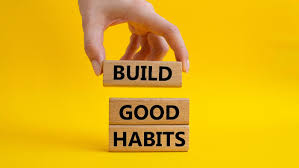
Over this past school year, my goal for Peak Pathways was to improve myself by learning about habits and applying them to my daily routine. I knew that I wanted to use the time in this class to better myself and felt like learning about habits would be a good step in the right direction. During this project, I read Atomic Habits by James Clear, started journaling, and began implementing new habits.

A key point I took from Atomic Habits was focusing on systems rather than goals. For example, rather than saying “I want better grades”, I focused on building study habits like studying for 20 minutes a day leading up to an exam and organizing my assignments ahead of time to keep myself on pace. These small actions didn’t feel overwhelming, which made them easier to stick with. Over time, they became automatic, and the results showed.

Another impactful thing I learned from Atomic Habits was how it made behavior change feel simple and achievable. It explains how habits are driven by cues, cravings, responses, and rewards, helping me understand my actions more clearly. Instead of relying on motivation, it showed me how to shape my environment to make good habits easier to form. Even small changes, like keeping my phone on my desk at night, made a difference. It also emphasized focusing on identity, or becoming the kind of person with good habits, which gave my project a deeper purpose.

One of the first habits I adopted was journaling. At the beginning, it felt awkward. It felt like I was forcing myself to write when I had little to say. But over time, journaling became a space for reflection rather than an obligation. I used it to track my progress, clarify my thoughts, and hold myself accountable. Writing regularly helped me notice patterns in my behavior, both positive and negative, which made it easier to adjust and improve.

Another important concept was habit stacking; attaching a new habit to something I already do. For example, I started journaling right after brushing my teeth at night. Linking the two made it easier to remember and more likely that I would follow through. After this, I started to plug my phone in and leave it at my desk for the night, rather than keeping it right next to my bed. Over time, these small routines built on each other, creating a structure that made my days feel more productive and balanced.

Of course, the process wasn’t perfect. There were times when I fell off track or lost motivation. But instead of giving up, I learned to focus on consistency rather than perfection. Missing one day didn’t mean failure; it just meant I was starting the next day again.

Looking back, this project taught me that change doesn’t happen overnight. It’s the result of small choices repeated over time. By committing to simple habits like journaling and being more mindful of my routines, I built a stronger sense of discipline and self-awareness. What began as a school project became a lasting part of my life.

The Mirror was established in 1927
© 2015-2022 by the Staff of The Mirror
The Mirror's Policy Manual and Style Guide.
The Mirror is funded by gifts to the Northwood Fund. Thank you.