New Hampshire Showcase a Learning Experience for Soccer Teams

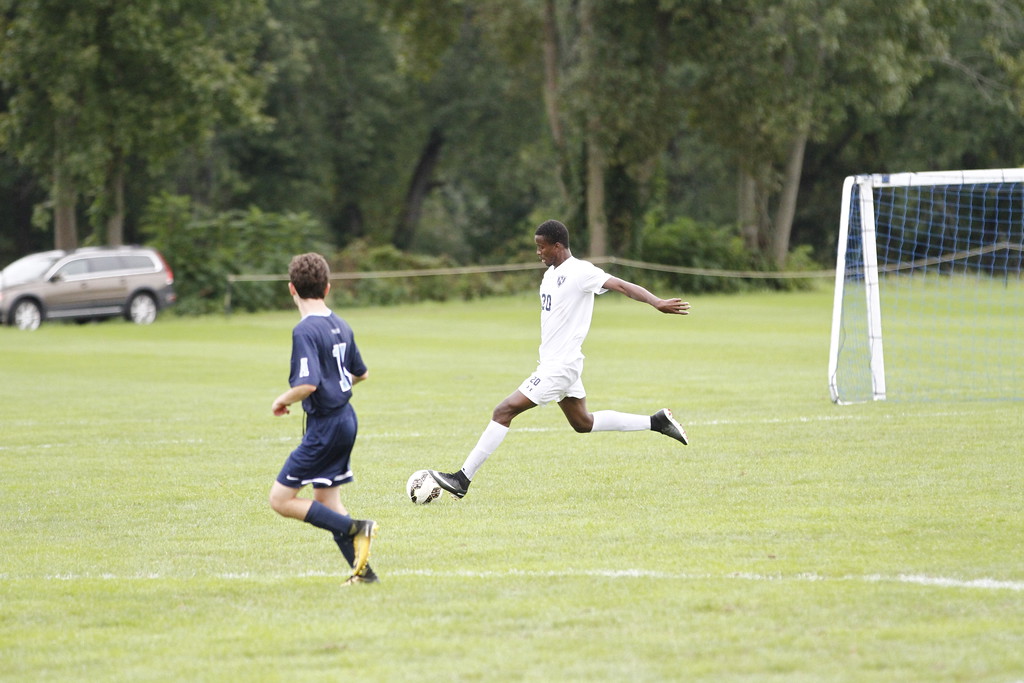
Illustration: Northwood Soccer (Instagram).

Over the last weekend, the soccer teams hosted the Black Rock FC Winter Indoor Cup & Showcase in New Hampshire, which took place between the 11th and 12th of February. The team left Lake Placid on the 10th of February and, after a 5-hour bus ride, arrived at Merrimack, New Hampshire.

The first day of the showcase was a challenging beginning for both the U19 team & the U17 team. The U19 team started the weekend with a tough game against High Mowing but could not score. The boys fought hard and created many chances but couldn’t capitalize on them. The U17 Team started off the weekend with their hardest opponent, the New England Revolution, an MLS Academy, and one of the country’s best teams. The game started off with the Black Rock team dominating the first 10 minutes, with Mitch Baker ‘25 breaking the deadlock, opening up the score to make it 1-0 with a beautiful goal assisted by his teammate Leo Doyle ‘25. However, Baker’s goal wasn’t enough to get the win against the Revs, and they came back, scoring two goals, and won the game 2-1. “I felt very excited to play against a top team, and I realized that they’re not better than me, and I’m as good as them, but they just play in an academy,” Machai Davis ‘25 said with a lot of confidence. The U19 team had one last game against Valencia CF, where Black Rock FC came back from behind after being down 1-0 and won the game 4-1. The players who scored: Sam Knauf ‘24, with two goals; Andres Vitteri ‘24, with one goal; and Aly El Mofty ‘23, who scored his first Northwood goal.

The second and final day of the showcase was a thrilling day. The U17 team first competed against IHC. They were exhausted from their previous game and lost the game 4-2. The goals scored by Baker ‘25 and AJ Etumnu Jr. ‘25. The U19 Team wrapped up their weekend with a significant game against the New England Revolution but unfortunately lost 1-0 despite strong performances from Andres Viteri ‘24 and Sachiel Ming ‘24. The U17 team wrapped up their weekend with another game against IHC, but this time came out on top with a 2-1 victory and goals scored by Mitchell Baker ‘25 and Diego Green ‘25.

“Over the weekend, the boys didn’t put out their best performance. We let down our expectations, but fortunately, we got a good understanding of what we need to work on over the next week or so. We will focus on these things in our training to ensure we are prepared for Manhattan. For me, the standout players were Elm Penti ‘24, who made some great saves, keeping us in the games, and Baker ‘25 up top scoring every game,” expressed Koah Paye ‘24.

The Black Rock FC will travel to Manhattan next week.

“Return to Auschwitz” Filmmaker Speaks to Students

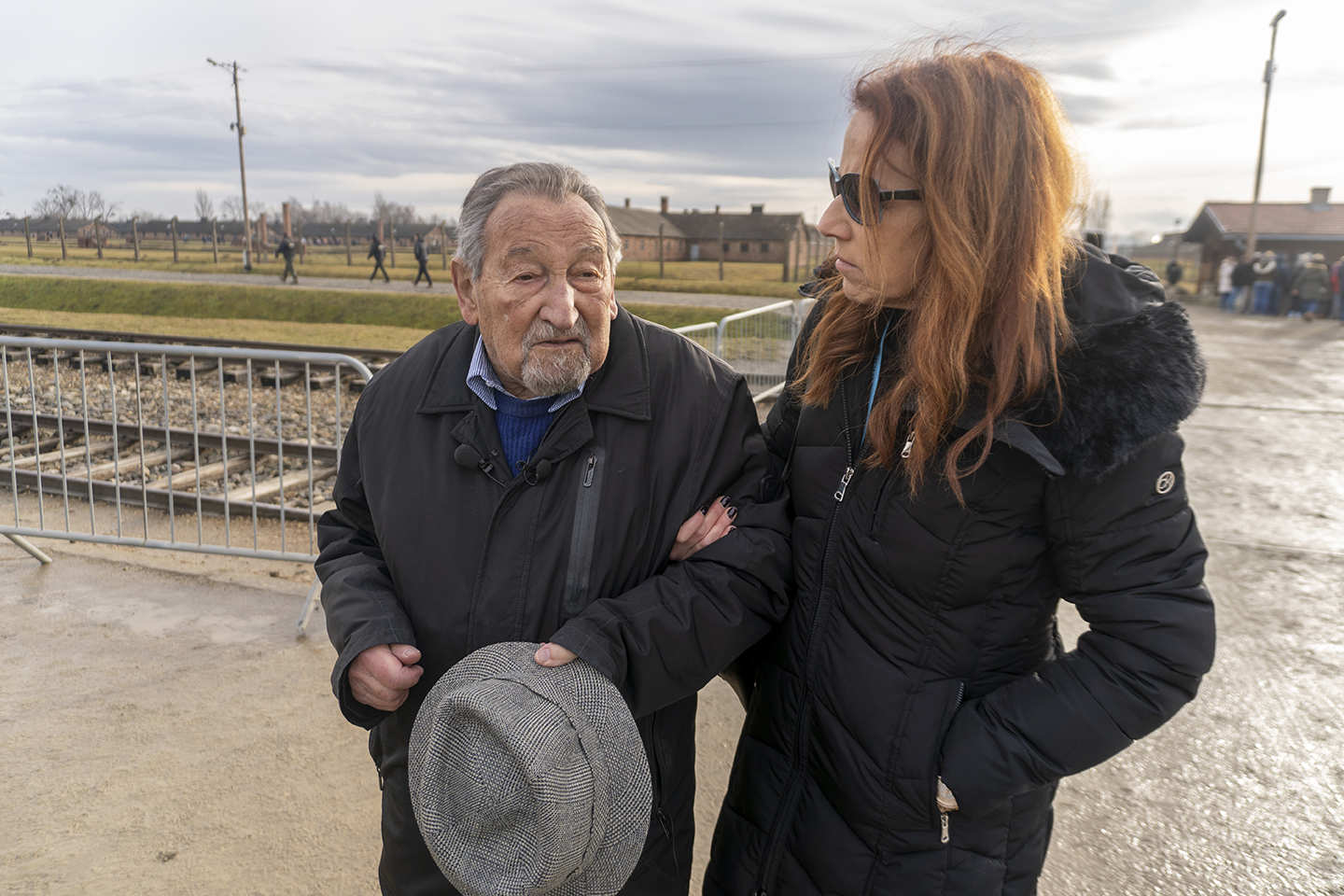
Vladimir Munk with filmmaker Julie Canepa. (Photo from “Return to Auschwitz: The Survival of Vladimir Munk”)

At a recent Monday Seminar, Northwood School experienced an enlightening talk by Julie Canepa on Vladimir Munk and his incredible story. The intention of this seminar was to inform and answer any questions that Northwood students and faculty had on Munk’s life story. To provide context for the seminar, students previously spent class time watching Return to Auschwitz: The Survival of Vladimir Munk in their respective history classes. This documentary is about Holocaust survivor Vladimir Munk, who returns to the infamous Auschwitz concentration camp 75 years later.

The film follows Munk as he shares his story and experiences in the Holocaust. Throughout the documentary, Munk reflects on the horrors he witnessed and how they have impacted his life since. He also speaks about the luck involved in his road to freedom and how he found love amidst the turmoil. Most importantly, he talks about the life he lived beyond his time spent in the concentration camps. It gives a refreshing look into the adaptation of the human spirit. The documentary is a powerful reminder of the human casualty of the Holocaust and the importance of preserving its memory.

Julie Canepa lives and works in Plattsburgh, about an hour north of Northwood School. Humanities department chair Ms. Heather Odell noted that Canepa’s proximity made it possible for the filmmaker to visit Northwood and “provide us with a first-hand look at what surviving the Holocaust really meant,” Odell said.

“Return to Auschwitz: The Survival of Vladimir Munk” was shown on PBS and is available for rent on Amazon Prime.

Julie Canepa met Vladimir Munk at Meadowbrook Healthcare, a skilled nursing care facility in Plattsburgh where Mr. Munk lives. Ms. Canepa performed a mini concert there, and afterward, she learned that Mr. Munk was a survivor of the Holocaust. Ms. Canepa then revisited Mr. Munk to talk about his story, which soon became a regular occurrence. She began to learn more about Mr. Munk and formed a powerful bond with him. Fast forward, Mr. Munk received an invitation to Auschwitz for the 75th Anniversary of the Liberation of Auschwitz, along with a guest of choice. Mr. Munk was hesitant to make the long journey but agreed and invited Ms. Canepa to accompany him. She shared this emotional trip with Mr. Munk. She filmed it along the way, incorporating multiple informational points of view through the concentration camps with knowledge known to only Mr. Munk.

Ms. Odell and Academic Dean Ms. Noel Carmichael were the leading force behind making this possible. They believed in the necessity to bring light to this survivor’s story and continue the memory of those who survived the Holocaust and those who fought trying. Ms. Odell said the goal for bringing in Julie Canepa to speak about the documentary “was for students to be able to form a personal connection to the memory of the Holocaust. When historical events occur before students are old enough to derive meaning from their significance, these connections are paramount in keeping history alive.” Mrs. Odell talked about how her classes were affected by this experience and said, “Students have written Mr. Munk letters, inquiring about his favorite football club to what it was like to relive Auschwitz. The Northwood community has kept our conversation alive by engaging in conversations about what life was like during WWII and the Holocaust. Students have also commented on Mr. Munk’s energetic nature and what it takes to turn 98, which he will do at the end of the month.” Not only did Munk’s story alter some of the students’ previous perspectives, but it also affected Ms. Odell herself. “Mr. Munk’s story gave me an opportunity to revisit this impactful time in history. His life journey is astounding, and we have so much to learn from his courage. I’m in awe of his resilience, bravery, and intellect. There are no words to capture what Mr. Munk has endured. Listening to his narrative is a privilege.”

The events and specifics of Munk’s story were striking to many students. “It affected me quite a lot. I saw what he had to go through, and I empathized for him,” Mitchell Baker ’25 said. Baker also thought that Canepa coming to speak added value to the learning experience. “It made it more personal…her actually being there and telling the story made it feel like it was real, rather than watching it on just a TV or reading out of a textbook. It helped me engage more.”

Multiple other students also agreed that the inclusion of Ms. Canepa in the seminar added a realness to them. “It was a very eye-opening experience,” A.J. Etumnu, Jr. ’25 said.

Introducing “Aussie Rules Football,” the Greatest Game on Earth

Photo: Darrian Traynor/AFL Media, via Getty Images

Being from Melbourne, Australia, I feel that it is my duty to introduce you to the best football game on earth—not American football (NFL), not rugby, not soccer but Australian rules football (AFL). It is the best game on the planet! Colloquially known as “Aussie rules” or “footy” and professionally played only in Australia, Aussie rules is the No. 1 football code in most states of Australia (New South Wales and Queensland play Rugby). It is a winter contact sport played between two teams of 18 players on an oval field with an oval ball. The objective is to score more points than the other team. The goals consist of 4 vertical posts at each end of the ground. If you kick the ball between the middle posts, it’s a goal (worth 6 points) and if you hit a post or kick the ball between the central and outer posts it’s a behind (1 point). Players can kick or handball the footy but can be tackled from all directions by the opposing team. The game consists of four 20-minute quarters and is highly entertaining.

Aussie rules football has the highest attendance and viewership of all the sports in Australia and the Australian Football League (AFL) is the sport’s fully professional competition. Its origins trace back to 1858 as a game invented to keep cricketers fit during the off-season. The first Aussie rules match was played in 1858 between Melbourne Grammar School and Scotch College.

Photo of GMHBA Stadium in South Geelong, Australia from exxentric.com

The most popular team in the AFL is the Collingwood Magpies (Black and white stripes). Collingwood actually has an American player, Mason Cox from Texas on its team.

As kicking the ball (or “punting”) is a big part of the game there are currently ex-AFL players now playing in the in the NFL as punters. Michael Dickson plays for the Seattle Seahawks, Arryn Siposs for the Philadelphia Eagles and Mitch Wishnowsky plays for the San Francisco 49ers. The most successful AFL player in the NFL was Darren Bennett who played AFL professionally before moving to the NFL and signing with the San Diego Chargers. As a former Aussie rules player, and considerably larger than most specialist kickers in American football (6’5″/1.96 m, 235 lbs./106.5 kg), he did not shy away from physical contact on special teams. This willingness to hit, rare among kickers, was never more evident than when he knocked an opposing punt returner out cold in his rookie season. Bennett was inducted into the Chargers Hall of Fame in 2012.

Photo: an Australian Rules Football (sportsmatik.com)

Aussie Rules is more than a sport Downunder. It’s an obsession and ingrained in the Victorian culture alongside Vegemite and good coffee. Media follow and discuss players’ form; people do footy tipping and play Supercoach (Fantasy teams) and discuss games in great detail. Grand Final day is even a public holiday in Victoria!

I grew up with a strong passion for Australian football and I strongly believe if Americans watched the game with an optimistic mindset, they would find it the best sport ever created. Unlike the NFL, players are on the field for all plays and can run up to 10 miles per game.  The game features numerous physical contests, spectacular catches (marks) and hard running, sprinting and possession chains to produce an entertaining, high scoring sporting match. Nothing beats being at the Melbourne Cricket Ground (MCG) with 90,000 fans cheering for their teams. The atmosphere is electric.

Do yourself a favor and watch a match of AFL with an Aussie who can explain the rules. The season starts next month. Once you know what’s going on, you’ll love it!

Promising New Athletes Help Grow Nordic Ski Team

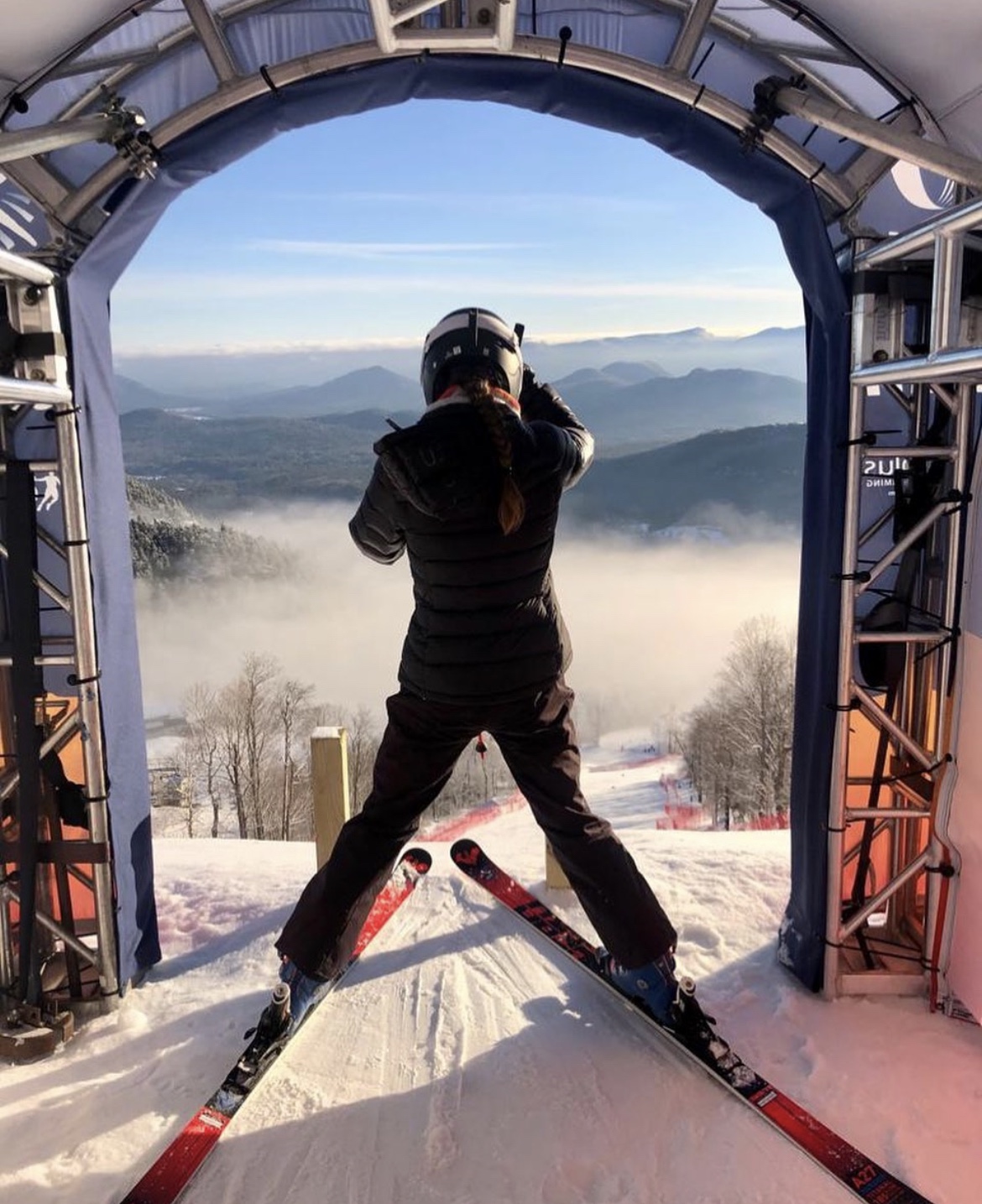
While the Northwood Soccer and Hockey teams have been getting a lot of attention, the Northwood Ski program has also been building and accomplishing great feats. After all, our school is in Lake Placid, home of two Winter Olympics!

Led by the Director of Skiing, Tommy Biesemeyer, Northwood’s ski team of 26 students comprises 11 girls and 10 boys in the Alpine and 5 students in the Nordic ski teams.

Nordic skiers Daven Linck ’25, Sophia Kelting ’23, Bella Wissler ’23, and Abigail Van Dorn ’25. (Photo: Northwood NYSEF/Instagram).

Alpine skiing is the standard type of skiing with steep slopes, skis with metal edges to cut and carve into the slopes and the rigid boots fully locked into the ski. Nordic skiing is often referred to as cross-country skiing, where the terrain is not as steep, the skis are narrow, and the bindings allow the heel to remain free.

Coach Biesemeyer (or “BZ”) joined Northwood, having been a professional racer for 12 years and represented the USA at the 2018 Olympics. Northwood School also has a longstanding relationship with the New York Ski Education Foundation (NYSEF), and all the student-athletes are members of this body. NYSEF is the only Gold Certified club in New York State and provides support and opportunities for athletes to further their snow sports careers. The Northwood Ski program has grown since its origin in 1950, and the latest crop of talent has added greater depth to the team. In particular, the Nordic team welcomed 3 new students this year—Daven Linck, Abigail (Abby) Van Dorn and Jack Kroll, all sophomores.

“The Nordic program here at Northwood is growing; it has changed over the past 2 years. Last year it was just Sophia Kelting and me, and we were kind of forerunning how the program would look for a bigger team. Now that the team is growing, it is running smoothly and helping us to be stronger skiers,” says Bella Wissler ‘23. “With Daven, we now have a male skier on the Northwood Nordic team. He is a strong skier and has been doing extremely well this year. Abby joining the team this year added depth and she is a biathlete (skis and shoots) which is pretty cool! So, we have two biathletes which is the most Northwood has ever had,” Wissler notes with passion.

Kelting adds, “We are also hoping to kind of advertise and get some interest for more kids to join the program here and the team at Junior Nationals this year in Alaska. We are hoping for some good results this year to help promote the school. We have been skiing with Daven and Abby for a very long time. They are also from Lake Placid and Saranac Lake so it’s not a huge change for us. It’s been very good having them here.”

The team’s strength was on show at the recent Empire State Winter Games, held in the region on 2-5th February. It is the largest Olympic-style winter event in the Northeast and Northwood School was ably represented in the Nordic events by Sophia Kelting, Abby Van Dorn, Daven Linck and Bella Wissler. Over 3 days, athletes of all ages competed in 23 winter sports, including sliding sports, figure skating, sled hockey, winter biking, Alpine and Nordic skiing.

The cross-country skiing was held at Mt. Van Hoevenberg and the Nordic team competed in 2 events. Again, for the non-skiers, there are two methods used in cross-country skiing. The first is the classic method, a technique in which the athlete’s skies move back and forth in a parallel motion inside parallel grooves of snow. The freestyle technique is the fastest of the two methods, where the skier moves their feet from side to side in a manner resembling ice skating more so than classic-style cross-country skiing.

In the 10km Freestyle mass start (everyone starts at the same time) event, Kelting won the U20 Women’s comfortably in a time of 32:41 minutes. Van Dorn placed 3rd in the U18 Women’s and Linck placed 4th in the U18 Men’s event.

In the 7.5km Classic Pursuit (skiers start according to results in previous races), Kelting won the U20 Women’s, Van Dorn placed 2nd in the U18, a mere 4 seconds from Gold, and Linck placed 3rd in the U18 Men’s event.

Many would say that cross-country skiing is more difficult than Alpine skiing because moving forward on level terrain or up steep-hill ski trails needs considerably more power, endurance, and speed, making this one of the most grueling cardio events invented. The team trains extremely hard!

“This Nordic season has been pretty good; we have completed all of our mid-Atlantic National qualifying races for the season. We have one more New England Eastern Cup left before we leave for Nationals in Firbank, Alaska. The season has been going very well!” exclaims Wissler.

Kelting states “I’d have to agree, we have a pretty strong team, NYSEF and Northwood are in a great place. The program is definitely growing and is a lot stronger than last year due to our newcomers.

Junior Nationals is the next big thing for the Nordic program at Northwood. We leave March 10th and then after that we are done for the season. Hopefully next year, after Sophia and I graduate, there are more Nordic skiers at Northwood. There has been some talk about more ski jumpers coming to the Nordic Northwood team.”

The Northwood Nordic team is excited about the future and Sophia and Bella should be proud of the legacy they will leave. The Mirror looks forward to watching this team at the Nationals and wishes them the best of luck!

Kilimanjaro LEAP a “Once in a Lifetime Experience”

Photos from the second day of the LEAP Kilimanjaro NOC hike in January 2023. (Eric Adsit adsitmediaworks.com)

This past January, the FISU Games were held in Lake Placid. Northwood was used as a venue to house the participating athletes, meaning students would have to be off campus for a month. During this time, LEAP programs, which would usually take place in May, were offered in January. These January LEAP courses were heavily subsidized by the revenue from FISU, making them more affordable than usual. One of these trips was the Kilimanjaro LEAP trip. On this trip, ten students traveled to Tanzania with three faculty, a former Navy medic, and a professional photographer, and successfully made it up to the highest summit in Africa, Mount Kilimanjaro. This article will tell the story in depth, day-by-day, not only of the Kili expedition but also of the other experiences that made this a once-in-a-lifetime trip.

The preparation for this trip started over the summer. Around mid-July, the loose details of the trip were shared with six returning Northwood students who had experience in the Northwood Outing Club from the previous year. All six expressed interest in the trip, and the majority selected January as the preferred date for holding the expedition. Come September, when more of the details were ironed out, LEAP Director Ms. Marcy Fagan invited other students who wouldn’t have athletic obligations during the January break. Ten students signed up, including myself.

Then training began, consisting of an initial run up Cobble Hill, behind the school, and progressed to hikes up various High Peaks, and later in the season, ski tours in the surrounding glades and up the Whiteface Toll Road. The final logistical issues, including required vaccinations, were settled in December. After a final briefing on the gear required, the students went off to break. The actual trip began on the morning of January 14th. Two flights beginning at JFK, with a layover in Nairobi, Kenya, before arriving in Tanzania at Kilimanjaro, made for an almost 30-hour travel day. Upon landing, the group traveled to the hotel, where we got a much-needed good night’s sleep.

On our first full day in the country, we had our final briefings on how the trip would go, provided by our guides with Boma, the company organizing our stay in Tanzania. We explored the neighboring town of Arusha, ate lunch at a local restaurant, and went to the Masai Market, where we gained some experience bartering for souvenirs. Afterward, we returned to the hotel, where the Boma guides did final gear checks to determine what the group would need to rent.

This is a good time for me to introduce the guides. Prosper, the head guide, had grown up on the mountain, starting as a gear porter, and gradually worked his way up the ranks, going to school and becoming one of the most knowledgeable guides on the mountain. Joining him were guides Tim, Chris, Joyce, and my favorite, Safara, who carried around a speaker from which he would play music throughout the trip. After being introduced to the guides, we went to bed, preparing for an early departure to the trailhead gate.

The following day, we finished packing up our gear and had roughly a 3-hour bus ride to the Londorossi Gate, the trailhead of the Lemosho Route, which we would take up Kilimanjaro. On Kilimanjaro, there are a variety of routes to reach the summit. The easiest route, the Marangu route, known as the Coca-Cola route for its popularity, approaches from the east and takes eight days; it is the only camp where fixed shelters house clients. The second-most popular, the Machame Route, takes five days and approaches from the Southwest. The Rongai Route is the only one that approaches from the North and uses separate camps from the rest. The Umbwe and Mweka routes come from the South and have the steepest verticals of the trails on the mountain. Finally, our route, the Lemosho Route, takes seven days, approaches from the West, and is the longest and most gradual of the routes. Lemosho also allows for the best body acclimatization to the high altitude, which is why our group chose this way.

This slideshow requires JavaScript.

After arriving at the gate, we ate lunch and then hiked a short 2 hours up to the “Tall Trees Camp,” gaining 2,000 feet of elevation in the process. This was the only one of our camps located underneath a tall canopy, and we saw groups of white monkeys jumping around in the trees above us as we arrived at camp. After eating dinner, we climbed into our tents and slept.

This slideshow requires JavaScript.

After an early breakfast the following day, what would end up being the longest hike of the trip commenced. On that day, we hiked 10 miles, gained 4,000 feet of elevation, and went to Shira 2 camp at 12,750 feet. We ate lunch at 11,000 feet along the way and crossed part of the East African Rift. We reached camp around 5:00 p.m. and got our first view of the summit soon afterward. This was also the first time we could see below the mountain at night; the lights in Moshi shone up to the camp as it was a clear night.

This slideshow requires JavaScript.

The next morning, we began the most challenging day up to that point. That day, we were to hike from Shira 2 camp to Barranco Camp, at roughly the same elevation. However, the route to get there would take us up to 15,000 feet, where we would eat lunch at the same elevation as the summit base camp, Barafu. This “climb high, sleep low” tactic helps the body acclimatize to the altitude. The route to the lunch spot, known as the Lava Tower, was almost straight uphill and took us about 5 hours to complete. On our final approach to Lava Tower, it began to rain, and by the time we reached our mess tent, it had changed to hail. The hail stopped as we finished lunch, and we were smoothly on our way down to Barranco by around 1:30 p.m. Our hike to Barranco took about 2 hours and involved a scramble down a waterfall and then a 2,200-foot descent to camp. We got in around 4:00 p.m. As we got to camp, we had a view down the valley and of the Barranco Wall, which would comprise a large part of the next day’s hike. We also got an even better view of the summit, including a vast avalanche crown (which also shows up on satellite maps).

At this point, one of our group members, Mrs. Carmichael’s husband, Chis, got sick, and our guides determined they could not continue. However, to leave the mountain, they would have to go up to the next camp, where they could access the descent trail.

This slideshow requires JavaScript.

The next day, we hiked from Barranco to Karanga camp, the last leg before Summit Base Camp. The hike began up the infamous “Barranco Wall,” the most technical part of the climb. “I thought it was very fun and tested our strengths since it was a couple of days in. It was one of my favorite parts of the entire hike. It was interesting how the porters and our group had to work around each other, but it was impressive how they could climb the wall with all the stuff on their back,” said Avery Novia ’24, one of the students who summited. The wall took about an hour to scramble up and over. The porters made it look easy; some did it without holding onto anything. It was a nerve-wracking part of the climb but also surreal to experience.

Once we made it to the top, it was a series of ups and downs in the pouring rain, culminating in a 600-foot scramble up to camp. We got in around 1:00 p.m. when the sun finally came out. We spent the afternoon lounging outside, taking photos in front of the sign at the camp, and playing cards. We even built a rudimentary bench (which consisted of two piles of rocks and a 2×4) at the camp.

This slideshow requires JavaScript.

On the final day before the summit push, we completed a short hike from Karanga to Barafu, the summit base camp. We gained 2,000 feet of elevation, which put us at 15,100 feet to start the final ascent. We lounged around that afternoon, and the sun came out again. Many people brought their sleeping pads out of their tents, lying on the flat areas near the campsite. That night, we ate an early dinner and had our final summit briefing from our guides. We went to sleep around 6 p.m. and got some rest.

Later that night, we were woken up around 11:00 p.m. and proceeded to the Mess Tent for tea and biscuits before our final push. We organized our gear and then began our push close to midnight. We started the slow climb up 5,000 vertical feet to the summit. Hour after hour, switchback after switchback, the wind picked up, and the dust swirled, illuminating in our headlamps. We reached Stella Point, outside the crater and on the same ridge as the summit, as the sun rose around 6:15. After a quick stop at the point, we continued to the summit.

The elevation gain from Stella Point to the summit is only about 200 feet, but it was the most mentally challenging part of the trip for me. Any uphill, even if it was a slight incline, felt horrible. Moving barely faster than a crawl, we reached the peak. Immediately, packs came off, and cameras came out. We took pictures on our own, then with the guides, and finally, a whole group picture with help from another group.

The mood at the top was not one of jubilation but of exhausted relief. Most of us were just happy that it was all over. As we began our descent, it still didn’t dawn on us what we had just accomplished. We got back to Barafu around 10:30, where we slept. We were awakened at 11:15 a.m. and got moving toward the descent trail. Like most other itineraries on the mountain, our descent trail was via the Mweka route. We would pass by Millenium Camp, at 12,000 feet, en route to the sprawling Mweka Hut Camp, where we would eat our next three meals, along with our last night on the mountain. When we arrived at Mweka Hut, everyone was beaten to a pulp. Some of the group’s older members, including NOC director Bobby O’Connor’s uncle, had their knees take a beating on the descent. We hung out at the camp until dusk and then slept at 10,000 feet.

This slideshow requires JavaScript.

The following day, we awoke, had a quick breakfast, and immediately got on the trail. Once again, we descended back into the canopy. After walking steadily downhill for around 3 hours, we reached the Mweka Gate, and our hike was finally over. We collected our certificates, proceeded to a souvenir shop, where we got lunch, and then moved to the hotel. We arrived there around 5:30 and chilled out for the rest of the night.

After a relaxing rest day at the hotel, it was back on the move two days later. This time, it was west, to the town of Mto Wa Mbu, where we would camp for the final night before leaving the country. When we got there, we did a day-long safari in the Ngorongoro Crater, where we saw 4 of the “big five” (Lions, leopards, water buffalo, rhinos, and elephants). We also saw other animals like Gazelles, Wildebeest, Hippos, Zebras, and Warthogs. Afterward, we went to our camp and set up for the night. The camp was a hotel in all but name and accommodation; we slept in tents, but all equipment, including food, was provided. There was running water and electricity in all the common areas, which included a bar, restaurant, and an infinity pool.

This slideshow requires JavaScript.

The following morning we left for the airport after lounging till around 11:00 a.m. Before leaving, though, we made one last stop at a souvenir shop and then made the 3½ hour drive to Kilimanjaro International Airport, back in Arusha. We flew out around 8:30, made a tight connection in Nairobi, had a 15-hour flight, and were stateside around 6 in the morning. After clearing customs, Mr. Weaver was waiting with a bus, and we were at school, moving into our rooms around 2 p.m.

All in all, it was an incredible trip. It was historic in terms of the magnitude attempted. All 10 students and 15 of the 17 in our group made it to the summit.

Those who summited in our group were, by seniority:

  • Captain Bill O’Connor, U.S. Navy veteran
  • Marcy Fagan, director of LEAP at Northwood and biology teacher
  • Tait Wardlaw, former Alaskan mountain guide and current Northwood parent
  • Bobby O’Connor, director of the Northwood Outing Club (NOC)
  • Eric Adsit, professional photographer and owner of Adsit Media Works
  • Finley Donahue ’23
  • Avery Novia ’24
  • Wyatt Wardlaw ’24
  • Ashley Guevara ’24
  • Brian Brady ’24
  • Gus Garvey ’25
  • Colton Cushman ‘25
  • Alex Randall ’25
  • Sophia Sherman ’25
  • Uma Laguna-Curtis ’26

U19 Soccer Team Repeats at Far Post Showcase

The U17 and U19 Boys soccer team recently made their way across Lake Champlain to Burlington, Vermont for the Far Post Showcase. Coming off a great start to the season in Puerto Rico, the boys were excited for their first showcase back. The Northwood Soccer team split into three teams for this 8-per-side showcase, 2 x U17 teams and one U19 team.  

On Day 1 of the showcase, the U17-1s were set to face High Mowing U17 and Far Post U17, the U17-2s were set to face Far Post U17 and High Mowing U17, and the 19s were set to face High Mowing U19 and Far Post FC U19. The 17-1s went 2-0 to start the showcase. They beat High Mowing U17 5-0 with an energetic performance and did not slow down as they beat Far Post FC U17 6-1. The U17-2s also beat High Mowing U17 with a final score of 5-2 and drew 2-2 to Far Post U17 in a tight game. The U19s went 2-0 with a very tough 4-3 win over High Mowing U19 and cruised to a 3-0 win against Far Post FC U19 in a very comfortable win.  

After a successful first day of the showcase, all three teams were pumped and excited for Day 2. The teams had their last group stage matches before seeing who would advance to the final game of the showcase. The U17-1 squad had a much-anticipated game against the U17-2 team to see who will top the table and advance to the final game. The U17-2 team came out strong and energetic with a 2-0 lead, wanting to prove themselves against their older teammates. The U17-1 team was putting relentless pressure on the U17-2s, looking for any angle to shoot from, but the U17-2 team held off and maintained their excellent organization and defensive grit for most of the game. As the end of the game approached, the U17-2 team finally broke the barrier with a second goal following soon after.  

Coach Moodey referred to the U17-2 team as “Hungry and willing to do a lot to prove everyone wrong and beat the U17-1s”. Coach Martinez also commented on the game: “It was good to see both teams competing with each other and showing fight.” After the well-fought battle came to an end, the U17-1 team was named winners of their group as they only needed a draw to maintain that top position. The U19s suited up against Sea Coast U19 and needed a win to top their group, as they were down by a goal difference. After a very tight first 25 minutes of constant defending from Sea Coast, the U19s finally broke the deadlock, slotting one past Sea Coast. Following their first goal, the U19s went on to put 4 more past the Sea Coast defense.  

As both the U17-1 team and the U19s topped their groups, they would go on to meet in the final game to decide the winner of the Far Post Showcase. The U17-1s vs. the U19s was a much-anticipated game; it was present vs future, and the U19s felt they needed to put their younger teammates in their place. The U19s did just that, with the final score being 5-0. The U19s ended the showcase with Andres Viteri ’23 being the top scorer with 5 goals, Junior Happi ‘23 in second with 4 goals, and Ean Malay ‘23 with 2. Given the U17-1 team had to play the final straight after the tough match against their U17-2 teammates, it was clear there was fatigue in the younger group.    

The U19s were crowned champions of the Far Post Showcase, making the Northwood- Black Rock U19s three-time champions. Both U17s teams played great and had a successful weekend but ultimately fell short. Coach Moodey was happy with the weekend’s performances and how the team kept momentum from Puerto Rico. For the teams, the focus now shifts to next weekend. 

Humans of Northwood: Daniel Buchbinder ‘23

I came to Northwood to grow as a person and challenge myself academically and athletically. I hope to leave here closer to the goals I have set out to achieve. Over the past few years, I have had the opportunity to learn from Coach Cassidy, Coach Morris, and Coach Mallaro. The lessons they have taught me will expand beyond the ice, and I am grateful to have had those opportunities. I am still undecided about what I want to study in college, but I am leaning toward business. I will also be playing junior hockey next year before going to college. I will forever cherish the bonds I have created and memories that will last a lifetime, and the boys will be one of the things I miss the most.

As told to Aidan Lasky ’23. Photo by Mr. Michael Aldridge.

Die, Eagles, Die: A Step-By-Step Guide to Losing a Super Bowl

Greetings, young fellow. Welcome to Glendale, Arizona, where the names in the building are hot and the temperature is even hotter. You’ve just witnessed one of the greatest Super Bowls of all time. But why did the losing team end up on the wrong side? Let’s hop into the metaphorical classroom for a moment and let me regale you on how Philadelphia blew a 10-point halftime lead in the Super Bowl to lose to a 1-legged quarterback.

The first part of the formula involves its offense humming along like a song. Apart from a fluke defensive touchdown by Kansas City (thank you, vaunted offensive line, for your expert protection on that play), everything went according to plan. 24 points were scored on that Swiss-cheese defense by halftime. Even better, the Eagles’ defense showed us the secret to their recent success by injuring the other team’s quarterback for roughly the 3rd time these playoffs.

Everything was roses and sunshine for Philly fans at halftime: up by 10, as Mahomes was injected with a black-market cocktail of painkillers and chucked to the wolves, where he scored a touchdown on the opening drive of the 2nd half, wait, what? This isn’t part of the script. So, we’ve got a game again, haven’t we? This is when the Birds’ offense continues its domination by marching into the red zone but stalls out and kicks a field goal. Injured Mahomes responds with another touchdown to take the lead.

Hey, defense? Are you gonna do something or what? Don’t just stand there and try to break his ankles again, Jesus! No, I didn’t mean your defense, Kansas City! Because of this misplaced encouragement, Philly did something that is all but verboten in a shootout like this; they punted. The penalties for punting are often severe in these games. In this case, it came in the form of a 60-yard return by Gettleman’s baby and an arduous 5-yard touchdown drive by Kermit the frog to extend KC’s lead to 8 points. This is where Sirianni probably threatened to put out a hit on the offense if they didn’t wake up, so cue a long touchdown drive with a 2-point conversion to tie the game up with 5 minutes left. Unfortunately, Sirianni failed to motivate his defense while making his sideline threats. They bend, bend, and bend as the Chiefs push into field goal range. However, with 1:48 left in regulation, the Eagles have KC on a 3rd and 9. Even better, Mahomes threw it incomplete! Now, what could ruin this?

A fringe holding penalty to give KC an automatic first down and let them burn the Eagles’ timeouts. Sure, the call itself may have been entirely valid, but the refs seriously chose this moment to interfere? When there was so much backlash after the ending of last year’s Super Bowl? Kansas City, predictably, boots the game-winning field goal, and Mahomes breaks the internet for no reason for approximately the 36th time this season. One of the most obnoxious fanbases in sports gets their laurels to lord it over the rest of us, while another obnoxious fanbase gets to loot and pillage their home city in their version of the Wells Fargo rage room. The only positive to come out of this is that I wasn’t wrong when I predicted the Chiefs to win in my Super Bowl preview. Eagles fans, this is called Karma. Now run off to Cancun with the rest of the fallen, you bums.

I have another pick-me-up under the mistletoe for you guys, too. The Eagles now join an illustrious group of teams to have a double-digit lead at halftime of the Super Bowl, and still lose. The other team to have earned this dubious honor. Yes, the architects of 28-3, and 2016 Atlanta Falcons. Now that’s some fine company. Eagles, you deserve this failure. Now go jump off a pier.

Ski Team Has Productive January Break

The Northwood Ski team was active over the break with many different events. The FISU World University games provided an excellent opportunity for student-athletes to see the highest level of college ski racing at an International level. The Ski Team comprises many types of skiing, like Cross-Country Skiing, Ski Jumping, Freestyle, and Alpine ski racing. The Northwood team of 32 student-athletes had the chance to train, forerun, and watch these top-level athletes prepare and compete.

This slideshow requires JavaScript.

“The goal of integrating our program within the FISU games proves to be a catalyst to dream big because each of the FISU competitors was previously in the shoes of our student-athletes, and if our athletes stay focused on their goals, they will be able to compete on this International stage,” Director of Skiing Tommy Biesemeyer said when asked what the goal of this program was during the FISU games.

Northwood’s athletes participated in many events and further developed their skiing over this long break. The FIS men and women traveled to Sun Valley, ID, from January 5th – January 16th to have proper training when the training space was limited at Whiteface. The team had full-length GS and SL training sessions along with four FIS races at the end of their camp, where they had Olivia Levesque ’24 score her best FIS result to date, 60 pts. When they returned from Sun Valley, our team foreran the FISU Giant Slalom and Slalom races and had the chance to hand out medals during the medal ceremony.

The U16 group is Northwood’s largest group of snowsports athletes, and these student-athletes were located in Lake Placid during the FISU games, where they stayed with Carrie Wardlaw and NYSEF’s Winter Term. Their training consisted of six weekly training days, where they trained alongside FISU athletes. In addition, some athletes foreran and got additional training runs on the FISU Super G track, where they witnessed some of the iciest conditions we have ever seen at Whiteface. The whole experience provided a large volume of training, challenging situations, and exposure to World Cup conditions, which will pay off for their long-term development.

Northwood’s five cross-country and ski jumping athletes put in long days at Mt. Van Hoevenberg and the ski jumps, where they also foreran each day and trained alongside the world’s best collegiate athletes. The course preparation was immaculate and allowed these student-athletes to benefit from top-level conditions. These opportunities helped Northwood’s nordic athletes develop their fitness and skills.

We had one freestyle athlete travel to Gore Mountain each day with his NYSEF coach, and he also had the chance to forerun each competition, hitting the biggest jumps of his life. This opened his eyes to the next level and inspired him to focus on what he needed to learn to compete at this level. “Seeing him come back each day with a smile on his face inspired our staff to push our kids to set big goals,” Biesemeyer said.

So we are all wondering now what is next for the Alpine ski team. The U18 teams are currently participating in the U18 National qualifiers in Vermont. The U16 Team is training at home and preparing for U16 New York State Championships on March 3-5. The Nordic team is getting ready for Junior Nationals in Fairbanks, AK, and the Freestyle team is training at Whiteface and competing each weekend at Titus Mountain.

The Northwood Invitational is Here!

It is an exciting week here at Northwood School because this weekend marks the 43rd Annual Northwood Invitational hockey tournament. The tourney was pushed back this year due to the FISU Games use of the Olympic Center, but it is happening. All three hockey teams will be competing this weekend, and don’t worry, the schedule is posted below.

In the tournament, athletes will compete Friday through Sunday to have a chance to hoist the trophies. Teams from all over come to see if they can come out on top. Besides exciting hockey, alumni, friends, and student’s families come to watch and visit beautiful Lake Placid. An important side note is that the Prep Team will have their senior night on Friday, so show the graduating players support in that matchup.

This tournament would not be happening if it wasn’t for the fantastic work of Coach and Athletic Director Trevor Gilligan. He works extremely hard each week to put out the school co-curricular schedule, and he has done the same for this tournament. Coach Gilligan said, “The Northwood tournament is always marked on the calendar as an exciting weekend. Not only do all three teams have the opportunity to compete at home for a trophy, but the weekend provides a great getaway for families and alumni to enjoy Lake Placid in the heart of winter!”

As you can see, the school takes a lot of pride in being able to host this amazing tournament. It means a great deal to the players and the school that people come to support the teams, so if you are free, you will not be disappointed in the competition this weekend. We wish the Huskies luck in ending the weekend with their respective trophies. We can’t wait to see you all there. Go Huskies!

This slideshow requires JavaScript.

The Mirror was established in 1927
© 2015-2022 by the Staff of The Mirror
The Mirror's Policy Manual and Style Guide.
The Mirror is funded by gifts to the Northwood Fund. Thank you.