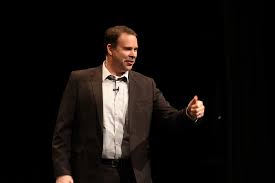

Executive Coach Marc Geuvermont came to Northwood on Thursday, March 19th, to lead a special seminar on Leadership. He is now a leadership coach for the Utah Mammoth hockey team and has a history of working with 5 different NHL teams.
He talked about four types of leadership styles: the “Driver” style fits people who take the lead quickly, and others listen to what they say. The “Influencer” style suits someone who does rather than talks; they lead by example. The “C Primary” fits people who follow a process and like to improve gradually, every day. People can be multiple types of leaders at the same time, but most are naturally 1 or 2.
Mr. Geuvermont spoke about discipline over default. He is referring to people needing to adapt and shift their leadership style (discipline) rather than sticking to a single style (default). He said, “When I was your age, I thought I had to be all things to all people.” He went into further detail, explaining that when his leadership style is not supportive, he shifts to support others. Then, he went on to say, “I will never quit on you; therefore, I will never fail.”
He gave students advice on how to have a successful business in any profession, because he himself has failed several times but is now running a successful business. Mr. Geuvermont said, “If anything, you are a product that is going to go into the marketplace to add value, whether you pursue sports, business, or anything of interest to you. You must solve a problem for your client that they cannot solve on their own. Make them make more money or save them more money. Make life easier for them.”
We students learned that you cannot go from a problem to an outcome. You must figure out the root cause, then develop the recipe to fix it. A team’s root cause can be that they do not know how to lead. If that is the case, you need to tell them what leadership skills they need, along with a specific recipe. If you understand and fix the root cause of the problem, the problem goes away. If you want to change the results, you must change the culture. The leader is the one who changes the culture.
Mr. Geuvermont ended the special seminar by telling the students what to do about failure and when life gets rough. He said, “An event will happen that is bad, and you will start to feel many emotions, from disappointment to being extremely angry. Everyone goes through this. You have no control over that event, but we carry the e options with us, as if we had decided to be unsuccessful. We have no control because the mistake was in the past. We live in the present. Emotion will be born out of the event, which is okay, but they are only supposed to alert you that something is not right. Your job is just to read your emotions and respond appropriately. You have full control of how you think and feel about it, as well as how you respond. You can respond positively and supportively to your team, or you can respond negatively and break your hockey stick and rage, but then that makes event number 2. The whole team will start to break apart if you respond negatively. Three steps to respond positively are: first, take three deep breaths; your brain needs oxygen, and when you are emotional, you breathe shorter, making your decision-making skills worse. Second, find what is important now. Third, respond with your strength. This is how a team responds quickly to the events that happen.”