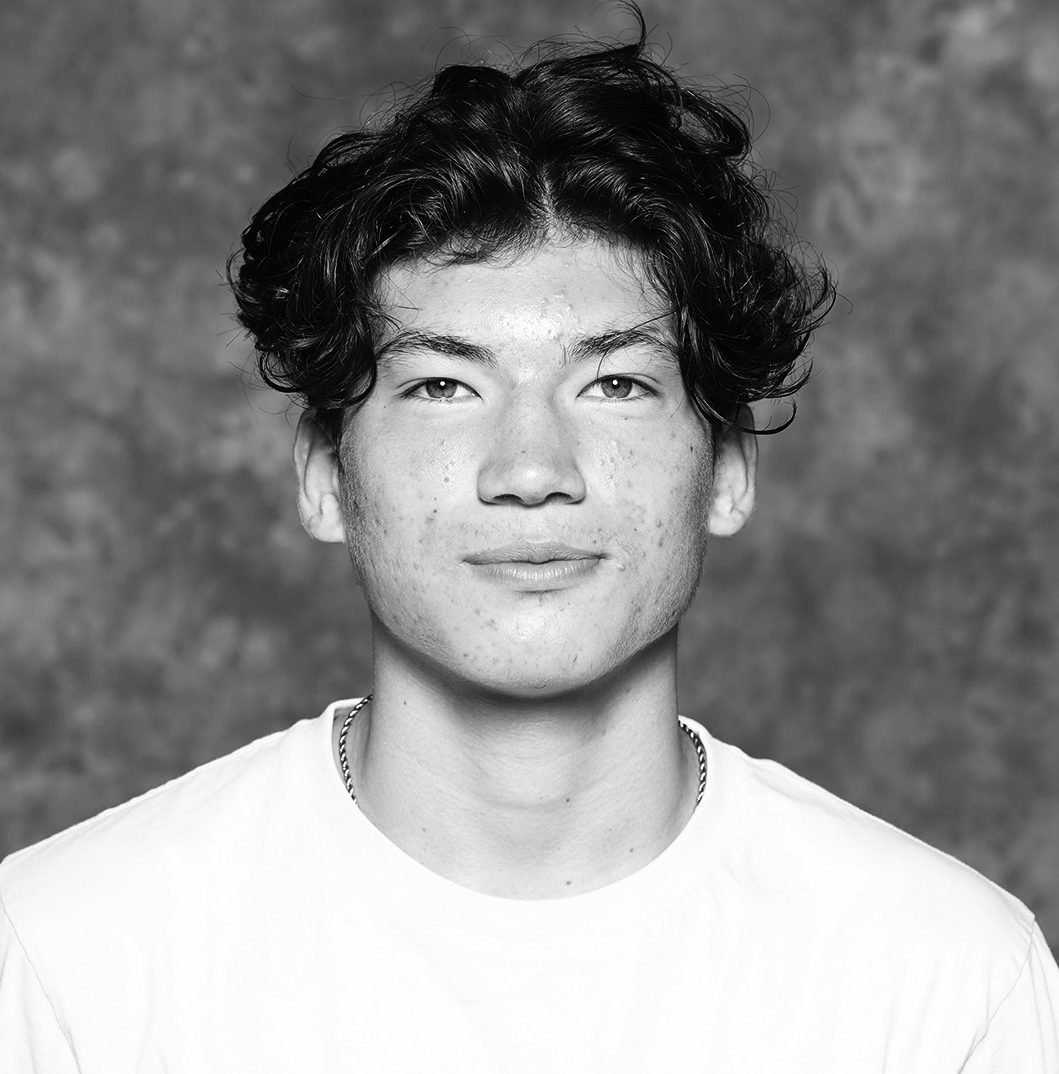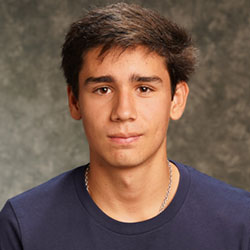
Humans of Northwood: Diogo Charraz ‘25

“If I didn’t play soccer, I would do track and field, like a 100-meter dash sprinter, or be a basketball player. Because, you know, my shooting abilities are incredible.

“I remember on my first day, I was so lost.  I didn’t know where to sit, I was panicking. I got out of the dining hall doors, and I looked up and saw Rapha ‘23  calling me over. From that point on, I knew that everything would be all right because even if I was not in my comfort zone, I was always going to have people around me, helping me get used to this school and helping me get better. I believe this is something that showed me what Northwood was about.

“When I want to escape from stress and just zone out. I usually talk to my parents or listen to music. I also like to go on the field and dribble the ball while listening to music. This feeling allows me to go back to when I was younger and didn’t have much to think about. Life was juggling and having fun with the ball. Because now, every time we play, it’s like getting serious, and we can’t have fun as much as before.

“If I had to give a shout to someone in my time at Northwood, it would be Cedric Lemaire ‘25, because I think he cares about this team and school. He is not going by and wasting his time here; he’s trying to make an impact and change things for the better.

“A piece of advice I’d give to a student here at Northwood: do not overthink, and don’t give unnecessary attention or value to things that don’t matter. If bad things happen once or twice, they won’t define you as a person. So don’t pay much attention to what goes wrong, focus on what you can control.”

As told to Cedric Lemaire ’25. Photo by Mr. Michael Aldridge.

Idiot’s Guide to Soccer: The Penalty Kick

Very few moments in soccer rival the drama of a penalty. It is often a game-deciding moment that is just between you and the opposition’s goalkeeper. For those unfamiliar with the game’s rules, a penalty occurs when a foul is committed inside the 18-yard box on a soccer field. The ball is then placed twelve yards away from the goal in the center for an uncontested shot. While it may seem simple, the moment’s pressure is immense and the true test of a player’s mental strength.

Penalty kicks are as much about nerves as they are about skill. Standing alone with the game on the line can unnerve any experienced player. Psychologists call it “paralysis by analysis” when players overthink instead of trusting their training. Composure and confidence are keys to success. Mitchell Baker ‘24, a former top-scoring striker for Northwood, comments, “Penalties are all about pressure and mentality. In training, everyone can score a penalty because there is no pressure, but at the moment when there is pressure on, it’s about how confident you are to hit the ball with power top corner.”

Mitchell Baker 24’ taking a penalty at Northwood. Photo by Mr. Michael Aldridge.

Every penalty taker has a pre-shot routine to stay focused. Some take a deep breath, others adjust their socks, and a few will pray. These rituals, like Cristiano Ronaldo’s wide stance or Lionel Messi’s calm pause, help players find their rhythm and execute under pressure. Each player has their own; Jace Donawa ‘25 begins his routine by setting the ball on the penalty spot. “Next, I take five steps back and one to the right. Then, when the referee blows the whistle, I curve my run to the ball’s left to set my shot up for a right-footed shot. Then I stutter three steps before the ball, and after that, I put it where I want to,” he states.

Statistically, penalties aimed at the top corners are the hardest to save, yet many players prefer low shots for safety. Matt Sheldon, a professional soccer player and YouTuber, created a list of a few tips for penalties based on years of studies. One tip was as minor as not turning your back to the keeper.  Psychiatrist Geir Jordet spent five years analyzing every single penalty shootout from all major tournaments, finding that if you turn your back, you are much more likely to miss your shot. At high levels, goalkeepers often don’t have time to react once the ball is hit, picking a side to dive—either left or right. This makes the center of the goal a surprisingly effective place to shoot. Many things play a big role in penalties that differ from other shots in the game, but confidence in execution often makes the biggest difference.

The penalty kick is a combination of art and science.  At Northwood, students are mastering not only the technicalities of penalties but also how to navigate high-pressure moments in life. Success comes from trusting your routine, embracing the pressure, and taking the shot. At Northwood School, penalty kicks are more than just a soccer skill—they’re a lesson in handling life’s pressures.

Read other articles in the “Idiot’s Guide to Soccer” series.

Humans of Northwood: Leo Doyle ’25

“I tend to overthink a lot of stuff. Piano focuses me on the instrument.

“My name is Leo Doyle ‘25, and I’m from Tokyo, Japan.

“Piano is something I picked up when I was out for a long time with my surgery, and I think it’s one of the only things other than football that calms me and puts me in the present.  Just focusing on pressing the instrument’s keys helps, and I really enjoy it. I played when I was six, and I enjoy picking it back up and learning some songs.

“If I played any sport besides soccer, I would play rugby because my dad used to play rugby growing up, and it’s a really big sport in Ireland. I also played a lot of rugby until I was around the U14 level. I really enjoy it. I love watching it with my family. It gets passionate, and I just love the respectful nature of the sport as well as the aggressiveness and passion about it.

“My biggest piece of advice would be to just do what you can on that day. Don’t read too much into the future or the past, or what you could have done, or what you did not do when you should have. Just do the little thing each day and know that you got a bit better, whether in football or academics or whatever, and you will see so much progress over time.

“The person I would most want to give a shoutout to here at Northwood would be Reno. He constantly checks up on me. He has done so much for me, like taking me out to dinner and inviting me to his home to discuss my personal stresses and problems one-on-one. He is a great listener and wise, so he gives great advice. He is someone I really counted on all three of my years here.

“I’m very grateful that I came here. The chances of me coming here were super slim because of where I grew up. The program, the soccer program, as well as the school, has put me through a lot of joy and a lot of obstacles, and I am so glad for the emotional maturity I gained to tackle these problems, which I otherwise would not have back home and for all the people I’ve met. So, I would not do it any other way. And I am so glad I came here.”

As told to Cedric Lemaire ’24. Photo by Mr. Michael Aldridge.

Students Get Real-World Civics Lesson

Northwood School is taking a refreshingly different approach in a world where political campaigns are often dominated by personality. At Northwood, a mock election is underway. It is not focused on the high-profile presidential race but rather on the issues that matter most to their community.

Teacher and coach Mr. Simon Shergold started this project. As a high school teacher, Mr. Shergold must teach civics to his students, and what better way to do so than by using modern elections as teaching tools? Mr. Shergold says, “I think that presidential elections or election cycles are always good teaching moments. We can actually look at the theory. We can look at what’s supposed to happen, how it was designed 250 years ago, and see if that is what’s happening today or if the whole thing has changed dramatically. Then, we let kids make their own decisions.”

Mr. Simon Shergold. Photo by Mr. Michael Aldridge.

The first steps taken to make this happen were through the weekly school meeting last Tuesday. Rarely is everyone in the same place at once, and Mr. Shergold wanted to take advantage of this. He designed a form “to get an idea of what the students at Northwood thought were priorities for them if they were voting in this election,” says Mr. Shergold. He continued. “I picked eight or nine—what you might call flagship things, things like the economy and foreign policy. These are big issues that are always a part of every election. I also gave some options where people put their own personal ideas.” Mr. Shergold will then take his 200+ responses and compile them based on what students care about most. He will send this information to two district candidates and emphasize that Northwood is focusing on an issue-based election—not on pointing fingers. Hopefully, this will push students to look beyond personality-driven politics and encourage students to research candidates. When either candidate returns their response, students will be able to “study up” on each candidate before voting. Doing so will shed light on the importance of local elections for Northwood students.

Northwood will then hold its election to see what the community votes for based on the information given about each candidate. Voting booths will be set up in the cafeteria on November 5th for students to vote. Votes will then be counted by a committee, which will be overseen by another group of Northwood students. Faculty and students are excited to see how the process will unfold and, most importantly, how it will foster a sense of civic duty in our community.

Students Seek to Improve Athletic Performance in STEM Research Projects

Northwood offers a wonderful array of classes outside of its standard core credits. One of the most unique independent work classes is the Advanced STEM Research program. This class is the pinnacle of science at Northwood and allows students to explore the field that interests them the most. A few exemplary projects include those by Will Schneid ‘25, Michael Peluso ‘25, Leo Doyle ‘25, and Lokoah Paye ‘25.

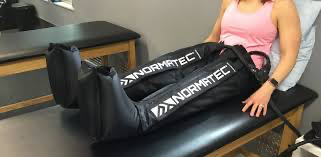
Normatec recovery boots. Photo provided.

Doyle and Paye are working together on an exciting project focused on recovery. The inspiration for the project came from their animosity towards being restrained from playing due to injuries. The general outline for their project is to “compare three different recovery methods for Northwood athletes: foam rolling, Normatecs, and massage gun. Results will be measured through a surveyed ‘feel good scale’ scale that each subject answers after the use of recovery tool,” Doyle said. Using these methods will be an important study for the health and well-being of the Northwood School athletes. “We are excited to find out which method is best and for us and to share that with the rest of the school and hopefully help the athlete community,” Paye added. Using scientific methods, these two will aim to measure subjects from all teams: Hockey, skiing, soccer. Both students said they would like to thank both Ms. Walker and Mr. Donatello for their help in pursuing the project and motivating them.

The Helios sensor. Photo provided.

Will Schneid ‘25 and Michael Peluso ‘25 are working on another sports-focused project that is looking at the effect of plyometric exercises for on-ice performance. “We are going to use a group using a warm-up incorporating plyometrics directed by Will and me and another group not doing the plyometrics. We will then see how each group’s power and explosiveness improve to see if the plyometrics have an effect,” Peluso said. They will be using the Helios sensor, a wearable device to enhance hockey performance by tracking key metrics such as skating speed, stride length, acceleration, and impact forces, to measure results. This small, helmet-mounted device provides players and coaches with real-time data and insights, helping to improve players’ performance.

Humans of Northwood: Ryan Farr ‘25

“My biggest fear is spiders.

“I came here mostly because of soccer. I’m a post-grad, and it’s my first year here. Coach Moodey recruited me, and I wanted to come here for some good academics and the good soccer program to set myself up for college.

“I was a senior last year at Saratoga Springs, New York. I played varsity basketball and was a starter, and we did pretty well. In the summer, I play a lot of golf. I’m a scratch golfer, which I think is pretty cool, but I’m kind of getting worse as I don’t play as much anymore. I try to mix it up as far as sports go, so I don’t burn out and because it makes it more fun.

“Saratoga is unique because of the many activities and how it brings the community together with good crowds at school sporting events, places to eat, the racetrack, parks, and golf courses, where kids even in middle and high school ride their bikes downtown to meet up, especially in the summer and after school.

“At my old school, we had a lot of athletes for basketball. We had six seniors who were in the rotation, five of whom started, so we’d get all of our friends out for a few games. We had 300, 400, 500 kids in the student section, so it’d be a packed gym, and it was super, super fun to play in front of. All the parents would come out, a lot of the town would come out. So it was awesome for basketball as well as soccer.

“It is somewhat similar here. I’d say definitely on a smaller scale, as opposed to 2000 students back at my old school, we have 200 here, but kind of runs the same. I mean, all the soccer kids try and get to the hockey games when we can, and we try and support them, and vice versa. When they’re available, they try to come to our games. I think it’s really important in a school, and it brings kids together.

“My grandma gives me a pack of Skittles after every game, whether it was basketball or soccer. She’s continued that—every game that she comes to, she gives me a pack of Skittles.

“My relationship with my grandparents is really good. My grandpa plays golf and skis, and my brothers and dad do too. We often do at least one or two golf rounds throughout the summer where we play 18 holes, and we’re all often pretty busy doing our own thing, so it’s four hours with the guys catching up, which is a lot of fun. In the winter, it’s a full-day ski trip. We drive up to Okemo in Vermont, which is their favorite mountain, and it’s a really fun time.

“I don’t question my choice to come here and do a PG year. For me, it’s the people here. Yes, it’s a grind every day, but and you’re around most of the same people, which is sometimes tough if you don’t like those people, but to have teammates that I love playing with every day, love being around every day, teachers who are really supportive who care about you and coaches as well, and all the staff and even the hockey guys and ski people. So, I love the people here, and I think that’s really helped me coming here.”

As told to Cedric Lemaire ’25. Photo by Mr. Michael Aldridge.

TEQBALL Builds Community in a Fun Way

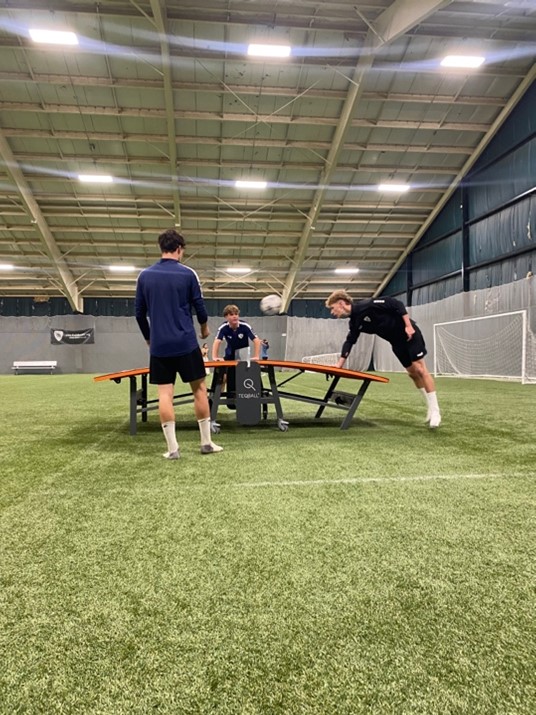
TEQBALL has taken Northwood School by storm. Imagine Ping-Pong, but you must use your feet and a soccer ball instead of your hands and a paddle. This community-building sport has brought a newfound spirit into the Northwood community off the pitch, rink, or mountain.

Competition is not a new concept to Northwood School; however, it is often found in high-stress environments where a starting spot or grade is on the line. TEQBALL offers a fun, low-stress, yet still highly competitive alternative. This alternative has been the perfect supplement for many soccer players off the field including myself. It is a time to unwind and destress, and, in the words of Edouard Laberge ‘26, “You can express whatever you want and play the way you want since there are no restrictions, except for the fact you want to win.”

I asked the most frequent players: what have they noticed TEQBALL doing for the community?

“It brings people together and makes us stay out of our rooms, so less depression,” Laberge said.

“TEQBALL creates a sort of freedom after practice,” Nicolas Malouin ’25 said. “And even if you had a bad practice, it gives you fun and enjoyment and a sense of relaxation, even though it’s kind of intense. It gives you great moments with your teammates off the actual pitch. It became a culture at our school. Every time we eat supper, we come down here after and play for an hour and a half each night. Its starting to add more and more people,” added Malouin.

“I think it creates cohesion among the team,” Ryan Farr ’25 said. “We must work out which rules we’ll play each time. I think it builds chemistry between you and your teammate obviously. Sometimes your teammates not playing as well, and you have to build them up,” Farr added.

“We can just have fun and win in a fun way,” Paulo Marcilio ’25 said. “Often in training we act like we want to kill each other, but here we can just play.”

Soccer players aren’t the only students enjoying TEQBALL. It is not uncommon for a hockey player or a skier to join in for a set or two to experience the joy of the game. I have seen personally 4 different languages spoken during games and the game will flow the way it is meant to. Unrestricted fun is a rarity found at Northwood and can only be found in pockets around the school. I urge everyone to expand out of their comfort zone and find those who dare to be free.

Artist Van Slyke “Finding the Ordinary: A Portrait of Everyday Shared Spaces”

Ms. Ingrid Van Slyke. Photo: Mr. Michael Aldridge.

Lake Placid is a beautiful place. That is exactly what Northwood’s very own award-winning artist and art teacher, Ms. Ingrid Van Slyke, is trying to capture in her series called Finding the Ordinary: A Portrait of Everyday Shared Spaces. Her series will consist of 52 oil paintings over a year, which will require her to average a painting every week.

Finding the Ordinary captures the “non-touristy everyday places that Lake Placid has to offer,” says Ms. Van Slyke. This effort sheds light on the Lake Placid local perspective and changes the audience for the artwork. Often, when Ms. Van Slyke’s work is displayed in galleries, “buyers are from out of town and not local residents,” she says. Her series aims to “allow locals to be the audience for my art—so now the parent that passes the stop sign every day to drop their kid off at school can have a painting of that.”

Ms. Van Slyke had already completed 22 paintings when she got the news from The Adirondack Lakes Center of the Arts (ALCA) and the New York State Council of the Arts (NYSCA) that she had been awarded a grant for her project. Her 52 paintings will be displayed in the Lake Placid Main Street Library, which fits the theme of her series and is welcoming to her target audience.

Ms. Van Slyke’s series will avoid landmarks such as the 1980 arena or Whiteface Mountain, which she expects to be appealing to locals who can now have a piece of art and a piece of community. As a result of her efforts, her art will go directly back into the community.

All proceeds made from the gallery will go to Mercy Care for the Adirondacks. Mercy Care is especially important to Ms. Van Slyke because they helped her mother when she was struggling with illness. It is truly inspiring to see an artist work so hard to support the efforts of her community, so please, if you see Ms. Van Slyke, congratulate her and thank her for giving back to her community.

Ms. Van Slyke’s project is made possible with funds from the Statewide Community Regrants program, a regrant program of the New York State Council on the Arts with support of the Office of the Governor and New York State Legislature and administered by the Adirondack Lakes Center for the Arts.


Tour Guides Play a Key Role

An overhead shot of campus. Photo by Mr. Michael Aldridge.

The 2024-25 school year is underway with the first two weeks of school done. However, it is already time to focus on the years to come, starting with Monday’s meeting on student-led tour guides.

Northwood’s initiative to have students lead family tours leaves a lasting impression on those who visit. I still remember my own tour five years ago. I entered campus, overwhelmed yet excited for what was to come. After countless meetings with faculty and teachers, the tour around campus with two college-bound soccer players offered a glimpse of the real Northwood experience.

Nerves, excitement, anxiety, or whatever you may feel can be eased when you can explore Northwood’s beautiful campus with someone of your generation.

The admissions office, which includes Mr. Gino Riffle, Ms. Elenor Mandigo, Ms. Carrie Wardlaw, and Mr. Jeff Miller, selects people for student-led tours . They are holding a meeting on Tuesday for those interested in giving their time to help tour applicants. Those called upon for tours are Blue Key Society Members, and their job entails the following:

“Dear Blue Key Society Member:

Congratulations on becoming a Blue Key Society Member (BKS). It is a special honor to be selected as an “ambassador” representing our School.  The Admissions Office thanks you for accepting this responsibility and for being generous with your time.  As a reminder you may be the first person many of our guests will meet upon arriving on campus, and very often this “first” impression will go a long way in making visitors feel comfortable while here at Northwood.

As you approach your responsibilities as a BKS, you should recognize that the best tours are those that mix sincere knowledge of Northwood with a willingness to let your personality shine.  Remember to relax and be yourself.  The Admissions Office has great confidence in each of you and thinks this could be the best group of BKS members ever.

In this handbook you will find a tour guide outlining the route your tour should take along with tips and reminders to help your tour go smoothly. New this year is a tour procedure that will give you more notice as to your tour date and time.  Remember the Admissions Office is relying on you to place your personal touch on each tour by describing some of your own experiences here.  These experiences can include anything from your first visit to campus, your first year at Northwood, your favorite teacher, a special memory with a roommate, an exciting victory in athletics or your first Northwood competition.  It is through your ability to make a connection with each visitor that Northwood will continue to attract exceptional students like yourself.

Again, thank you for your time, your enthusiasm and your smiles!

Happy tours!”

Updated Blue Key Society Provided by Ms. Mandigo

Ms. Elenor Mandigo. Photo: Mr. MIchael Aldridge.

I had the opportunity to interview Ms. Mandigo to discuss the purpose and importance of these tours. I expressed to her the impact that my experience with these unique student-led tours had in making my decision and asked what they looked for in a student to entrust them with the responsibility of touring a family.

“Whoever is giving the tour and depending on what they are saying is representing what the school is,” Mandigo said. “And so, you want somebody who is informed and a good representation of the school,” she added.

Mandigo also explained how they assign a tour guide to a family, often putting a hockey girl with another hockey girl, and this is because “The parents and the students that are visiting feel more comfortable asking questions to the student. If it were an adult, maybe the student wouldn’t ask as many important questions.”

Her insight into how tours should be run was vast and I advise any Northwood students interested in leaving a lasting impression to attend Tuesday’s meeting to take the first step to becoming a Northwood tour guide.

Some “Tour Tips” shared by Ms. Mandigo.

How the tour works, shared by Ms. Mandigo.

Students Arrive to Campus Changes with More to Come

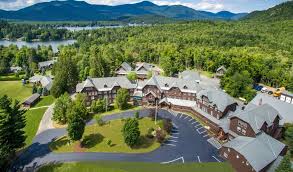
Upon arriving at Northwood this school year, many notable campus changes become evident. Just in front of the school’s main building, the 90-year-old pine trees that once threatened the new soccer pitch have been cut down and replaced with young maple trees. The old carpet has been torn up inside the main building, and the original hardwood floors underneath have been restored and decorated with new furniture and tasteful rugs.

Mike Maher, Northwood’s Head of School, said that “the board of trustees has passed a number of different capital projects that began this summer and will take place over the course of twelve months.” The board began with the entryway trees since they posed the largest threat to student safety and the longevity of the soccer pitch. The next project aimed to refurbish and restore the Northwood living room to its original hardwood floors. This change preserves the school’s Adirondack aesthetic while modernizing the entrance and living room, both of which have the most activity during the day. Mr. Maher summarized the school’s vision well. “The campus, as you know, is really unique among boarding schools. It is truly a historical Adirondack property that is rare to find, and we believe that we have the responsibility to protect it and restore it,” Maher said.

The changes aren’t finished; plans to relocate both the school store and the art studio are already in motion. The space that used to house the School Store will now function as a year-round gallery to view and admire students’ artwork, while the former student center space will be the art studio.

Mr. Maher described the reasoning behind the change. “Students weren’t using the student center in big numbers. We can debate [the student center] because kids may have different points of view; what’s not debatable is that we have not had an adequate space for the arts.”

Along with the current changes, plans to remove the School Life office, currently occupied by Mr. Spear, and the business office between the entranceway and the cafeteria are also underway. These plans were made to open up and connect the two major school spaces. In addition, a café named “Reno’s Café” will be opened, serving Mountain Dew and grilled cheeses in honor of the incredible teacher Steve Reed.

However, many current students are concerned at the removal of the student center, an important space in many students’ experiences at Northwood. Without confirming anything, however, Mike Maher alluded to a potential solution, saying: “The cafeteria could be turned into a multi-use space with things for kids to do.” However, with many changes occurring in the Northwood community, we must all remember that the physical differences that may occur in the school space do not define what Northwood means because as change occurs around us, the members of the Northwood community keep us together.

The Mirror was established in 1927
© 2015-2022 by the Staff of The Mirror
The Mirror's Policy Manual and Style Guide.
The Mirror is funded by gifts to the Northwood Fund. Thank you.