Generative AI: The Death of Reality’s Verisimilitude, Part 2: An Inadequate, yet Palatably Brief, History of Generative AI

Let’s start the second part off with a bombshell: 180 million.

As of March 2024, there are a staggering 180 million active users of ChatGPT worldwide.

It is odd to start an article with a number, of all things. A number like that is usually reserved for a conclusion – a few numbers strung together at the very end to set in stone a conclusion of AI’s prowess as of late. Besides, it’s not like I’m unfamiliar with numbers and their place in writing – all good analytical articles have buried within them somewhere a truckload of data in a small space that diminishes all traces of written cohesion and reader retention – nor am for some reason shy to spend time talking about them. No. The second part starts with a number so I could avoid having to bring up even more numbers down the line. You see, a conventionally written part 2 Sora breakdown has to discuss the history of AI in a way that makes numbers unavoidable as far as analyses are concerned, as every development in the technology comes with them a set of numbers that helps visualize the length of said development so the readers can have an idea of just how much the new outpaces the old. The problem with that is that despite the inherently exciting nature of AI and its history, I cannot bring myself to spend time jotting down numbers and relaying them to you in the way I just described. It’s uninteresting and requires even further explanations to contextualize the actual impact of these numbers, which makes an already long article even longer.

Fortunately for you and your short-form-content-perforated mass of pulsating fat and neurotransmitters you keep inside the skull cage that you call a brain, I am not a conventional writer. I do not believe the average reader knows what ‘parameters’ in the context of AI mean and why these ‘parameters’ matter, and that’s alright – you don’t have to. The more practical – and frankly, interesting and intuitive – way of translating numbers into palatable chunks of information is to compare these numbers from across history with real-life ‘things’ of all types (‘things’ that we’re all familiar with to some capacity) in an exercise in creative writing and large-scale research. It’s more fun that way anyway, and I’d finally get an excuse not having my written sentences be of the length and complexity of the Great Wall of China every time I attempt to explain something.

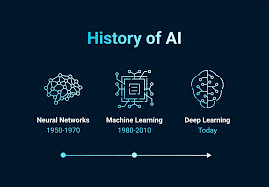
Before we get to the modern history of AI, we’ll have first to establish the groundwork – that being the concept of artificial intelligence itself and the vessels that allow for it to function in the real world, and finally, provide you with an actual, clear definition of AI – something so large and broad that it very well warrants its very own article flaunting a ridiculous wordcount sometime down the road – For now, though, I’ll try my absolute best to summarize AI as it stands right now. When I mention AI in my articles, I don’t mean all AI. Instead, and this shouldn’t be a surprise considering the topic at hand, it is generative, deep-learning AI that I reference, which is a sub-field of neural networks (something that will become relevant later) and a sub-field of machine learning and AI. A program doesn’t have to be sapient or even sentient to be considered AI. AI is any program capable of sorting, consolidating, and using information in some capacity. It is artificially intelligent; without the ‘intelligence’ we’d been taught to expect from human beings, Search engines, web filters, and plenty of hardware are all AI by this definition, as what they do daily is without conscious input from humans. Generative, Deep-learning AI is a minuscule slice of the AI pie that had only recently been given attention from the mass public, so it makes some sense that misinformation should run rampant when it comes to what AI is and what it does and can potentially do – and so this section works to inform and dissolve some of that misinformation. With that out of the way, it’s time to discuss the history of AI as a whole and how generative AI came to be – a more manageable feat that has been cleared up.

The first example of ‘interactive’ AI technically started in the 1950s, but the concept of artificial intelligence has existed for millennia. It does make some semblance of sense – the idea that we as human beings aren’t all that unique in the grand scheme of things is less an opinion and more a confirmable truth of life at this point – even the philosophers of yore knew of such perspectives. If what makes us human (our sapience, intelligence, metacognition, introspection, etc.) It isn’t unique; it stands to reason that it could be replicated in some way, shape, or form and subsequently injected into, say, a lifeless statue carved out of wood and limestone to grant it life and humanity (If you couldn’t already yet tell, that period in history is when the phrase ‘make friends’ stands as quite the literal statement). Despite the similar nature between these archaic beliefs and the more refined takes of modern society, the idea of granting something human-like intelligence wasn’t coined ‘Artificial Intelligence’ until the 1950s, when Turing developed his infamous (and recently more topical than ever) Turing test. These ancient ideas laid the groundwork upon which the modern iterations of artificial intelligence will build.

Long cut to early 1900s America – where everything (including the examples of locomotives planes that were used to prove a point back in the first part) that this subject touches on seems to originate – We saw an influx of popular media that centered around the idea of ‘artificial humans’, likely as a result of the industry boom granting America an uncountable number of new revolutionary technologies that mingled with creativity in philosophical thought. A simple yet intriguing concept. Twenty-one years later, in a stage play (Rossum’s Universal Robots, or RUR as it is sometimes known) by Czech playwright Karel Capek, a single word that will eventually become synonymous with technology and the future of humanity was born – Robot. Robots… Artificial beings of incredible intelligence confined to a metallic vessel forced to move in – for lack of a better word – ‘robotic’ comfortably distinct from humans. Both their design and mannerisms felt less like a take on manufactured life and instead not at all dissimilar to the mere mockery of the human form when looking retrospectively – but only when considering the capabilities of the robots of the modern day. However, this stalemate between fantasy and reality wouldn’t last much longer, as we cut to 1929 when the first Japanese robot was made.

Generative AI: The Death of Reality’s Verisimilitude, Part 1. The Erratic Nature of Rising Technologies

Illustration: LinkedIn/Imane El Khalfi

Artificial Intelligence (AI) was, for a while (In early 2022), seen as the next in a series of fads concocted by the ever-disconnected set of technology/software-based entrepreneurs we as a collective referred to as the ‘tech bros,’ a group who had only just recently managed to (barely) recover from the absolute demolishment of their reputation ascribed to the rise (and subsequent, painful fall) of various cryptocurrency programs which had involved conspicuously screenshot-able PNGs of desiccated monkeys with outrageous prices attached to them (with a terrible sense of fashion, attributed to their being generated on a random algorithm uncaring of visual finesse) and the attempted purchase of an island to host supporters of their scheme in an act only too reminiscent of the esoteric cults of yore.

Technology is fantastic, yes. It is how we prevailed above all else in nature, after all. Flexible yet dangerously capricious in both direction and growth – it has outpaced natural evolution in speed by multiple orders of magnitude. If I had told someone living a mere 65 years ago so much as half of what the humans of the future do daily, I would be outed by them as mad and promptly ostracized, and for good reason. The device I am typing all this into right now is a sleek, portable version of the house-sized clunker of a glorified toaster that the engineers had only recently invented to work as a calculator that not only works at 5 million times the efficiency (3) of the said toaster but is also intrinsically connected to a global network of billions of devices that is an eternally expanding vortex of information, entertainment and faux nihilism (A topic for another day) that has become linked to our daily lives to a degree previous thought impossible.

Frustrating, however, is the unpredictability. The speed and volatility at which new, revolutionary technologies are being developed leave some unable to adapt to major, life-altering changes properly, the failure in doing so resulting in merely being considered out of touch by those more ‘in the know’ in the best case and losing one’s job, prospects and hope in the worst. There isn’t a real way to prepare beforehand, either; we, as human beings, have demonstrated an unparalleled ability to be terrible at predicting things – examples include gambling, stocks(gambling), or even tomorrow’s weather, for crud’s sake – Once again providing the need to bring out the ancient yet ever-relevant adage of a group of humans in the 1900s predicting the mass production and usage of flying automobiles in the ‘near future’ (#50 years? 100? Something something the ancient library of Alexandra). Quite nonsensical, retrospectively, when considering the gut-wrenching scenarios that would emerge upon their actual implementation, of course – On the subject of private, flying vehicles, even the loosest of Google searches sing of the cataclysms that would transition from mere campfire tales into reality upon them ever reaching the mainstream – But the idea of the invention itself felt semi-reasonable, surprisingly. The early 1900s were reeling from the sudden rise in popularity of motorized transportation as it slowly began taking over niches originally reserved for carriages driven by horses. At the same time, the first-ever airplane decided that it just really wanted to get invented. With both life-changing inventions under their belt, the denizens of the 1900s began to speculate about what was to come, and naturally, their sights drifted to what they had now: ‘Cars and airplanes. Cars + Airplanes. Flying…… Cars. Flying Cars! It makes perfect sense!’ They thought. It’s intuitive. Only ostensibly, of course, but cut them some slack.

We all know what happens next. The prediction managed to slip itself into memetic relevance wherein its story is used by many to mock/satirize the same vein of futurology that spouted said prediction in the first place – Often to prove the theory of a declining rate of technological progress as more effort seems to be directed towards the peripheral and irrelevant as opposed to something more cohesive or useful, which is ironic, considering the nature of the actual explanation for such a phenomenon. Technology isn’t a monolith – the invention/development of the ‘cool new thing’ doesn’t funnel all technological effort and funding towards it, nor does it terminate the growth of dissimilar technologies. As such, new, emerging technologies from all facets of science take their turn in the spotlight, diversifying and thus greatly limiting the extent to which we can predict their growth.

We may see something so revolutionary in the coming months that dwarfs even the towery waves raised by generative AI. We do not know, and we’ll unfortunately never be able to until such a day arrives… Or it doesn’t.

So, just what does all that have to do with AI?

The whole spiel right then with the unpredictability of rising technologies serves to disprove the idea that technology is somehow stagnating just because what comes next isn’t built off of the mainstream norm, explain the reasons as to why the nature rising technologies are nigh impossible to account for before their launch and conveniently create a segway for the revelation that generative AI isn’t actually at all something hidden that wasn’t being developed until recently. In fact, generative AI has existed for at least longer than you may have expected from something that feels so suddenly influential – that it’s not a fad that emerged out of nowhere.

The more inquisitive readers may realize what at first glance reads to be a contradiction and ask: Dear author, whom I know already to be quite the pain when trying to have a normal conversation with, how could you possibly make a claim for the technology’s unpredictability only to follow that up with a prominent ‘Not out of nowhere’? Does he even know what he is saying?

Everything makes sense when looking retrospectively – even the most ‘random’ of events bears an explanation. The internet, for instance, had its first appearance all the way back in the 1960s, funded primarily by the U.S. Department of Defense. This prototype allows for communication between multiple functioning computers. Looking back, it made sense for this to be ground zero for the birthplace of the modern internet – but for the people back then, it was only yet another esoteric piece of tech that had not the slightest chance of ever becoming relevant in the lives of the common citizen. Therefore, the development of the internet wasn’t out of nowhere, as we could track down the exact steps it took to become what it is today. Still, it wasn’t predicted to become such for those back then – they were too hyper-fixated on the invention of the laser, I suppose – and, therefore, still intrinsically unpredictable. The two qualities are not mutually exclusive.

This is even more relevant when it comes to AI. With the power of said internet, its development is fully documented. Still, as it exists alongside everything else being made and promised to become the next big thing, its rise wasn’t at all expected (at least, not by the mainstream). However, its rise made sense when looking back and seeing the rate at which it continues to grow. The unpredictability of the power of emerging technologies and the recounting of their success are taken at two differing points in time – one before its rise and one during and after. The claims are not mutually exclusive, not because they fundamentally contradict each other, but because they’re made at two separate junctures.

With that cleared up, my painfully lengthy introduction of a good five or so minutes has finally concluded. The next part will see my attempts at summarizing the development of AI across the years to an extent that I will be personally fine with – and yes, this will be a multi-parter for sure. AI is FAR too interesting of a topic for me not to fully cover, to the greatest of my ability. If you think I sound mildly negative now, premonitions most foreboding of its inevitable growth and thus potential harm from yours truly would become the norm as I disassemble the very nature of AI and bring proper light to what it has already managed to achieve in these few years, and how the few jobs already being replaced are only the appetizer for what’s to come.

…Or, and this is still a possibility, despite all that will eventually be said, it would fail to do anything worth mentioning (sans the already replaced jobs, of course), existing forever as only a goofy commodity for us all to poke fun at and occasionally enjoy when bored beyond belief. The impact of developing technologies is unpredictable, and it always will be. Maybe.

Cont. In part 2.

Perspective: The (Potential) TikTok Ban and Its Implications.

The House on Wednesday passed a bill with broad bipartisan support that would force TikTok’s Chinese owner to either sell the hugely popular video app or have it banned in the United States. If the TikTok bill were to become law, it would probably deepen tensions between the United States and China over the control of important technologies.

– The New York Times on March 13, 2024

I’m all too tired to even attempt to sugarcoat the following message in any way that doesn’t entrench its logical foundations into the sludgy annals of schizophrenic caffeine-fueled misinformation, so for my sake and the sake of any readers fortunate (unfortunate?) enough to stumble upon this article, YES. TikTok MAY VERY MUCH RECEIVE A COUNTRY-WIDE BAN – if certain conditions aren’t met in the future. On the surface, it is done as a precautionary measure that prevents the potential pilfering of the personal data of American users by the ever-topical Chinese government.

What a way to start an otherwise entertaining article, I understand. Fortunately, we’re not here to discuss the intricate politics of America and how the mere act of doing something is enough to bolster support occasionally more so than the action itself – I’m not an expert, and politics are very much thin ice – rather, the implications that occur come the implementation of such an order. TikTok is popular – perhaps more popular for its own good – and anything done to it will send catastrophic ripples across America. Context may be needed to fully explain such a drastic rise in influence and popularity, and so I will provide context.

To my surprise (and the surprise of some of my peers), I am – for my age, at the very least – a chanced individual, one of the few not swept up by the social media boom that spawned as a direct result of the pandemic having locked us all in airtight boxes of brick and plaster with nothing worthwhile to take the mind off of our predicament aside from the steel rectangle we as a collective had trained ourselves to carry within our pockets at all times regardless of occasion and mood, a device that had already become ubiquitous. With demand for entertainment comes a supply of said entertainment in droves – short form content churned out from creators across the globe that unanimously yet unwittingly purveyed a horrific cacophony of mangled ideologies, of wealth being above all, of the apparent falsity that is ‘love’ and relationships, of videos longer than 10 seconds being the spawn of Satan himself,  powered by the simple yet concerningly effective strategy of combining short-form, attention-grabbing content doctored to appeal to the bored and easily distracted with an algorithm programmed to, with great apparent success, predict the type of content you enjoy, creating a feedback loop of endless content that ropes you in for an eternity. Effective. Incredibly, devastatingly effective – I only happened to avoid its influence through an inexplainable stubbornness against the recommendations of others.

TikTok (for lack of a better word) blew up. It had achieved success in China long before the pandemic and in nearly every other country after the pandemic, becoming the No.1 trending app even as I write, whose popularity and influence, despite showing some signs of finally waning, remains potent enough to dwarf nearly every other entertainment-based app on the market.

  • As of early 2024, TikTok has over 1 BILLION monthly active users, roughly 1/8 of Earth’s total population, doubling that of Snapchat (Which reveals sideways the popularity of Snapchat, but that’s another story for another time) and catching up to Instagram at an alarming rate.
  • Since its inception in 2016, TikTok has been downloaded over 3 billion times.
  • ByteDance (The company that owns TikTok) is valued at a staggering $200 billion.
  • Out of the 4.8 billion total internet users, over 20% of them are active users of TikTok, including over 1/3 of mobile internet users.
  • There are 150 million TikTok users in America alone – by far the largest number out of any country in the world – larger than even China.
  • 50 million daily TikTok users.
  • And so much more. It NEVER ENDS.

This is where the nature of TikTok becomes relevant once more. I mentioned above that TikTok is primarily a website that emphasizes short-form content above all else. There is not much to contend with there, but most aren’t aware of just HOW short-term they really are. According to the official TikTok website, the average watch time per video is around 1.5-3 seconds, while the length of the average TikTok video ranges from 21 seconds to 30 seconds. This horrific mashup of statistics makes it so if you were to upload a TikTok video and have a mere 20% of it watched, your video is considered by the standards of TikTok to be ‘engaging’ – a spine-crushing epiphany dampened further by the addition of some more stats that claim the average TikTok user spends around 55 minutes per day browsing these videos which results in a total of 400-600 TikTok videos watched per day.

It’s also worth noting the demographic of TikTok to fully factor in so many numbers. Over 50% of content creators are young people between 18 and 24 years old, and about 45% of all TikTok users are Gen Z, with a significant tilt towards women, as 60% of TikTok users worldwide are female. It’s a widely held belief that TikTok appeals to young people tremendously more than older ones, and the data agrees: there’s a significant drop in TikTok users from ages 50+ with a relatively moderate yet considerable drop of users from ages 40 and above. Despite having such a large user base, the demographic that it appeals to is quite consistent.

Empirical evidence, though pragmatic and effectively the foundation on which any good analysis is built, is quite a bore to slog through. So, instead of dropping the both of us into even more mind-splitting numerical data, I’ll deliver unto you a smattering of anecdotal evidence that confirms somewhat the statistics above while commenting on how each one adds to the impact of a potential ban. It’ll be more entertaining, at the very least, if not useful or informative.

“TikTok is used at nearly all junctures of the day. Iconic yet painfully repetitive bits from songs flood the corridor as I leave my room and attempt to make peace with all that surrounds me with little success. I recall being at the cusp of falling to sleep only to be jolted awake by a most heinous cacophony of clips of empty, derivative motivational quotes (Espoused no less by none other than your favorite human trafficker scrounging for diminutive scraps of relevancy) interlinked with the new popular music clip (Note that we are playing fast and loose with the definition of music here as not a single drop of melody nor lyricism can be derived from such swill) in a fashion that eats away at the core of my being. Crude opinions formed on delicate subjects ossify as the previously mentioned algorithm built with the express purpose of pushing to the user an ouroboros of self-aggrandizing content does its job. It is everywhere – everywhere and anywhere.”

– A re-write of a rant about TikTok one of my friends had a year back, only now it is more relevant than ever, and its addition to the article felt warranted.

“No, absolutely not. From what I’ve seen, nearly everyone I know uses TikTok to some extent/capacity. Most people on my team use it. I use it occasionally, though not as much as them, and yes, before you ask, I can see the appeal of using it the way they do—I’m just not interested enough in them to do so. Yeah, you’re right. A TikTok ban will change things. A lot of things. I just can’t really put into words the exact number of things. I don’t know.”

– Quote from a student I questioned about TikTok after opening with doubts of its influence on students our age.

“Yeah, I use TikTok. You don’t? It’s fun! You should get it.”

– A quick answer to my question from a student whose name I couldn’t recall – my favorite kind of answer, really. Simple, to the point… Yet incredibly telling all the same

“I don’t use TikTok.”

– Many teachers, when questioned whether they use the app or not. Neat.

Anecdotal evidence linking up with empirical evidence to form a concise conclusion is one of the best things analysts experience…Supposedly. I’m not an analyst, and I’d be better off not making assumptions about them. Either way, now that anecdotal evidence confirms empirical evidence, it’s time to discuss the implications of a potential ban.

There are 120 million American TikTok users, mostly young adults. A country-wide ban from Congress would not only alter the way so many people live on a decently large basis (55 minutes spent per day on one app is a large chunk of the day, after all), it would also sever the relationship said young people have with their government. This is rather dangerous, especially considering the time the bill was passed – in an election year, when the youth are given a chance to dictate America’s future (Or, at the very least, given the idea that they could). TikTok has become so ingrained in the minds of many that a sudden ban would be nigh-unadaptable, so many would choose to find ways to skirt the regulations – VPNs of all kinds come to mind – and use TikTok regardless. For them, nothing would change, except now, most of the content would be from countries that aren’t America. For instance, Brazil has a large TikTok user base unimpeded by the ban, which will then be the country with the most users and creators.

Many who use TikTok but aren’t willing to get a VPN to establish connections with the app once more may need to find other ways to entertain themselves – which would be incredibly difficult. As mentioned above, TikTok has drastically reduced the attention span of many a student, and to force them to move on to other forms of entertainment so quickly would be unwise – Considering the time elapsed per reading, writing, or art session, they may not have the patience to finish even one. Therefore, they may instead consider alternatives to TikTok, such as YouTube shorts or Instagram Reels, in these apps that work similarly to TikTok and have similar retention rates and userbases. TikTok, in a way, is less an app and more a phenomenon – the lowered attention spans of the younger generation capitalized made manifest. The banning of TikTok wouldn’t miraculously solve all that, so chances are they’ll merely move on to something else.

TikTok is also a breeding ground of internet trends that grow, spread and get parodied until the original becomes the anomaly. The banning of TikTok wouldn’t stem the flow of such trends but would surely cut down on the speeds at which they form. Individual jokes and ‘memes’ may have a longer impact. This isn’t all that important in the grand scheme (especially in comparison to the other implications above) but is worth mentioning as trends, especially internet trends, are a staple of TikTok and TikTok-esque apps and thus will be affected due to the ban. The youth might have to spend less time reading up on the latest new things, which is always a good thing.

The older generations, on the other hand, will stand mostly completely unaffected. They’ve likely more important things to do than care about some random app getting the axe.

And lastly, I wish to reiterate that I don’t use TikTok – so I don’t care. Really.

Suggested Reading:

The Future of Batteries

Symbolic image of a future battery. Computer-generated image.

The development of technology never stagnates. Whether it be something as simple as a patch for a technology/product in desperate need of repair or something truly innovative and game-changing for generations, there will always be SOMETHING on the horizon for SOMEONE. Something, in this context, is the electric batteries, an intrinsic part of our daily lives. They are also taking part in this dramatic metamorphosis towards a more developed future, undergoing changes at a rapid pace – and yet, it is rarely brought up when discussing the development of technology. In truth, electric batteries have improved immensely since their inception all the way back in the 1800s and will continue to do so for decades. This article will be an exploration of just where they are headed as a technology, and what to expect of them 50 years in the future.

Cheaper Batteries, Cleaner Energy.

As a counter to the purveyors espousing the inevitable and total collapse of society due to an overuse of coal/oil-based energy sources and that nothing could alter that course, cheap, powerful batteries are being used in grid storage, making renewables more and more viable as an energy source by the day. According to Reuters reporting, “Giant batteries that ensure stable power supply by offsetting intermittent renewable supplies are becoming cheap enough to make developers abandon scores of projects for gas-fired generation world-wide.”

This isn’t just a fluke, either. Recent news regarding the state of energy production has brought up an influx of never-before-seen developments in renewable energy (and the distribution and storage of said energy) that, in perfect union with the decreasing cost and increasing storage of batteries, renewables have been made much easier to invest time and money into, which would greatly assist in the production and storage efficiency of said energies.

Batteries, in a way, are catalysts to whatever technologies utilize them. The better the battery, the more effective the technology that utilizes it becomes. As batteries continue to lower in cost, so would the expense of producing such technologies. As productivity and investment continue to increase, it’s fair to suggest even cheaper batteries in the future.

Growing Popularity/Image.

Battery sales are growing almost exponentially – 33% more per year, in fact. This is due to an entire array of factors – including but not limited to – increased sales of electronics, increased effectiveness of stationary storage, and an explosion of growth for electronic vehicles of all kinds. As mentioned before, batteries act as catalysts for the storage of energy. An increased demand for them strongly implies an increase in battery-synergistic technologies, which would only further the demand for more batteries, increasing its overall effectiveness.

With such a massive increase in sales, people will inevitably be looking into them.

They are the perfect middle ground between the differing types of energies, storing them all with relatively stable efficiency. Higher sales = More investment = Better quality and even more production in the near and far future.

The Strengthening of Battery Volume Despite Lowering Prices

As prices for batteries continued to plummet, one might assume the quality to fall along with it, but the opposite has happened. As battery prices fell, the strength and capacity for batteries only grew to a staggering 500Ws per kg at the end of 2023. There doesn’t seem to be any slowing to this process, either; in fact, battery-based technologies only seem to increase in development speed. We were BEHIND in terms of estimation for what batteries will become.

Their growth doesn’t seem to be thinning out or stopping in any way. The s-curve trend of batteries implies something massive about our knowledge of how this tech works on a fundamental level – we aren’t even close to fully maxing out its potential with what we have. This is fortunate, as with the increased investments in batteries and renewable energies come changes that can work to seal the wound humanity has dealt with the environment. We will likely see more exponential growth in the future, and therefore, batteries are more powerful than we could ever hope to imagine today.


In conclusion, batteries have never stagnated in growth. They are and always will be something in the background—something that helps yet never takes the central stage. Despite that, and despite the heavy emphasis I’ve put on their role as catalysts, their role in the development and growth of humans as a collective cannot be understated. Because of this, we could expect cheaper and much more powerful batteries than we have today, embedded within your phone, walls, or even car.

Lab-Grown Meat – Innovation Breeds Competition

A piece of GOOD Meat’s cell-cultivated chicken cooks on a grill at the company’s California office in July 2023. Justin Sullivan/Getty Images

There is a common thread amongst surveyors of technology that manages to unite them all despite differences in ideology and identity – we have very little object, or in this case, ‘news’ permanence. We forget developments in technology just as quickly as we read the articles. This has been the case with solar-powered generators (something that most people seemingly forgot about only to be reminded of once more once it had reached mainstream media a few months back), developments in drone technology that makes them accurate and stable enough to serve in armies across the world, and of course, in what’s relevant to the topic at hand, lab-grown meat. I’m sure many of you may have picked up on the phenomenon of lab-grown meat a few years before from the miscellaneous articles lining the shelves of convenience stores and supermarkets alike, ruminated for five minutes on the massive implications, and forgot completely about it until seeing the title above. I don’t altogether blame you for it, surprisingly.

Lab-grown meat years ago was incredibly out of reach for commoners. Its price was nothing short of obnoxious (around $300k for a single patty produced by a Dutch scientist back in 2013. This “achievement” was and was thus seen as nothing more than a vain display of technical gene-spicing (however inaccurate that may be) expertise that provides little to nothing to the grand scheme of actually solving the unfortunately very real climate bushwacking and moral depressions caused by the meat industry at large (The meat industry alone is responsible for around 17% of all of humanity’s greenhouse gas emissions, coming from a horrific mixture of animal gases and massive machines that wouldn’t look out of place out of a 90s horror flick) – and that was the impression left to many upon reading of the news all those years ago.

Fortunately for the bored and inattentive, there hasn’t been a single instance of technological progress wherein it has proven itself completely resistant to the waves of change – and change it did. From the sky-high prices effectively barring all but the elite from ever having a taste to the much more affordable (though arguably still overpriced) burgers costing upwards of 15 dollars from restaurants in Singapore, developments in the lab-grown industry had effectively reduced costs thousands of times per burger, a trend that came to be once the original tech became more widespread, and results became more consistent across labs. It’s fascinating to watch as it all becomes an actual option for those unwilling to take part in the traditional meat industry.

Unfortunately for those in parts of America looking forward to a meat-industry-free future, such innovations have proven too competitive, potentially harming the large and influential traditional meat industries there. This confirms two things: That lab-grown meat is mature enough to be both sold somewhat commercially and at a cheap enough price threaten the longevity of the meat industry, and that, despite the good that this could potentially do, it is being challenged on account of that alone. Southern states like Tennessee have legislated major fines to those selling cell-cultured meat upwards of one million dollars in an act of defiance against the rising technology. Tennessee wasn’t the only state acting up. According to a report in Vox, “Florida state Rep. Tyler Sirois, another Republican who introduced a similar bill late last year, stated a different — and perhaps more honest — motivation for banning cell-cultivated meat: to protect the state’s farmers from competition. ‘Farming and cattle are incredibly important industries to Florida,’ Sirois said in an interview with Politico in November.”

Some have even claimed the very practice of producing meat from cells to be an affront to nature—despite humanity’s current state being so much more of a mutation of “nature’s interests” than a new piece of technology that builds from predetermined principles of cellular reproduction could ever hope to be.

Strangely, however, this isn’t the first time politics revolving around meat have managed to cause real damage to nascent technologies. Meat and protein substitutes had always been under fire from politicians unwilling to fully shift from one to another in fear of damaging large industries. It is then somewhat fortunate that only a few states in America have passed this bill, and they will stand as constant reminders of how ever-prevalent ties with politics and economics technologies that, to most of us, are only positive additions to our lives and the ecosystems of the planet on which we reside can be.


Recommended Reading:

Inside the effort to cut the cost of cultivated meat (acs.org).

Why the media ignores meat’s role in climate change – Vox.

What is cell-cultivated meat, and why do Republicans want to ban it? The political crusade against lab-grown meat, explained. – Vox.

Flash Freeze Sweeps Across America, Neutralizes Record Warmth

Source: WTXL

February 27, 2024 saw a radical shift in the weather as a massive cold front, reinforced partially by an artic blast (a sudden and intense surge of cold air from the North Pole, carried into America via an unnatural jet stream) swept across the midsection of America, jettisoning the lands that had recently just experienced the record-breaking warmth of February that alluded even further to the throes of climate change into an icebox of epic proportions – a drop of 50-60 degrees for cities like Kansas City, Dallas, and Chicago. The temperature, what felt like early summer, transitioned impromptu back immediately to the middle of winter as blizzards ravaged states like California and Sierras, causing jams in traffic and creating whiteout scenarios wherein snow blows across the lands (almost parallel to the ground as a visual representation of the winds at play here), the winds are inconsistent and unpredictable in direction yet potent and permeating in strength. Visibility is dramatically reduced as a result, twisting the simple act of going outside into a challenge. Snow blindness, a form of photokeratitis that is caused by UV rays reflected off ice and snow, is also now a factor at play, considering the innumerable layers of fresh snow coating the ground where there used to be ground-based foliage (grass, flowers, the works), so wear sunglasses if that causes significant discomfort.

The climate machinations behind such a mass drop in temperature, unfortunately, couldn’t be remedied in a meaningful way by the ordinary civilian. We don’t yet possess the technology to stop cold fronts or redirect jet streams, so for the average citizen, the best port of call would be to once again redirect their attention towards the age-old debate of adaptation vs. mitigation, rule out the latter, and look for ways to quickly change their personal spaces as to better cope with the dropping temperatures. This includes the good-ol’ advice of drinking plenty of water, turning on the heat before you go to sleep (failure in doing so has resulted in fever with the capacity to kill for the less fortunate), closing windows, bringing animals/plants you own unable to function in such drastic weather conditions indoors and wear heavy thermal protection if you ever plan on going outside for supplies or meet-ups with your friends. Winter is back for round two, and while you may not be happy about that, there’s nothing much we can do at this point except hold out until it all returns to normal – or at least, normal to the standards of the rapidly shifting modern climate.

Although we can’t yet prevent the cold front outright, it’s worth noting that the frequency of cold fronts is tempered by changes in the climate, something we as a species are both responsible for and capable of slowly changing. Perhaps. Optimism isn’t yet dead to me, and I’ll hold out hope whenever I can, so allow me this chance.

The Mirror was established in 1927
© 2015-2022 by the Staff of The Mirror
The Mirror's Policy Manual and Style Guide.
The Mirror is funded by gifts to the Northwood Fund. Thank you.