Two Northwood Alumni Named to Olympic Teams

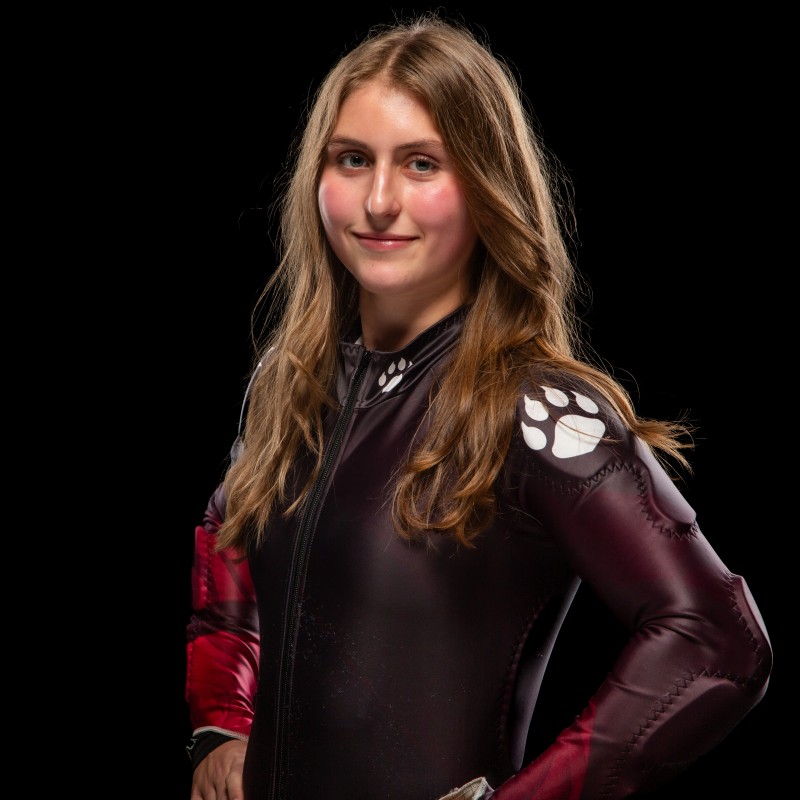
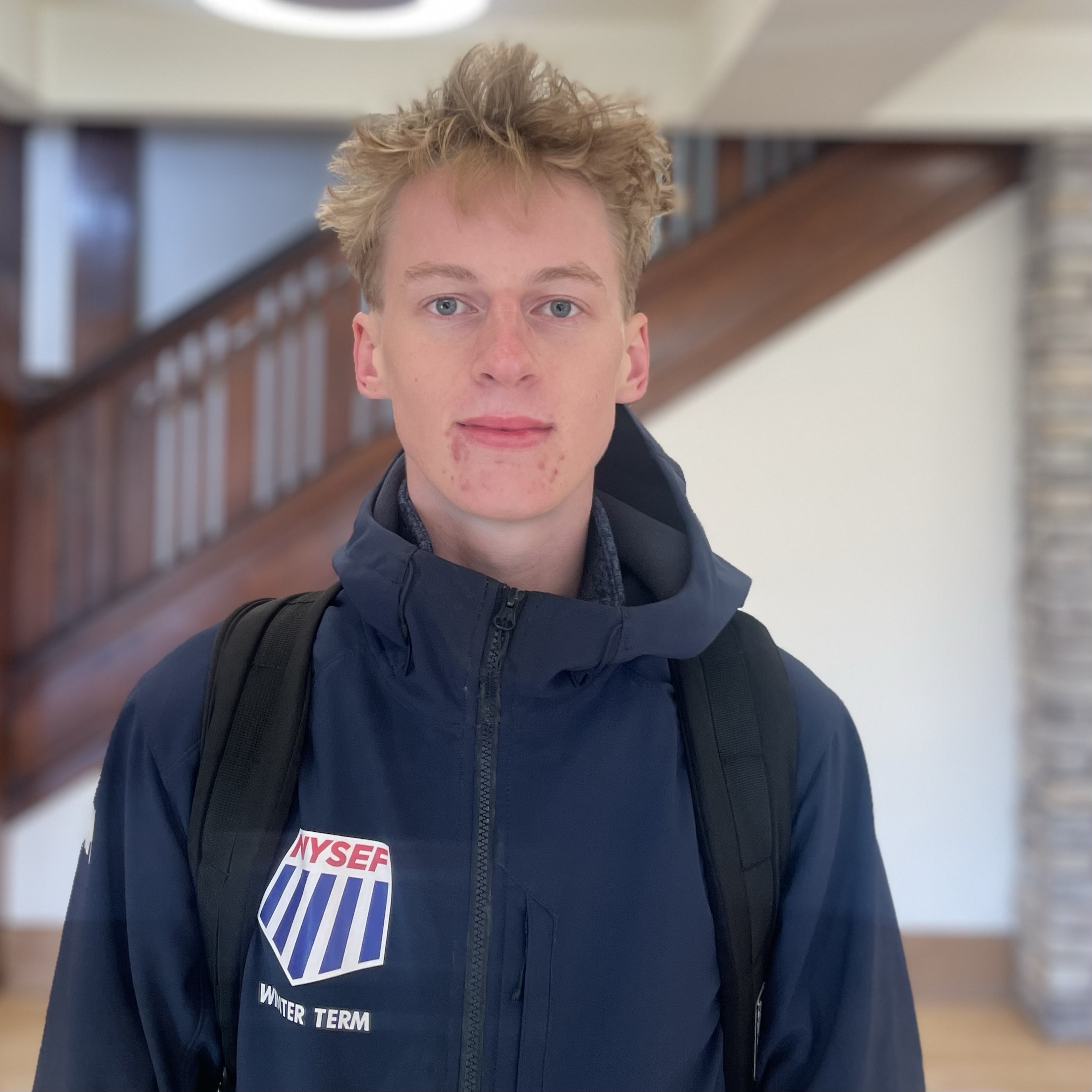
Photo by US Ski Team.

On Thursday, January 22, the US Ski Team announced its team for the 2026 Milan-Cortina Winter Olympics. US Ski Jumper and Lake Placid Local and former Northwood student Tate Frantz was among those named to the team. And on January 26, Team Canada announced that ski cross athlete Kevin Drury ’06 would represent Canada in his third Olympics.

Frantz started jumping at the age of 9, but his Olympic dreams stretch back much further. “Since my first time on skis at the age of two, I’ve dreamt of having the honor to take part in the holy grail of sports,” said Frantz on his Instagram when he announced his naming to the team.

“I don’t think it’s fully hit me yet, but when I take a second to think, or look at my post or all the messages, I realize how freaking cool it is. I’m so beyond excited and proud of the work and years behind it.”

Frantz attended Northwood for a year in 2020-21. He then took the leap, moving to Norway to hone his skills. Then, 2 years later, he returned to Lake Placid in 2023 to make his World Cup debut.

Since then, Frantz has established himself on the World Cup circuit, racking up three Top 10s and a 14th-place finish at the World Championships in 2025. He also took home three medals in the 2025 Junior World Championships here in Lake Placid.

Kevin Drury ’06 (File/Getty Images)

At 37, Drury is set to compete in his third Olympic Winter Games. He narrowly missed the podium at the PyeongChang 2018 Games, finishing fourth in the big final. After several injury-affected seasons, Drury returned to top form last year, earning five World Cup podium finishes following a nearly three-year drought. In December, he captured his first World Cup victory since February 2020, marking his 19th career podium. Drury previously claimed the Crystal Globe in the 2019–20 season, one year after winning bronze at the FIS World Championships.

“I’m incredibly honored to represent Canada in a third Olympics,” Drury said in a statement released by Team Canada. “Really excited to finish my career with the opportunity to win a medal. For first-time Olympians, my advice is to take it all in, have fun, and enjoy the experience. It’s a once-in-a-lifetime moment, though I guess in my case it’s three in a lifetime, which I still can’t believe. “

Huskies Fight for Spots on the 2026 Junior Worlds Team

Midway through January, the Ski jumping and Nordic combined teams traveled to Ishpeming, in the Upper Peninsula of Michigan, to compete in the first set of Junior World Qualifiers. The team battled through tough conditions and came away with some good results.

The 2026 FIS Nordic Junior World Ski Championships are being held in Lillehammer, Norway, in March. Previously, they were scheduled to be in Trondheim, Norway, but the venue has been changed. The United States has four spots on the team plus an alternate. Qualification is discretionary, but outside of international events, the main way to get on the team is through the 4 Junior World Qualification events. The first two just took place in Ishpeming, and the other two are in Brattleboro, Vermont, in February. Currently, one athlete has auto-qualified for the team based on World Cup results, leaving the other four spots (including the alternate) up for grabs.

Image of the Change of Venue Announcement for Junior Worlds. Photo by FIS.

This year, Ishpeming experienced a historic snowfall. As of January 20th, 2026, they are already 50-60 inches above their yearly winter average. This trend continued while the team was there, and it “snowed basically the entire time we were there,” Jack Kroll ’26 said. The snow brings “unique challenges to competing.”” The tracks can slow down, and the comp can become unfair. Also, the landing can become sticky, making it hard to land,” Henry Loher ’26 said.

Athletes also had to contend with high winds, especially on the second day of competition. Ishpeming is located 15-20 miles inland from Lake Superior, which creates strong winds and lake-effect snow.

The first competition was held on Friday, January 16th – a night competition under the lights, starting at 7 pm. Hundreds of spectators came to watch 37 athletes compete in a US Cup Competition that would also serve as a World Junior Qualifier. The US Cup is a yearlong domestic competition series for U20 athletes. Henry Loher ’26 would keep his streak of 7 consecutive US Cup wins over the last two seasons. Jack Kroll ’26 finished just off the podium, in 4th, followed by Duncan Van Dorn ’28 in 5th, Eli Larkin ’27 in 8th, and Cadel Cox ’27 in 12th. Islay Sheil ’28 finished 4th in the U20 Girls.

On the second day, conditions deteriorated during the trial round, and by the time the first round started, the wind and snow made jumping unsafe at times. This led to long wind holds and breaks to blow the snow out of the track. Additionally, there was a long hold after Max Fey ’28 crashed due to an equipment failure. Luckily, Max was able to walk away from the crash unharmed and take a second-round jump. Loher and Kroll finished 1st and 2nd, respectively, followed by Larkin in 8th. Due to the conditions, the Nordic combined athletes chose not to risk taking a second jump, as only the first jump dictates your starting time for the cross-country race. Shiel finished 6th in the U20 Girls.

Henry Loher ’26 1st and Jack Kroll ’26 on the podium. Photo provided.

On the Nordic combined side of things, Duncan Van Dorn ’28 led the way with two 4th places finishes, one in the 10k and one in the 5k. Unfortunately, Max Fey ’28 was disqualified on the first day for incorrect measurements. It was later determined that the people taking his measurements made the mistake, not him. On the second day, Fey started last due to his crash and made up solid time. On day one, Cadel Cox ’27 finished 9th and finished in a photo finish on the second day.

Looking ahead, the team has an off weekend to prepare for the Eastern Championships in Salisbury, Connecticut, from the 6th to the 8th of February. The following weekend, February 14th and 15th, the team has the final two Junior World Qualifiers in Brattleboro, Vermont. Currently, Henry Loher ’26 leads the qualification with 200 points. Then, Jack Kroll ’26 is tied with another athlete for 2nd place. “I have high hopes going into the second set. I was hoping for a 4th or 5th place in Ishpeming and then podiums in Brattleboro. Getting the podium in Ishpeming puts me in a great spot and takes some of the pressure off ahead of Brat,” Kroll said.

Nordic Teams Kick off the Winter Season

A week after returning from Thanksgiving break, the Ski Jumping, Nordic Combined, and Nordic teams kicked off their competition seasons in Norway, Colorado, and right here in Lake Placid.

Before their competitions, they helped prepare the hills in Lake Placid for winter. The team helped with the slushing of the in-run track. Henry Loher ’26 said, “We were tasked with shoveling snow from a pile of manmade snow and running it through a snowblower to chop it up. From the blower, we put it in 5-gallon buckets and carried it to the takeoff of the jump.” The buckets were then dumped into a hopper that gets pulled up the track by a winch. In the hopper, water is added to the chopped snow, creating a slush mix that Olympic Regional Development Authority (ORDA) staff and New York Ski Education Foundation (NYSEF) coaches then pour onto the track to freeze. Once the track was completed and frozen, the track cutter smoothed the ice.

The tracks being slushed. Photos provided.

The team was able to get on the hill for their first training session on December 5th. “It was good to get some training on our home hill before we went to the competition,” said Jack Kroll ’26.

After a weekend of training, the team split up to head to their first competitions. Henry Loher ’26 and Eli Larkin ’27 traveled to Norway to compete in a FIS Cup. The FIS Cup is an international competition level that is the first step to the World Cup. For both Loher and Larkin, it was “not our first FIS Cups, but it still was a valuable experience,” said Larkin. The pair had fewer training sessions than their competitors due to lengthy travel and adverse weather conditions. Ultimately, the results were “not quite what we hoped,” said Loher.

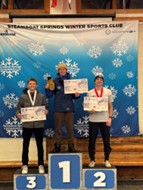
Jack Kroll ’26 in 2nd on the U20 US Cup podium. Photo provided.

The other half of the team traveled to Steamboat Springs, Colorado, to compete in the first winter US Cup of the 2025-2026 season. The team included Jack Kroll ’26, Cadel Cox ’27, Duncan Van Dorn ’28, and Islay Sheil ’28. The US Cup is the highest level of domestic competition. “We got solid training while there leading into the competition, and I think that showed in our results,” said Kroll. Kroll took home 2nd place in a close battle for the U20 US Cup podium. Van Dorn finished 6th in the jumping, and Cox finished 10th. Sheil got 9th in the U20 girls.

For Nordic Combined, both Cox and Van Dorn were scheduled to race, but Cox was “pretty sick and unable to race.” Van Dorn showed good pace and strong skiing even at the altitude. He dropped back 1 place over the 7.5 km Compact race, finishing in 5th.

For Nordic, Max Fey ’28 competed in the ADK Tour De Ski and finished 1st.


Catching Up With Sydney Kuder ’25

Sydney Kuder ’25. Photo: Bates College Athletics.

In my very biased opinion, the Northwood Class of 2025 is the greatest Northwood Class of all time. They were the largest graduating class in the school’s history and included top athletes, students, and great people. One person who checked all these boxes from last year’s class was Sydney Kuder ’25.

At the end of last year, Kuder committed to continuing her academic and athletic careers at Bates College, a small liberal arts school in Lewiston, Maine. Bates, a Division 3 athletic school in the New England Small College Athletic Conference (NESCAC), has a Division 1 ski program that Kuder joined as an alpine skier. When we talked to her, she was preparing for her first race at Sunday River. Her goal for the season is to be one of the top 7 on her team so she can compete in college carnival events, which are races between the colleges.

Kuder also represents the ski team on the student athletic advisory committee. Every other week, the committee meets, and the representatives relay information from their respective teams and share the meeting’s contents with their own teams. The group is also responsible for many fundraisers and community activities aimed at supporting the local Lewiston Community.

Academically, she felt very prepared and even said it’s “easier than Northwood.” She attributes much of this to Reno and his AP Lit class that she took last year. “It really improved my writing, and it’s really showing in some of my essays—my professors have been impressed.” The transition to Bates was not difficult for her, as she had been a boarding student for four years and was already adjusted to dorm life. She said the two schools are very similar. “The schedule is basically the same, and our workouts are similar.”

Sydney has yet to declare a major but is considering a double major in politics and Spanish. Then, she is considering going to law school.

When Kuder isn’t on the hill or in the classroom, she likes to be an active member of the Bates and Lewiston communities. “I’m a mentor at the Auburn Middle School, where once a week, I have a girl in seventh grade, and I just sit with her and hang out with her for a little bit. We try to be role models for kids. The point is to engage with kids in the Lewiston-Auburn communities and get them thinking about getting a college education.”


Kuder also writes for the Bates Student, the college’s student-led newspaper, as a sportswriter. “It came naturally after my time as Co-Editor of the Northwood Mirror. It’s the reason I joined the paper.”

According to Kuder, Bates is very similar to Northwood, except it’s bigger and has more opportunities. One thing Kuder does miss is the town of Lake Placid. Current Northwood students should “take advantage of the beautiful town and place they live. Not all college towns will have what Lake Placid does.” She also says, “It goes by fast, so don’t take it for granted. Try everything you can, and if you apply yourself at Northwood, it sets you up for success in the future.”

“I have another thing for seniors:
Don’t stress about getting into your dream school. What’s meant for you will come for you. My dream school was Williams, and I even considered applying ED. I didn’t get in, and I honestly had never really looked at Bates, and the coach never responded to my emails for a long time. I ended up getting in on academic merit alone, and my coach reached out to the Bates coach. I ended up getting an offer, and I really liked it. I’m really, really happy with my decision, and I honestly could not see myself anywhere else. Just remember, it’s all going to work out.”

Former Northwood Faculty Member and Current NYSEF Coach Inducted to Lake Placid Hall of Fame

Flyer for the 2025 Lake Placid Hall of Fame induction. Source: Olympic Regional Development Authority.

On Wednesday, November 5th, Larry Stone, a former Northwood faculty member, Olympian, and current NYSEF ski jumping coach, was inducted into the Lake Placid Hall of Fame, which “seeks to honor the leaders and visionaries in our community who made the Games, the venues, and other keys to our legacy.” Larry is one such individual who has been a key to preserving the legacy of the Winter Olympics in Lake Placid through sport.

Larry is currently a Ski Jumping coach for the New York Ski Education Foundation’s (NYSEF) junior program. He fostered the athletes that now compete at the highest levels for Northwood School, starting to work with some of them as young as six. Larry was also a faculty member at Northwood from 1966 to 1968, teaching History and English while also coaching the ski jumping program. Not only was he coaching the team, but he was also still competing as a jumper. Two of his Northwood athletes, Jay Rand and Canadian Ulf Kvendbo, both Northwood Students, would compete at the 1968 Grenoble Olympics.

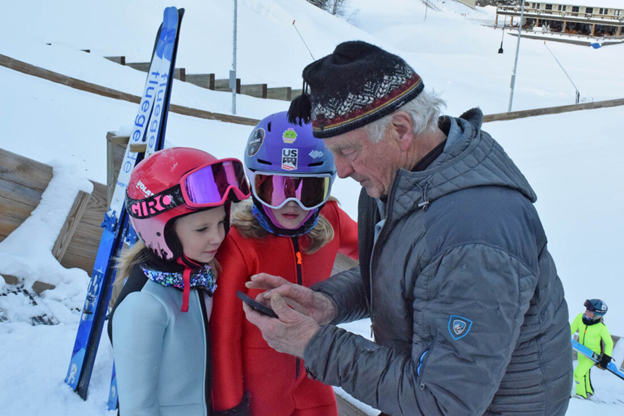
Larry Stone with some of his current junior jumpers. Photo by Eastern Ski Jumping.

After 1968, Larry moved back to his hometown of Salisbury, Connecticut to work as a coach for the Salisbury Winter Sports Association (SWASA). It was here that he began his junior coaching career.  “You get little bubbles of kids that are really talented and push each other just like you guys,” Larry said.

Additionally, he used his emerging passion for coaching to enhance his own jumping career. “One way I could support myself and get SWASA to help me with training costs was coaching. But when you coach ski jumping, and I presume other activities like that, you start seeing things a little differently, and it kind of opens you up to approach the sport in a little different way. It’s more organic and all of a sudden you find that what you are working on with the kids becomes what you are working on as an athlete, and it’s clearer than before.”

For the last few years of Larry’s jumping career, 1972-1974, he moved to Woodstock, New York, where he could pursue his passion as a singer-songwriter as well as his ski jumping career. In 1974, at 29, Larry retired as a competitive ski jumper. He then returned to Salisbury, where he continued to work with the junior program. He encountered one such “bubble of kids” and coached them all the way to the “big hills,” which at the time were 60-70 meters.

Then, in 1980, he volunteered at the 1980 Winter Olympics in Lake Placid. “I was there working as a volunteer, and my job was to measure heel blocks up at the start because people were trying to get away with having too much. The night before the big hill event, the people running the program fired the US coaches. You develop really close bonds with your coaches, so the athletes were noticeably destroyed when they showed up the next morning. A couple of days later, Rex Bell and I were hired to be the ski team coaches for the rest of the year. Rex went to Europe, and I took over the domestic circuit.”

Larry was then instrumental in putting in place a regional system of coaches that still governs American ski jumping today. He was the regional coach for the Eastern Division. “My Salisbury kids started really coming around, so I focused on them for a couple of years. Then all of a sudden in ’88, I got a call about taking over the NYSEF program in Lake Placid. I did that for a few years, and then I went back to the US Ski team for 5 years. At the time, I still coached NYSEF, and I got help from Matt Cook, Casey Colby, and a few other coaches with that.”

Larry and Molly Stone in Salisbury, Connecticut, in 1998. Photo by USA Ski Jumping.

Larry moved to Park City in 1994 and stayed until 1996. There, he met Lindsey Van, a young American jumper. “I was really impressed with her possibilities, so I started taking her abroad. There was no women’s circuit at that point, but we started to put one together in Germany and Austria, and I started taking a group of US women over there, including my daughter Molly, Lindsey, and a few others. I officially took over the women’s program when Casey Colby stepped away. I hired a Norwegian guy, and we worked together toward the 2009 World Championships. There were several unofficial world championship events that the women went to, but 2009 became the first year that we had an official Women’s World Championship, and that year Lindsey won it.”

At this point, Larry decided, “That’s good enough. I think I’ll retire here.” Larry stepped away for a few years, living in the Adirondacks, running his farm, and playing music. Larry, however, couldn’t stay away from ski jumping and, in 2011, returned to NYSEF as head coach until 2016, when he moved back to his passion for the small hills. It was at this time that the current Northwood ski jumping team got its start in the sport. “I took my first jump ever with him back in 2016, and now, 9-10 years later, he’s still coaching me. It shows his dedication to the sport and his passion for his athletes sticking around and working with us. He embodies the spirit of the Lake Placid Hall of Fame,” said Jack Kroll ‘25.

Larry Stone coached current Northwood ski jumper Henry Loher ‘26 when he started out. Photo by Nancie Battaglia.

“My priorities were elsewhere. I really liked soccer and mountain biking, but Larry talked to my family and me and said I had a natural technique and encouraged me to really focus on ski jumping. Looking back on it, that may be the best decision ever,” said Henry Loher ‘26.

Larry is “grateful for the induction” and, in his speech, thanked all the parents and coaches who supported him over the years, adding that it is the parents’ willingness to let their kids do this crazy sport and their support that makes his job possible.

From the Staff of The Mirror and the Northwood Ski Team, we would like to express our gratitude for everything Larry has done and will continue to do for the sport of ski jumping, not only in Lake Placid but also across the country. Thank you, Larry!

Humans of Northwood: Henry Loher ‘26

“My favorite meal? 
This is going to be pretty controversial. Some people hate it. Some people love it. I like the classic chicken sandwich, the best meal. I know most people think we have too much chicken, but when I see the chicken sandwich, I know it’s gonna be a great day.

“I started ski jumping when I was 10 or 11. At first, I wasn’t very committed to it, and I split my time between skiing, soccer, and mountain biking. Then one day, one of my coaches told me about the promise I had in the sport, and I decided to start focusing on it and train year-round. I’d say that it worked out pretty well.

“I first heard about Northwood through teammate Jack Kroll, who was already ski jumping there at the time, and I saw him get very good, very quick, so I knew I needed to look into it to continue my progression. This is now my second year in Northwood, and it has helped me become a better ski jumper.

“Last year, I qualified for Junior Worlds and then at Junior Worlds, I was able to get 21st and individual for U20 and was part of the first-ever US men’s team event podium at Junior Worlds. For people my age, I placed second in the event. Events like this are made possible by being here. It’s the balance Northwood has between athletics and academics that has helped me the most. I am a local athlete and previously attended the Lake Placid Public School, and when I had to travel to Europe to train or compete for a week or two at a time, they wouldn’t have allowed it, whereas Northwood is very accommodating. This is one of the things I am going to miss most, the structure of the days at Northwood and how much training we get.”

As told to Jack Kroll ’26. Photo by Mr. Michael Aldridge.

Dodgers Defeat the Blue Jays in Instant Classic World Series

The 2025 World Series will be remembered as one of the closest and most nail-biting World Series in history. From complete games to 18-inning games, it truly had it all. Initially, it was portrayed as a mismatch of talent, and many expected the Dodgers to handle the Blue Jays easily. This, however, was far from the truth; the Blue Jays gave the Dodgers a run for their money and fought to the end.

It was a ninth World Series title for the Dodgers, and their third in six years under manager Dave Roberts. Photo: Getty Images.

Game 1

The Dodgers would strike first and carry a 2-run lead into the bottom of the third. Toronto would respond by putting up two runs in the 4th, and 9 in the 6th. They (Toronto) would go on to win the game 11-4.

Game 2

In Game 2, the Dodgers had their ace, Yoshinobu Yamamoto, on the mound. They took advantage of their ace, who pitched a complete game, holding the Blue Jays to just four hits. The Dodgers scored five runs, 3 of which came from catcher Will Smith, who had a single, a force out, and a solo home run.

Game 3

When the teams headed to Los Angeles for game 3, the series was tied 1-1. The game would turn into two complete games, lasting 18 innings. Blue Jays fans on the East Coast – including those at Northwood – stayed up until about 3 am EST to watch the Dodgers walk it off with a Freddie Freeman solo home run in the bottom of the 18th.  The game was an instant classic and tied game 3 of the 2018 World Series between the Dodgers and the Red Sox as the longest World Series game ever.

The game was tied 4-4 in the 5th, and 5-5 in the 7th. The two pitching staffs would then pitch a combined 10 shutout innings. Both teams used virtually every player on the roster. Had the game gone to the 19th inning, the Dodgers had Yoshinobu Yamamoto, who, let’s not forget, pitched a complete game just 2 days before, warming up to come in and pitch. The Dodgers’ leaning on Yamamoto would become a theme in this series. The game was a gut punch to the Blue Jays, who used virtually all their pitchers in a game they ultimately lost.

Freddie Freeman after his walk-off double. Photo by BBC.

Game 4

In game 4, the Blue Jays came to play. You couldn’t tell they had played an 18-inning game just 17 hours ago. The Dodgers scored first in the 2nd, but after that, it was almost all the Blue Jays. In the 3rd inning, Vladimir Guerrero Jr. hit a 2-run bomb off Dodgers two-way superstar Shohei Ohtani. In the 7th inning, Toronto piled on four more runs with an RBI single from Andrés Giménez, an RBI groundout by Ty France, an RBI single by Bo Bichette, and an RBI single by Addison Barger. Innings like this would become a theme for the Blue Jays. They consistently got big hits from everyone on their roster, allowing them to turn over the lineup and pile on runs. Game 4 would end up as a Blue Jays win, 6-2, but more importantly, the Blue Jays had established themselves as a force. Coming into the series, many reporters were calling it a “David and Goliath” matchup, but the Blue Jays were proving that they were just as good as the Dodgers.

Game 5

Going into game 5, the series was tied 2-2. Whichever team won this game would be one game away from a ring and put the other team in a corner. Right from the start, the Blue Jays took control when on the first pitch of the game, Davis Schnieder hit a home run off of Blake Snell. Schnieder was only in the lineup because of an injury to George Springer. Then, two pitches later, Vladimir Guerrero Jr. went back-to-back with another solo home run.

Blue Jays pitcher Trey Yesavage is leaving the mound in game 5—photo by MLB.com.

On the mound, the Blue Jays had their future ace in 22-year-old Trey Yesavage. In the 3rd inning, the Dodgers would score their only run of the game off a Kiké Hernández. In the 4th, Ernie Clement hit a sacrifice fly to re-establish the Toronto momentum. In the 7th, Addison Barger hit a single, then advanced to 2nd on a wild pitch, then to 3rd on another, and finally home on a 4th wild pitch. Then Bo Bichette hit an RBI single, making it 5-1 Toronto. Yesavage would leave the game with 12 strikeouts in 7 innings. Yesavage tied a World Series record for most strikeouts by a rookie in a World Series game with 12.

Game 6

Game 6 was back in Toronto, and the Blue Jays were one win away from a ring. For the Dodgers, it was a must-win game, and luckily for them, they had their ace Yoshinobu Yamamoto on the mound. He would go six complete innings with only five hits and one earned run. That run came off an RBI single by George Spinger, who was put back into the lineup even though he was injured. With every swing, you could hear him scream and see the pain on his face. He battled through and got the only Toronto run in game 6.

In the 3rd inning, the Dodgers scored three runs off a Will Smith RBI double and a Mookie Betts 2-run single. The Blue Jays had chances in both the 7th and 8th innings but could not come through. Then, in the bottom of the 9th, Alejandro Kirk was hit by a pitch leading off. Myles Straw came in to pinch run for him. Then, perhaps one of the strangest plays you will ever see happened. Addison Barger smoked a ball to the wall, and it managed to wedge itself under the wall. The Dodgers outfielders knew the ground rules perfectly, and as soon as they saw the ball get stuck, they threw up their hands and did not reach for the ball. This signals to the umpire that something is wrong, and the ball is declared dead. The runners are given two bases on the play if it’s a dead ball, meaning that Straw gets to go to 3rd and Barger to 2nd. Had the Dodgers’ outfielders reached to touch the stuck ball, they would have lost the right for it to be a dead ball, and both Straw and Barger would have scored, tying the game with no outs, giving the Blue Jays the chance to walk it off and win the World Series. This showed the depth of the preparation of the Dodgers team and their ability to perform under pressure.

The ball was wedged under the wall—photo by MLB.com.

Then came another play that you don’t see often—a game-ending double play made by outfielder Kiké Hernández. Andrés Giménez hit a ball into left field, but right to Hernández, who threw it to Miguel Rojas to put the tag on Barger at 2nd to end the game.

Game 7

Game 7 is every sports fan and player’s dream. Every baseball player grows up imagining the moment, “bottom of the 9th, game 7 of the World Series, tie game.” Every player wants their team to have a chance to win it all, and they want that chance to be in their hands. Game 7 is the most crucial game of the year. It defines how the team will be remembered. One team will go home World Champions; the other will go home with nothing. Baseball is often described as “the game of tomorrows,” as it has the longest season, and each day is just as important as tomorrow. There is always another game and another chance, except for game 7 of the World Series. There is no tomorrow. Every player leaves everything on the field, and they have the entire offseason to reflect on and scrutinize what they did or did not do.

On the mound, the Blue Jays had postseason veteran Max Scherzer, who pitched Game 7 in the 2019 World Series. The Dodgers had Shohei Ohtani, their superstar pitcher and hitter, on the mound. In the bottom of the 3rd, the Blue Jays would strike first, when Bo Bichette came up to the plate in what could be one of his last at-bats as a Blue Jay. He enters free agency this year after years with the Blue Jays, who drafted him. It was his chance to leave his mark on the fanbase, and leave a mark he did when he launched a 3-run home run to take a 3-0 lead in game 7.

Bo Bichette after his three-run homer in Game 7. Photo by MLB.com.

In the 4th, the Dodgers responded with one run coming off a sacrifice fly by Teoscar Hernández. In the 5th inning, Louis Varland set an all-time postseason record with his 15th postseason appearance on the mound. In the 6th inning, Tommy Edman cut the Blue Jays’ lead to 3-2 with a sacrifice fly. Then, in the bottom of the 6th, Ernie Clement tied the MLB record with his 29th hit of the postseason. He would then steal 2nd base and be driven in by Andrés Giménez’s RBI double.

In the 7th, the Blue Jays turned a clutch double play to get out of a jam and carry their 4-2 lead into the bottom of the 7th. The Blue Jays just needed six more outs to win a World Series. Then, in the 8th, Max Muncy hit a solo home run to cut the Blue Jays’ lead to 4-3. Then, in the bottom of the 8th, Ernie Clement had his 30th hit of the postseason, taking sole possession of the record.

In the top of the 9th, the Blue Jays were two outs away from victory, when the Dodgers’ 9 hitter Miguel Rojas – who is the worst hitter on the team and hadn’t had a hit in almost a month, excluding the game before – hit a solo home run to tie the game. This is what makes baseball special. Any player has the chance to win it all. All it takes is one swing. The Dodgers, who looked like they were sleeping all game, had just woken up.

In the bottom of the 9th, the Blue Jays got their chance. Due up was Vladimir Guerrero Jr., who came just feet from a World Series-winning home run. Behind him, Bo Bichette hit a single, and Isiah Kiner-Falefa came in to pinch run for Bichette, who has a knee injury. Addison Barger worked a walk, moving the winning run in IKF to 2nd. The Dodgers turn to Yamamoto to come in and try to close out the game. He then hits Kirk, loading the bases with one out. Then, Dalton Varsho hits a slow roller to 2nd base, where Rojas picks it and makes the throw home. If IKF beats the throw home, the Blue Jays win the World Series. If the throw beats IKF, the Dodgers are one out away from getting out of a major jam. The throw beats IKF by an estimated 4 inches, and the game remains tied. Many were quick to criticize IFK for not taking a big lead off 3rd base, but his teammates were quick to defend him, saying that they had to avoid a double play, which would end the inning. I believe that the actual baserunning error occurred when sliding feet-first into home plate. If IKF had either run through the bag or slid headfirst, he would have kept his momentum better and possibly won the World Series. I must admit that it is very easy to look back on it and see what he could have done differently, but it certainly is not his fault.

Ernie Clement came up with bases loaded and two outs, and he smoked a ball to the warning track. Off the bat, it looked like it might be a home run, or that the fielders wouldn’t get there in time. Kiké Hernández tracked the ball down and was running and looking up at it when his teammate, Andy Pages, came out of nowhere, running into him, but importantly making the catch to send the game to extra innings.

Kiké Hernández and Andy Pages are colliding in game 7. Photo by MLB.com.

The Blue Jays got out of a jam in the 10th by getting the lead runner at home, and the game continued into the 11th. Then, Dodgers catcher Will Smith hit a solo home run to make it 5-4 Dodgers. Yoshinobu Yamamoto then closed out the game, making it back-to-back titles for the Dodgers.

The Dodgers are quickly establishing themselves as a dynasty. This marks their second consecutive Championship and their 3rd since the start of the 2020s. Yoshinobu Yamamoto won the World Series MVP after his complete game, his relief appearance, his second 1 run start, and, of course, his closure of the series. It was one of the most impressive pitching performances of all time.

Yamamoto with his 2025 World Series MVP trophy. Photo by MLB.com.

For the Blue Jays, this will forever be a tale of “what could have been.” The Blue Jays were fun to watch and played energetic, fun baseball. After the game, it was clear how much the players loved each other. When talking to the media, many cried, and veterans like Max Scherzer said they have never felt a bond and a connection to a team like they did with the 2025 Blue Jays. Hopefully, this is just the start of the Blue Jays’ playoff success, and we get to see them next year.


Get to Know New Student Cadel Cox ‘27

Cadel Cox ’27. Photo by Mr. John Spear.

Last week, Cadel Cox ’27 recently joined the Northwood community. Cadel is from Peterborough, New Hampshire and is a Nordic Combined skier. He came to Northwood to “get better and more consistent training with the ski jumping and Nordic Combined teams.” Also, Northwood gave him “a change in academics” that he was looking for.

“Northwood has some amazing access to the Olympic venues here in Lake Placid, including the Olympic Jumping Complex and Mount Van Hoevenberg. It gives me the opportunity to ski more consistently,” Cadel said.

His favorite thing so far has been training. “At home, I train alone a lot, and it’s nice to have a full team working towards the same goals.” Cadel is excited to get to watch the World Cup Finals for Nordic skiing here in March.

Outside of skiing, Cadel enjoys mountain biking and golfing, which he says, “Lake Placid is perfect for.” He is a day student living in an apartment behind High Peaks Cyclery in town, but you can often find him working on campus or socializing with friends. “I have found the Northwood community very welcoming, and it has made it a very easy transition. It’s full of really solid, well-rounded people,” Cox said.

One thing Cadel was surprised by was “how much they serve chicken in the cafeteria. Luckily, I like chicken. My favorite meal so far has been the tacos,” Cox said.


Students Mourn the Loss of Starbucks

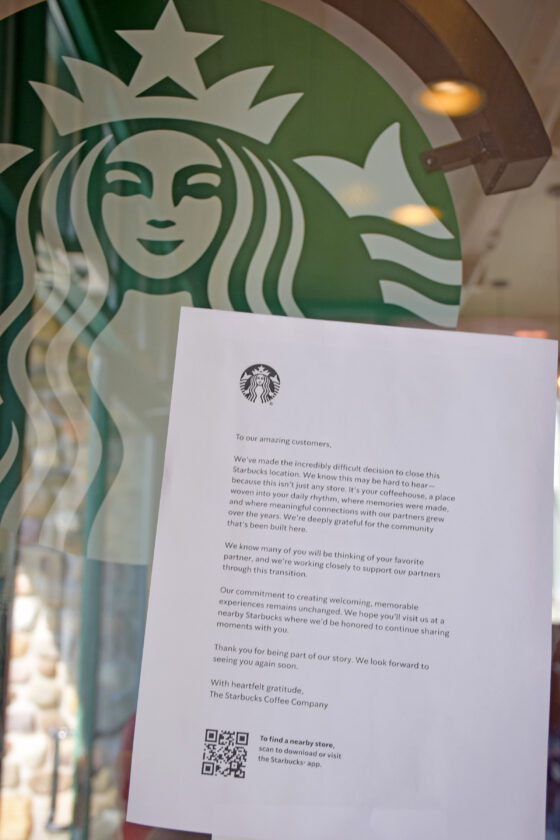
On October 2nd, 2025, Northwood students lost their favorite coffee and study spot when the Lake Placid Starbucks closed its doors for the last time.

The closure follows an internal review by the company as it seeks to reshape itself and realign its corporate goals. “Our goal is for every coffeehouse to deliver a warm and welcoming space with a great atmosphere and a seat for every occasion,” said Starbucks CEO Brian Niccol in an announcement made on September 25th, 2025. He went on to say, “During the review, we identified coffeehouses where we’re unable to create the physical environment our customers and partners expect, or where we don’t see a path to financial performance, and these locations will be closed…Partners in coffeehouses scheduled to close will be notified this week.”

The Lake Placid Starbucks was one such location.

A note is left on the front door of the Starbucks in Lake Placid, letting potential customers know that the shop is now closed. (Adirondack Daily Enterprise photo by Chris Gaige)

Employees were given 3-day notice before the final closure on October 2nd. Many were left scrambling for jobs on short notice.

The students were also given short notice. In a 3-day period, a beloved staple of the Northwood experience was taken away.

“I used to go there to study. It was a comfortable environment, and it was easy to focus,” Anja Robertson ‘26 said. “It was a good escape from campus. I haven’t really found a replacement for it yet. I also used to go for walks around the lake and stop at Starbucks. Now I have less motivation [to walk the lake].”

Riley Ward ‘27, who was at a ski camp in Chile when news of Starbucks’ closing came, said, “I was very shocked; it was my favorite coffee place in town. I get my chai from Origin or Big Mountain Deli and Creperie now.”

Overall, students miss their coffee shop, but Lake Placid does have alternatives. Local businesses like Origin, Capisce, and the Big Mountain Deli and Creperie now don’t have to compete with a global chain for customers. One common criticism is that the local shops don’t have the same consistent hours and days open as Starbucks did; however, now the local shops may be incentivized to change that to capitalize on a less competitive market.


2025 World Series Preview

2025 World Series logo. Source: MLB.com.

The 2025 Major League Baseball season is winding down, but the action is heating up. Now, just two teams remain: the Toronto Blue Jays and the Los Angeles Dodgers, who are set to face off in the 2025 World Series, which starts Friday, October 24th, in Toronto.

The Dodgers had a relatively easy path to the World Series and have lost only one game in the postseason.  They went 2-0, winning the wild card against the Cincinnati Reds 3-1, knocking out the Philadelphia Phillies in the NLDS, and then sweeping the Milwaukee Brewers, who had the best regular-season record, in the NLCS. Most teams would celebrate even making it to the World Series, but after the game four win against the Brewers, critics noticed a distinct lack of celebration. For the Dodgers, merely getting to the World Series isn’t enough; they have to win.

For the Blue Jays, the road to the World Series was much bumpier. They had a bye in the wild card before playing the Yankees in the ALDS. The Jays won the series 3-1. Then, they had the tough draw of playing the Seattle Mariners in the ALCS. Lucky for the Blue Jays, the Mariners went to game 5 in the ALDS and won in the 15th inning, meaning virtually all their pitchers got used, leaving very few options for game 1 of the ALCS. Against the odds, the Mariners won both games in Toronto and took a 2-0 series lead heading back home to Seattle. The Jays responded by winning games 3 and 4 in Seattle, tying up the series 2-2. Seattle would win game 5, making game 6 in Toronto a win-or-go-home game for the Jays. They would win and force the words every sports fan dreams of: game 7—a winner-takes-all instant classic.

George Springer celebrates as he rounds the bases after his go-ahead 3-run homer. Photo by CNN.

Both teams scored 1 in the first inning. By the 5th, the Mariners took a 3-1 lead. The Blue Jays had men in scoring position almost every inning but failed to cash in with the big hit. Then, in the bottom of the 7th, the Blue Jays would find their big hit when George Springer hit a 3-run bomb to give the Blue Jays a 4-3 lead. From there, the Blue Jays’ pitching did the rest and shut down the Mariners, sending the Blue Jays to their first World Series in 32 years.

The World Series is a best-of-7 series with the first two games in Toronto, followed by 3 in LA, and 2 in Toronto if needed. It is expected to be one of, if not the most, viewed World Series in history, with the entire country of Canada poised to tune in.

The Blue Jays celebrate after securing their first trip to the World Series in 32 years. Photo by MLB.com.

On paper, the Dodgers have the advantage with multiple MVPs in their lineup, the second-highest payroll in baseball, and a team loaded with postseason experience, not to mention they are the defending World Series champions. They have the best pitching staff in baseball. One of their pitchers is also their best hitter. In Game 4 of the NLCS, Shohei Ohtani struck out 10 batters as the starter while hitting three home runs. Many are calling this one of the single greatest sporting moments and achievements of all time.

The Blue Jays are coming in hot, and they have the “homefield advantage.”  Vladimir Guerrero Jr. is having one of the best postseasons ever, batting .442 with a 1.440 OPS. George Springer has hit clutch home runs every time his team needed him to. Additionally, offensive reinforcements are on the way as Bo Bichette has announced he will be back from injury for the World Series. During the regular season, the star shortstop batted .311.

Shohei Ohtani rounding the bases on one of his three home runs in Game 4 of the NLCS. Photo by Bleacher Report.

The Dodgers are the favorites to win, but that’s not to say the Blue Jays don’t have a shot. Game 1 in Toronto is essential to the Jays. If they can win game one or game 2, they have a chance. They can’t lose both games at home as momentum is key. The Blue Jays also cannot give free outs to the Dodgers. Their defense has to be on point because if you provide the Dodgers with a chance, they will pounce on it. The Blue Jays also have to be aggressive and try to knock out the Dodgers’ starters early. When the series heads west to LA, the Blue Jays need to find a way to win at least one game and two if they want to have a real shot at the championship. If the series makes it back to Toronto, the Dodgers may be in trouble. The Blue Jays will have the momentum and home-field advantage, and, for the first time, the Dodgers will be under threat of elimination. They won’t be able to cruise like normal, and if they tighten up, we may see the Blue Jays take the win.

Now for my predictions. I’m going with the Blue Jays in 7, in what I hope to be one of the best matchups of all time. For individual games, here are my predictions: game-1 Jays, game-2 Dodgers, game-3 Dodgers, game-4 Jays, game-5 5-Dodgers, game-6 Jays, and game-7 Jays.

The Mirror was established in 1927
© 2015-2022 by the Staff of The Mirror
The Mirror's Policy Manual and Style Guide.
The Mirror is funded by gifts to the Northwood Fund. Thank you.